Malambane Goitseone, Madumane Kelebogile, Sewelo Lesego T, Batlang Utlwang
Department of Crop and Soil Sciences, Botswana University of Agriculture and Natural Resources, Gaborone, Botswana.
Front Plant Sci. 2023 Feb 6;13:1074395. doi: 10.3389/fpls.2022.1074395. eCollection 2022.
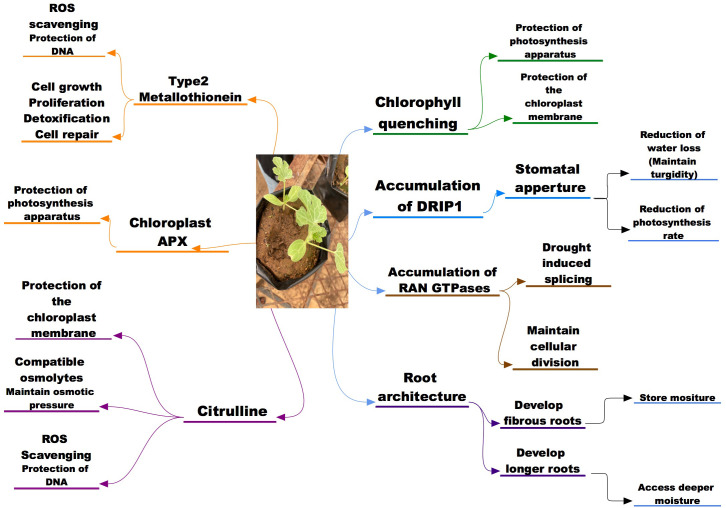
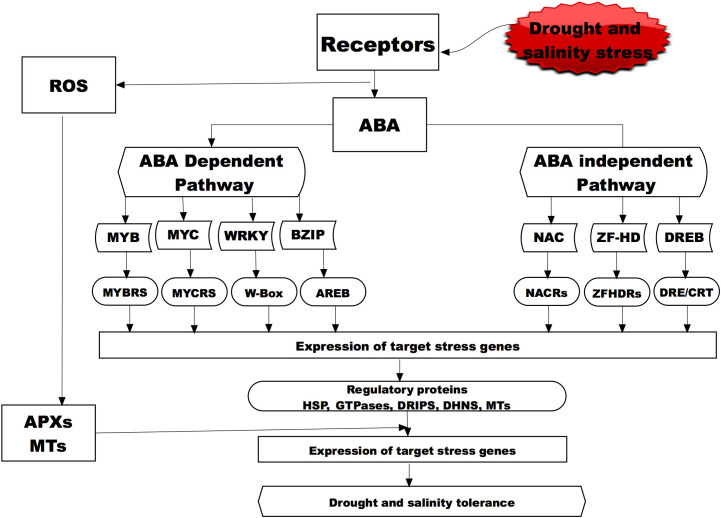
Climate change has escalated the effect of drought on crop production as it has negatively altered the environmental condition. Wild watermelon grows abundantly in the Kgalagadi desert even though the environment is characterized by minimal rainfall, high temperatures and intense sunshine during growing season. This area is also characterized by sandy soils with low water holding capacity, thus bringing about drought stress. Drought stress affects crop productivity through its effects on development and physiological functions as dictated by molecular responses. Not only one or two physiological process or genes are responsible for drought tolerance, but a combination of various factors do work together to aid crop tolerance mechanism. Various studies have shown that wild watermelon possess superior qualities that aid its survival in unfavorable conditions. These mechanisms include resilient root growth, timely stomatal closure, chlorophyll fluorescence quenching under water deficit as key physiological responses. At biochemical and molecular level, the crop responds through citrulline accumulation and expression of genes associated with drought tolerance in this species and other plants. Previous salinity stress studies involving other plants have identified citrulline accumulation and expression of some of these genes (chloroplast APX, Type-2 metallothionein), to be associated with tolerance. Emerging evidence indicates that the upstream of functional genes are the transcription factor that regulates drought and salinity stress responses as well as adaptation. In this review we discuss the drought tolerance mechanisms in watermelons and some of its common indicators to salinity at physiological, biochemical and molecular level.
气候变化加剧了干旱对作物生产的影响,因为它负面地改变了环境条件。尽管生长季节降雨极少、气温高且阳光强烈,但野生西瓜在卡拉哈迪沙漠中大量生长。该地区的土壤也以保水能力低的沙地为特征,从而导致干旱胁迫。干旱胁迫通过分子反应对发育和生理功能的影响来影响作物生产力。耐旱性并非由一两个生理过程或基因决定,而是多种因素共同作用以帮助作物形成耐受机制。各种研究表明,野生西瓜具有有助于其在不利条件下生存的优良品质。这些机制包括根系弹性生长、气孔及时关闭、水分亏缺下的叶绿素荧光猝灭等关键生理反应。在生化和分子水平上,该作物通过瓜氨酸积累以及与该物种和其他植物耐旱性相关基因的表达来做出反应。先前涉及其他植物的盐胁迫研究已确定瓜氨酸积累以及其中一些基因(叶绿体APX、2型金属硫蛋白)的表达与耐受性有关。新出现的证据表明,功能基因的上游是调节干旱和盐胁迫反应以及适应性的转录因子。在这篇综述中,我们在生理、生化和分子水平上讨论了西瓜的耐旱机制及其一些常见的耐盐指标。