Xu Bing, Wang Jinfeng, Yan Bin, Xu Chengdong, Yin Qian, Yang Deyan
Department of Infectious Diseases, The First Affiliated Hospital of Xi'an Jiaotong University, 277, Yanta West Road, Xi'an, 710061, China.
The State Key Laboratory of Resources and Environmental Information System, Institute of Geographic Sciences and Natural Resources Research, Chinese Academy of Sciences, 11A, Datun Road, Chaoyang District, Beijing, 100101, China.
Virus Evol. 2021 Aug 13;7(2):veab071. doi: 10.1093/ve/veab071. eCollection 2021 Sep.
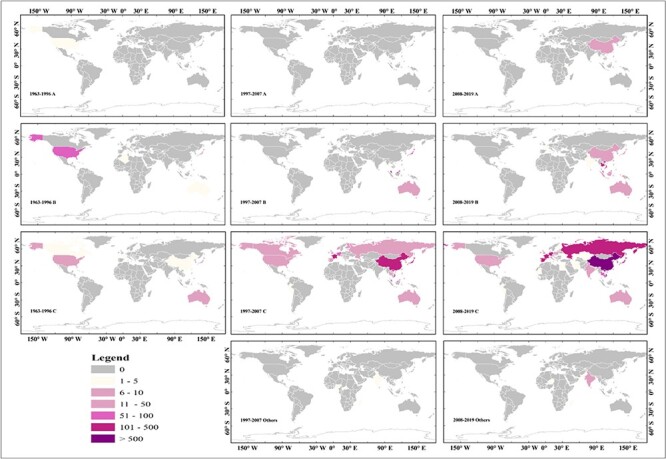
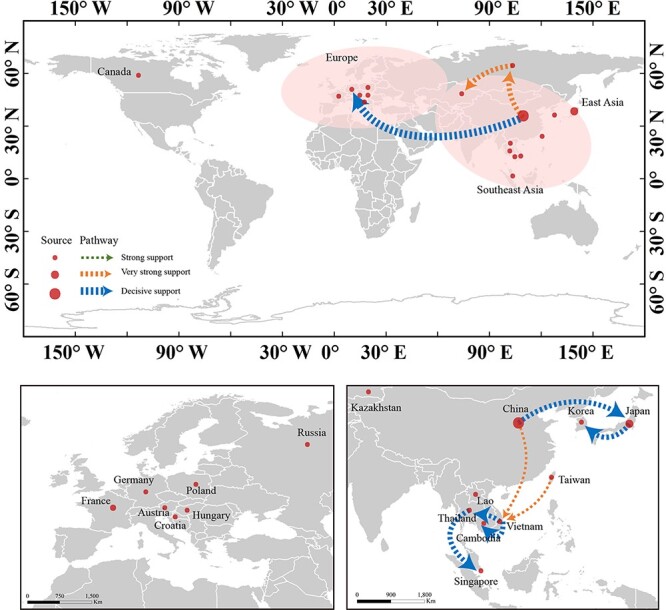
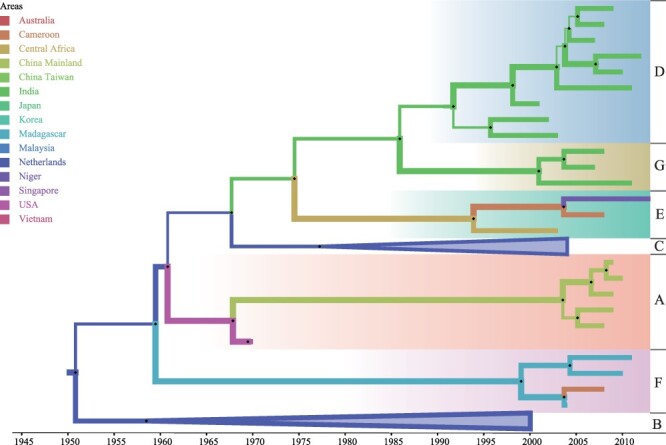
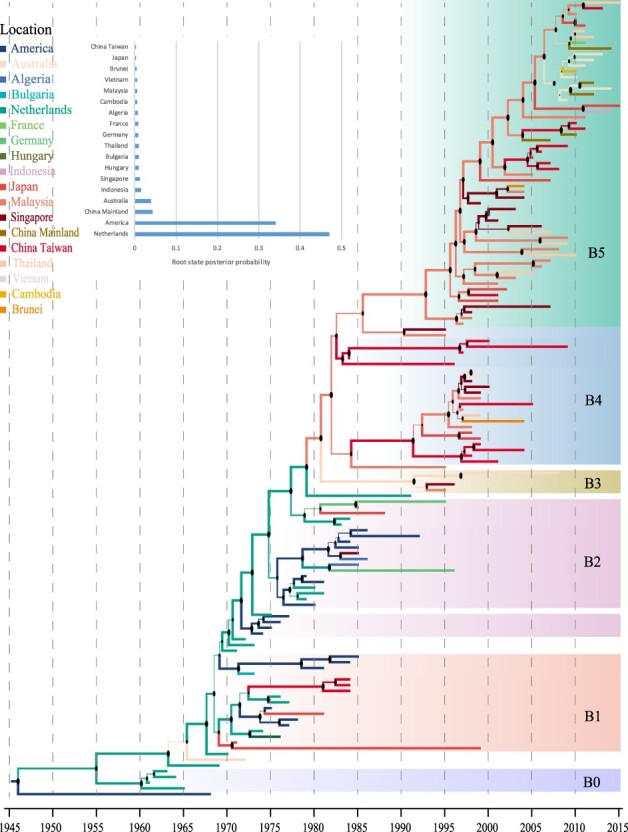
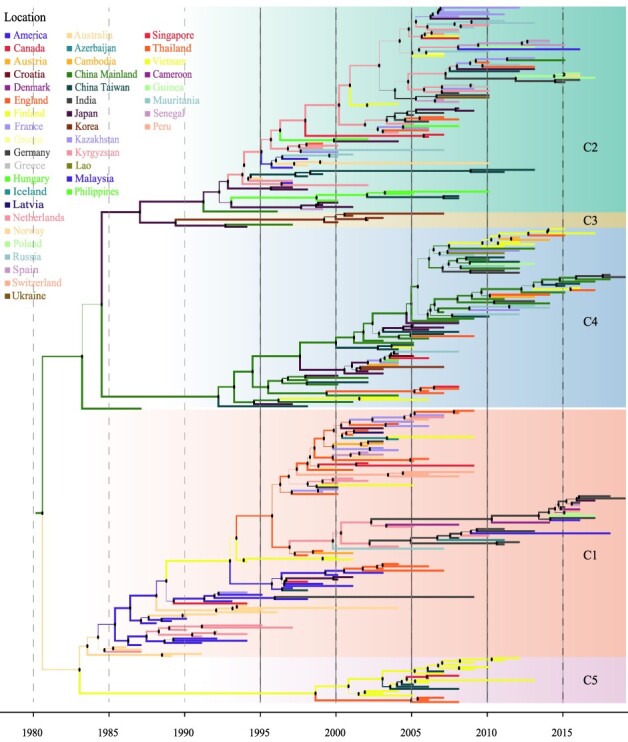
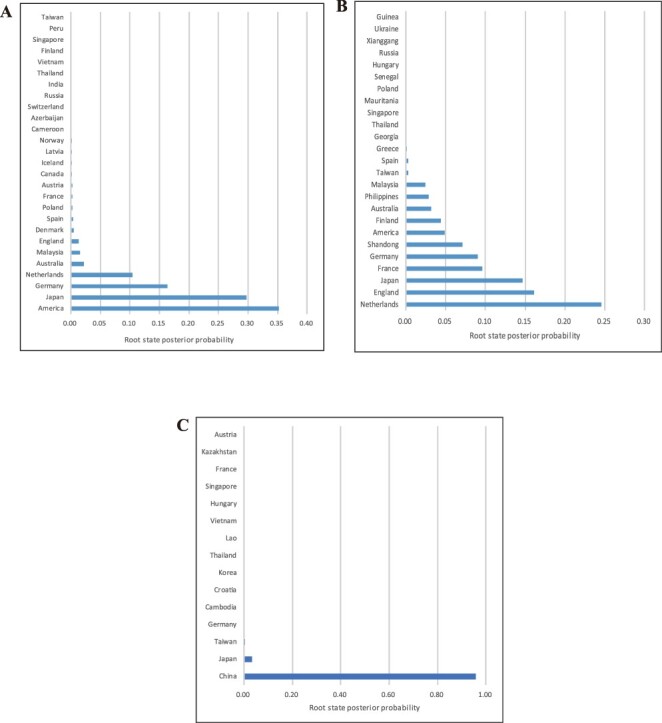
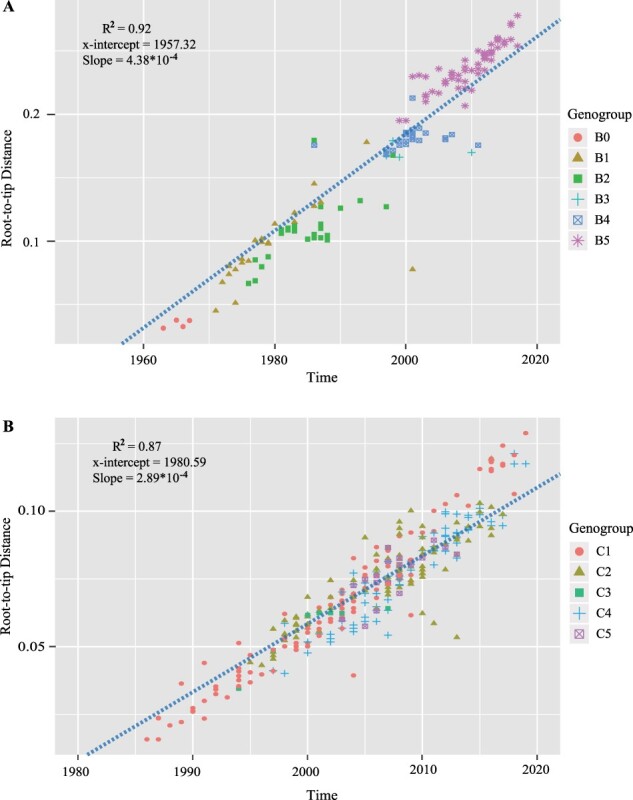
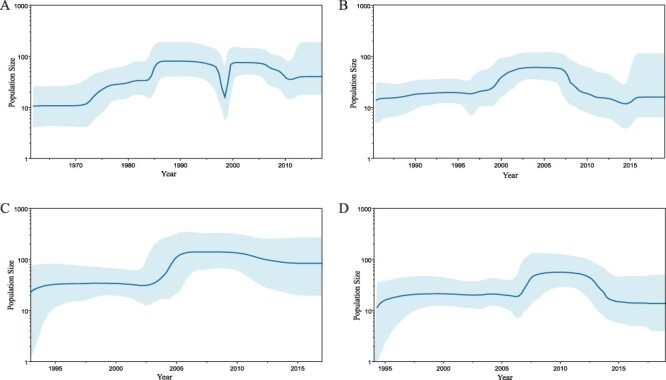
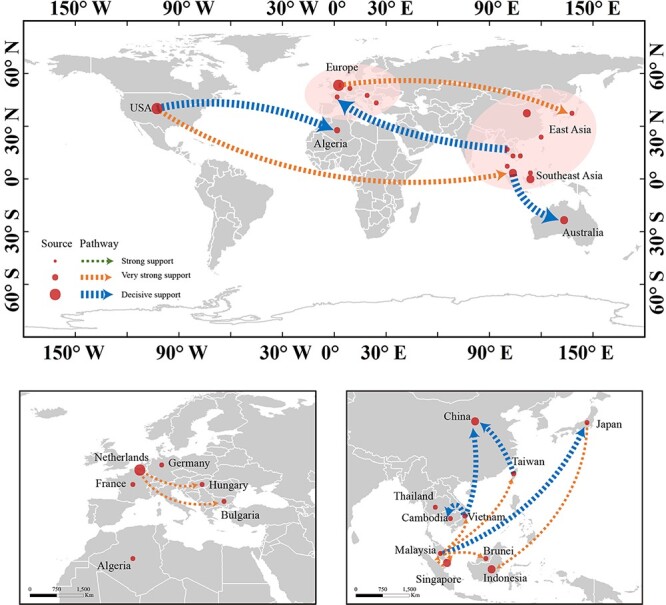
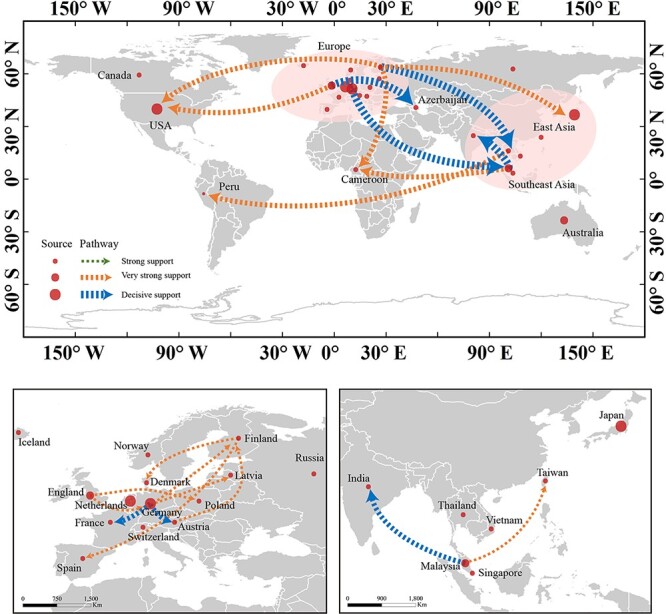
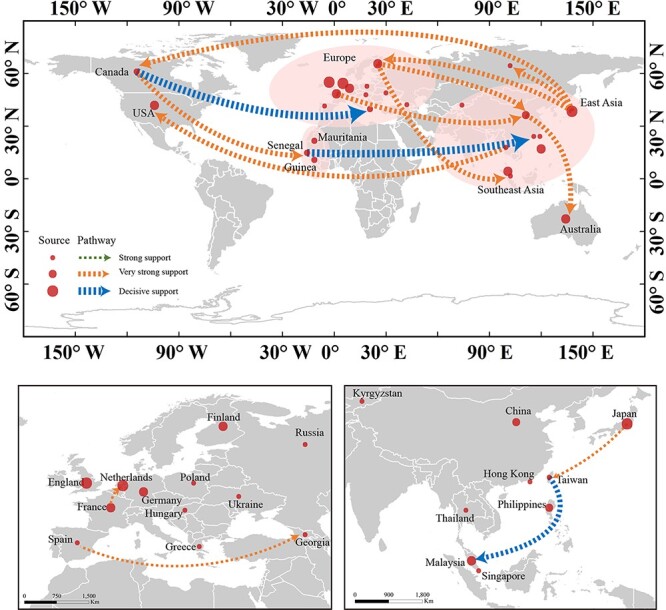
Enterovirus 71 (EV71) can cause large outbreaks of hand, foot, and mouth disease (HFMD) and severe neurological diseases, which is regarded as a major threat to public health, especially in Asia-Pacific regions. However, the global spatiotemporal spread of this virus has not been identified. In this study, we used large sequence datasets and a Bayesian phylogenetic approach to compare the molecular epidemiology and geographical spread patterns of different EV71 subgroups globally. The study found that subgroups of HFMD presented global spatiotemporal variation, subgroups B0, B1, and B2 have caused early infections in Europe and America, and then subgroups C1, C2, C3, and C4 replaced B0-B2 as the predominant genotypes, especially in Asia-Pacific countries. The dispersal patterns of genotype B and subgroup C4 showed the complicated routes in Asia and the source might in some Asian countries, while subgroups C1 and C2 displayed more strongly supported pathways globally, especially in Europe. This study found the predominant subgroup of EV71 and its global spatiotemporal transmission patterns, which may be beneficial to reveal the long-term global spatiotemporal transmission patterns of human EV71 and carry out the HFMD vaccine development.
肠道病毒71型(EV71)可引发手足口病(HFMD)的大规模暴发以及严重的神经疾病,这被视为对公共卫生的重大威胁,尤其是在亚太地区。然而,该病毒在全球的时空传播情况尚未明确。在本研究中,我们使用了大量序列数据集和贝叶斯系统发育方法,来比较全球不同EV71亚组的分子流行病学和地理传播模式。研究发现,手足口病的亚组呈现出全球时空变化,B0、B1和B2亚组在欧美引发了早期感染,随后C1、C2、C3和C4亚组取代B0 - B2成为主要基因型,尤其是在亚太国家。B基因型和C4亚组的传播模式在亚洲显示出复杂的路径,源头可能在一些亚洲国家,而C1和C2亚组在全球呈现出更具支持性的传播路径,尤其是在欧洲。本研究发现了EV71的主要亚组及其全球时空传播模式,这可能有助于揭示人类EV71的长期全球时空传播模式,并开展手足口病疫苗研发。