Health Intervention and Technology Assessment Program, Department of Health, Ministry of Public Health, Tiwanon Rd, 6Th Floor, 6Th Building, Muang, 11000, Nonthaburi, Thailand.
Institute of Health Policy, Management and Evaluation, University of Toronto, Toronto, Canada.
BMC Public Health. 2023 Feb 23;23(1):382. doi: 10.1186/s12889-023-15152-6.
This study aimed to identify targeted interventions for the prevention and treatment of harmful alcohol use. Umbrella review methodology was used to summarise the effectiveness across a broad range of interventions, in order to identify which interventions should be considered for inclusion within universal health coverage schemes in low- and middle-income countries.
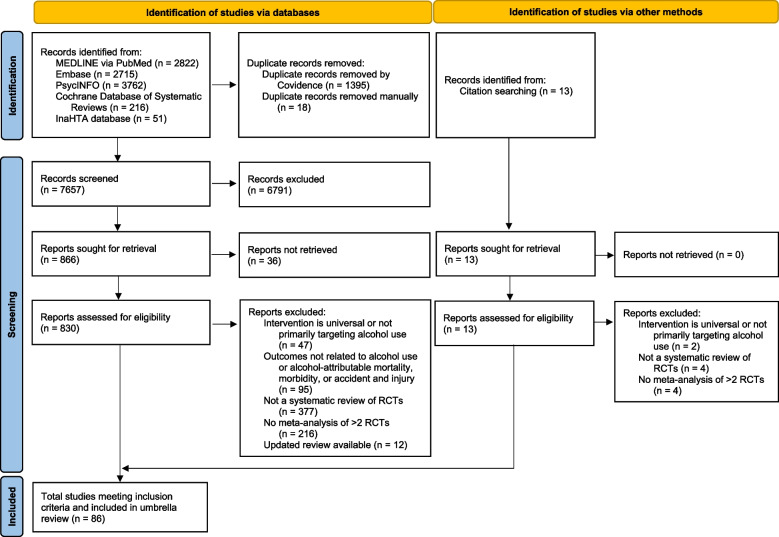
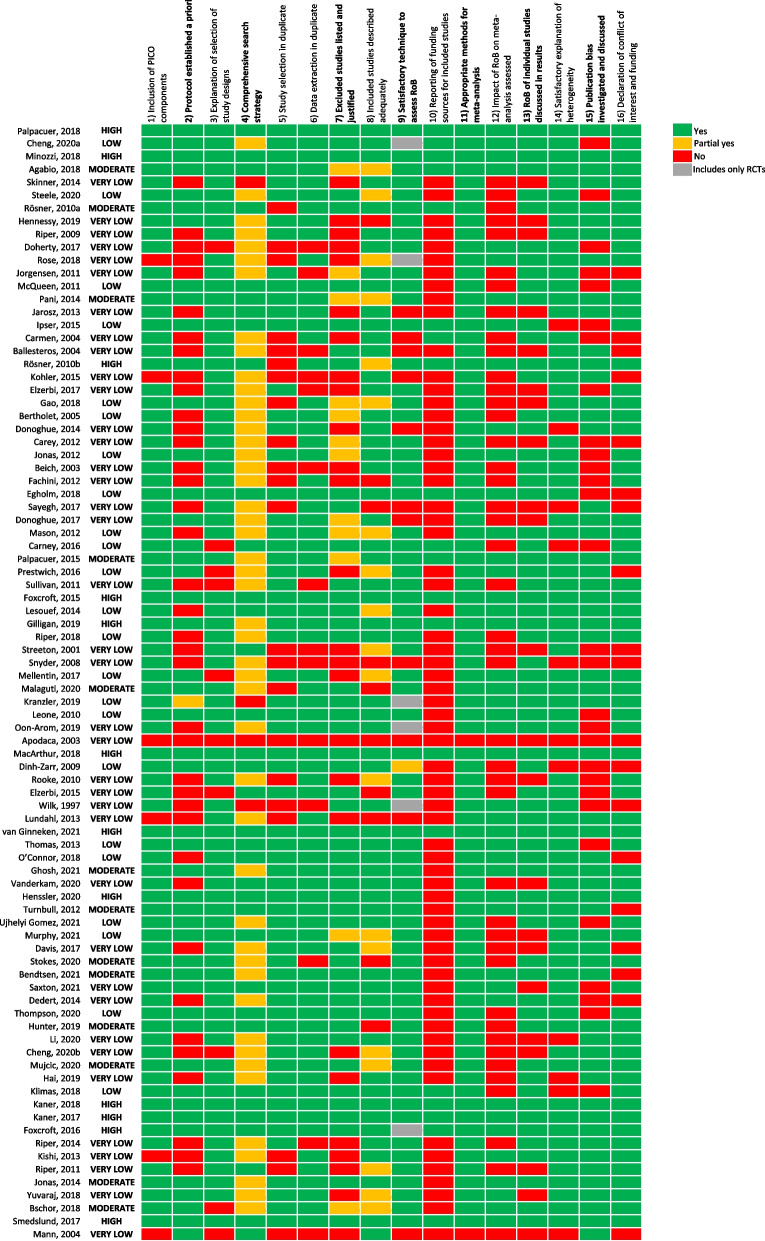
We included systematic reviews with meta-analysis of randomised controlled trials (RCTs) on targeted interventions addressing alcohol use in harmful drinkers or individuals with alcohol use disorder. We only included outcomes related to alcohol consumption, heavy drinking, binge drinking, abstinence, or alcohol-attributable accident, injury, morbidity or mortality. PubMed, Embase, PsycINFO, Cochrane Database of Systematic Reviews, and the International HTA Database were searched from inception to 3 September 2021. Risk of bias of reviews was assessed using the AMSTAR2 tool. After reviewing the abstracts of 9,167 articles, results were summarised narratively and certainty in the body of evidence for each intervention was assessed using GRADE. In total, 86 studies met the inclusion criteria, of which the majority reported outcomes for brief intervention (30 studies) or pharmacological interventions (29 studies). Overall, methodological quality of included studies was low.
For harmful drinking, brief interventions, cognitive behavioural therapy, and motivational interviewing showed a small effect, whereas mentoring in adolescents and children may have a significant long-term effect. For alcohol use disorder, social network approaches and acamprosate showed evidence of a significant and durable effect. More evidence is required on the effectiveness of gamma-hydroxybutyric acid (GHB), nalmefene, and quetiapine, as well as optimal combinations of pharmacological and psychosocial interventions. As an umbrella review, we were unable to identify the extent to which variation between studies stemmed from differences in intervention delivery or variation between country contexts. Further research is required on applicability of findings across settings and best practice for implementation. Funded by the Thai Health Promotion Foundation, grant number 61-00-1812.
本研究旨在确定针对有害饮酒的预防和治疗的目标干预措施。使用伞式综述方法总结广泛干预措施的有效性,以确定应考虑将哪些干预措施纳入中低收入国家的全民健康覆盖计划中。
我们纳入了针对有害饮酒者或有酒精使用障碍者的酒精使用问题的目标干预措施的系统评价,这些评价包含随机对照试验(RCT)的荟萃分析。我们仅纳入与饮酒量、豪饮、 binge drinking、戒酒或与酒精相关的事故、伤害、发病率或死亡率相关的结局。从创建到 2021 年 9 月 3 日,我们在 PubMed、Embase、PsycINFO、Cochrane 系统评价数据库和国际卫生技术评估数据库中进行了检索。使用 AMSTAR2 工具评估了综述的偏倚风险。在对 9167 篇文章的摘要进行审查后,我们以叙述性的方式总结了结果,并使用 GRADE 评估了每种干预措施的证据确定性。共有 86 项研究符合纳入标准,其中大多数报告了简短干预(30 项研究)或药物干预(29 项研究)的结果。总体而言,纳入研究的方法学质量较低。
对于有害饮酒,简短干预、认知行为疗法和动机访谈显示出较小的效果,而青少年和儿童的指导可能具有显著的长期效果。对于酒精使用障碍,社会网络方法和 acamprosate 显示出显著且持久的效果。还需要更多关于 γ-羟基丁酸(GHB)、纳美芬和喹硫平的有效性的证据,以及药物和心理社会干预的最佳组合。作为伞式综述,我们无法确定研究之间的差异在多大程度上源于干预措施的实施差异或国家背景的差异。需要进一步研究在不同环境下的适用性和实施的最佳实践。该研究由泰国健康促进基金会资助,编号为 61-00-1812。