Ferrer Miriam, Mourikis Nicholas, Davidson Emma E, Kleeman Sam O, Zaccaria Marta, Habel Jill, Rubino Rachel, Flint Thomas R, Connell Claire M, Lukey Michael J, White Eileen P, Coll Anthony P, Venkitaraman Ashok R, Janowitz Tobias
Cold Spring Harbor Laboratory, Cold Spring Harbor, NY 11724, USA.
MRC Cancer Unit, University of Cambridge, Hutchison Research Centre, Cambridge Biomedical Campus, Cambridge CB2 0XZ, UK.
bioRxiv. 2023 Feb 18:2023.02.17.528937. doi: 10.1101/2023.02.17.528937.
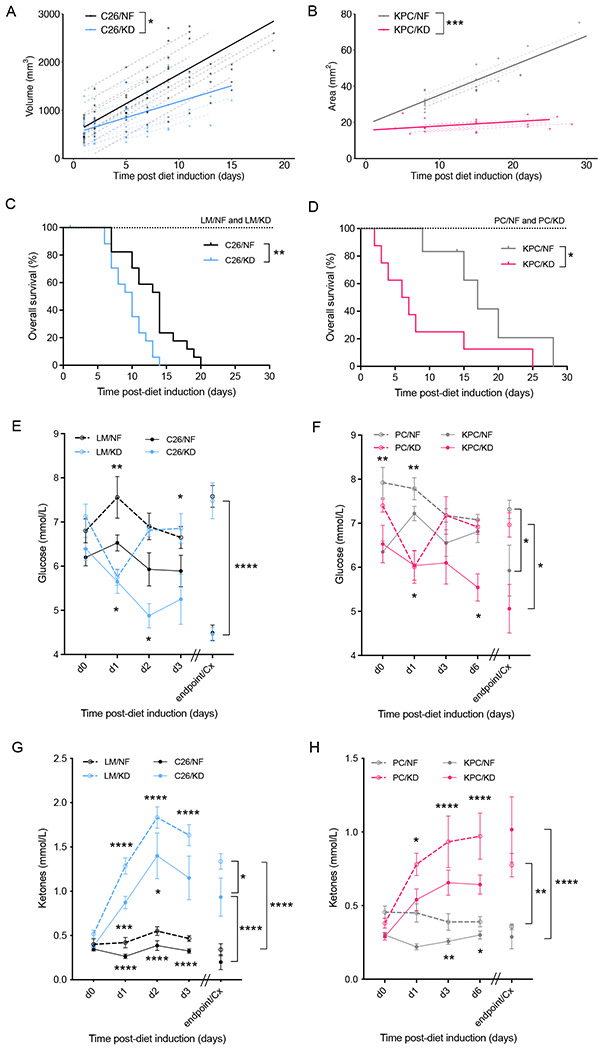
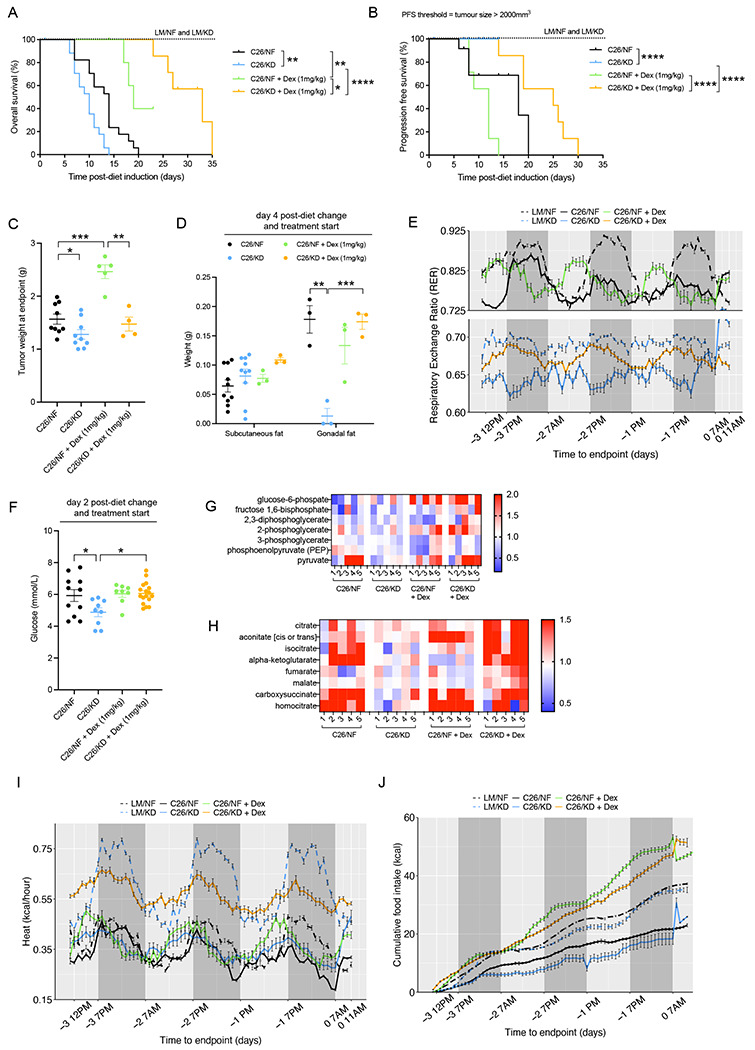
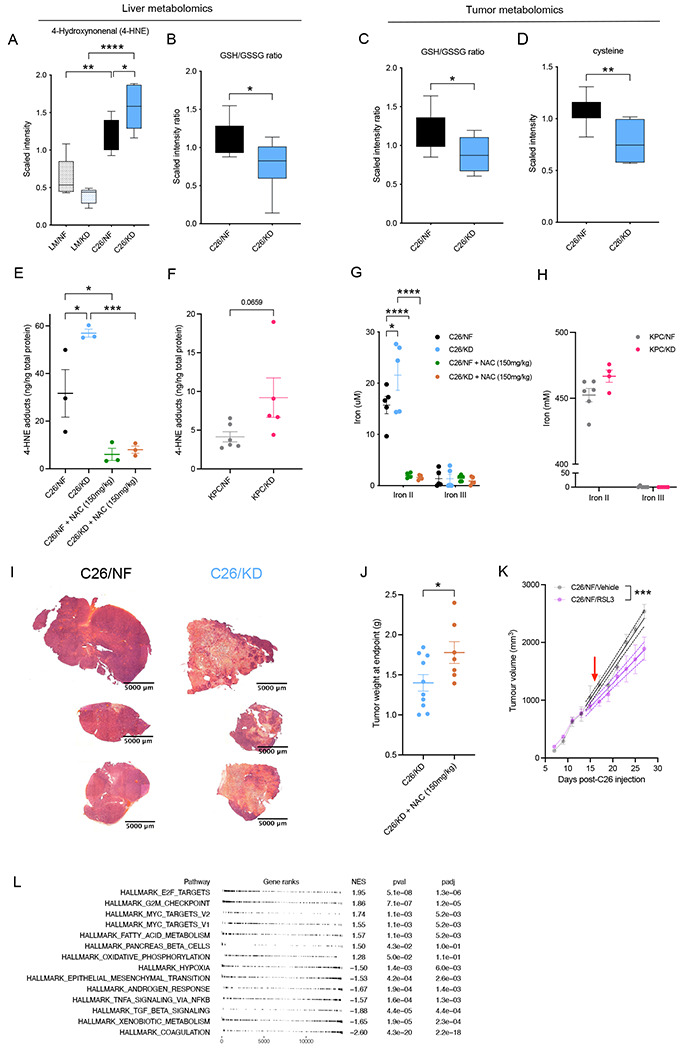
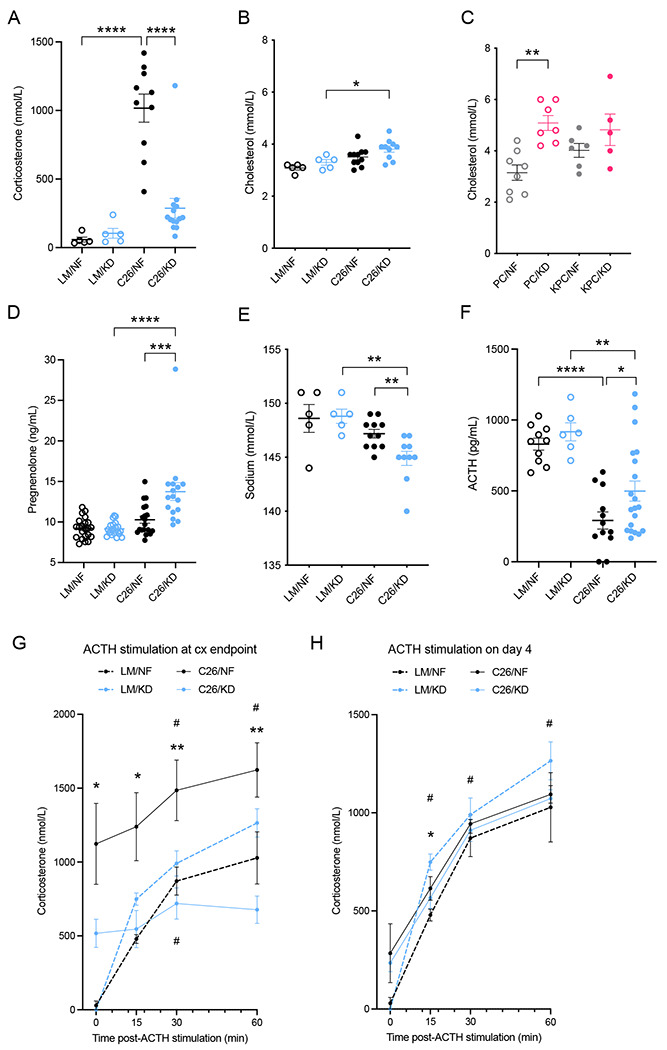
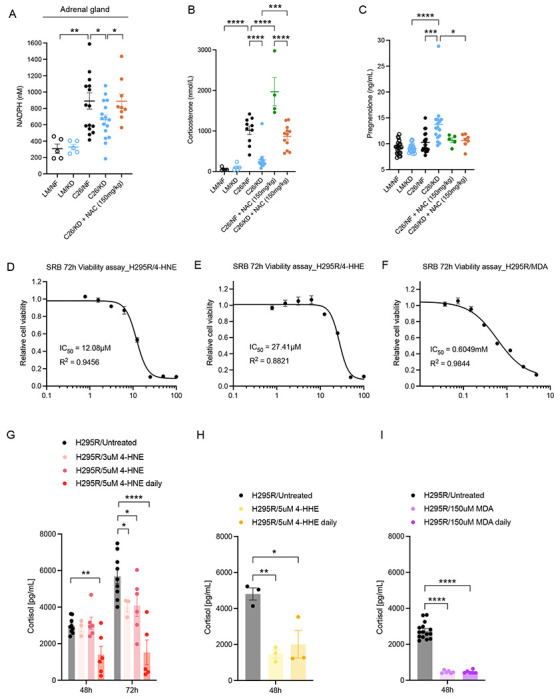
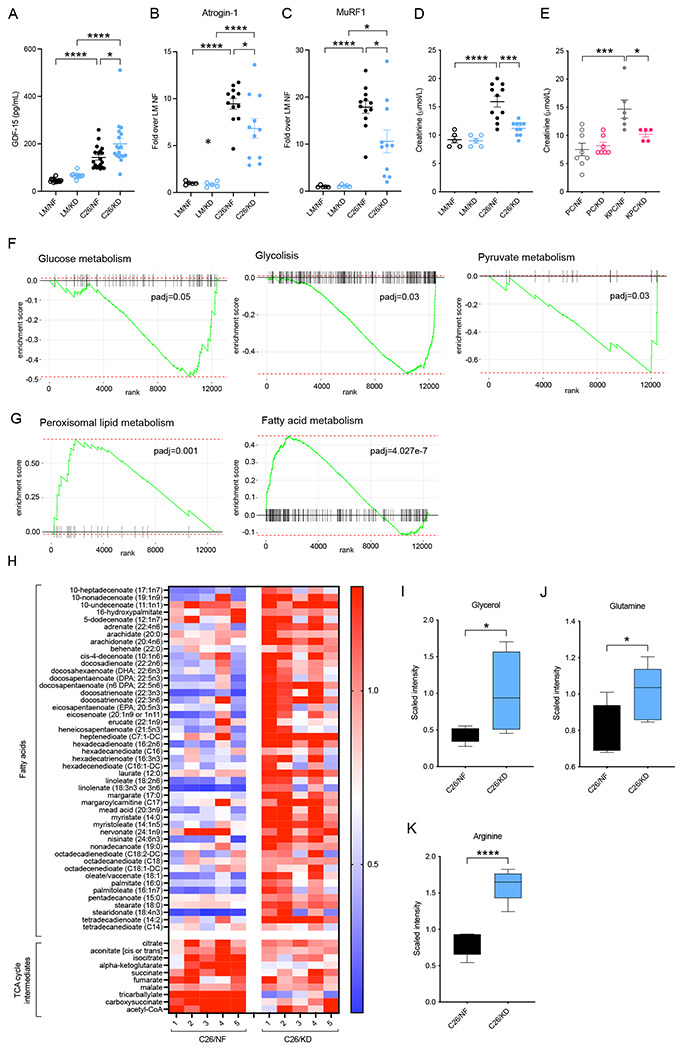
The dependency of cancer cells on glucose can be targeted with high-fat low-carbohydrate ketogenic diet (KD). However, hepatic ketogenesis is suppressed in IL-6 producing cancers, which prevents the utilization of this nutrient source as energy for the organism. In two IL-6 associated murine models of cancer cachexia we describe delayed tumor growth but accelerated onset of cancer cachexia and shortened survival when mice are fed KD. Mechanistically, we find this uncoupling is a consequence of the biochemical interaction of two simultaneously occurring NADPH-dependent pathways. Within the tumor, increased production of lipid peroxidation products (LPPs) and, consequently, saturation of the glutathione (GSH) system leads to ferroptotic death of cancer cells. Systemically, redox imbalance and NADPH depletion impairs the biosynthesis of corticosterone, the main regulator of metabolic stress, in the adrenal glands. Administration of dexamethasone, a potent glucocorticoid, improves food intake, normalizes glucose homeostasis and utilization of nutritional substrates, delays onset of cancer cachexia and extends survival of tumor-bearing mice fed KD, while preserving reduced tumor growth. Our study highlights that the outcome of systemic interventions cannot necessarily be extrapolated from the effect on the tumor alone, but that they have to be investigated for anti-cancer and host effects. These findings may be relevant to clinical research efforts that investigate nutritional interventions such as KD in patients with cancer.
癌细胞对葡萄糖的依赖性可以通过高脂肪低碳水化合物的生酮饮食(KD)来靶向作用。然而,在产生白细胞介素-6(IL-6)的癌症中,肝脏生酮作用受到抑制,这使得该营养源无法作为机体的能量被利用。在两种与IL-6相关的癌症恶病质小鼠模型中,我们发现当给小鼠喂食KD时,肿瘤生长延迟,但癌症恶病质的发病加速且存活期缩短。从机制上讲,我们发现这种解偶联是两条同时发生的NADPH依赖性途径生化相互作用的结果。在肿瘤内,脂质过氧化产物(LPPs)产量增加,进而导致谷胱甘肽(GSH)系统饱和,从而导致癌细胞发生铁死亡。在全身水平,氧化还原失衡和NADPH消耗会损害肾上腺中代谢应激的主要调节因子皮质酮的生物合成。给予强效糖皮质激素地塞米松可改善食物摄入,使葡萄糖稳态和营养底物利用正常化,延迟癌症恶病质的发病并延长喂食KD的荷瘤小鼠的存活期,同时维持肿瘤生长的减缓。我们的研究强调,全身干预的结果不一定能仅从对肿瘤的影响推断得出,而必须对其抗癌和对宿主的影响进行研究。这些发现可能与研究癌症患者营养干预(如KD)的临床研究工作相关。