Amare Azmeraw, Thalamuthu Anbupalam, Schubert Klaus Oliver, Fullerton Janice, Ahmed Muktar, Hartmann Simon, Papiol Sergi, Heilbronner Urs, Degenhardt Franziska, Tekola-Ayele Fasil, Hou Liping, Hsu Yi-Hsiang, Shekhtman Tatyana, Adli Mazda, Akula Nirmala, Akiyama Kazufumi, Ardau Raffaella, Arias Bárbara, Aubry Jean-Michel, Backlund Lena, Bhattacharjee Abesh Kumar, Bellivier Frank, Benabarre Antoni, Bengesser Susanne, Biernacka Joanna, Birner Armin, Marie-Claire Cynthia, Cervantes Pablo, Chen Hsi-Chung, Chillotti Caterina, Cichon Sven, Cruceanu Cristiana, Czerski Piotr, Dalkner Nina, Del Zompo Maria, DePaulo J Raymond, Etain Bruno, Jamain Stéphane, Falkai Peter, Forstner Andreas J, Frisén Louise, Frye Mark, Gard Sébastien, Garnham Julie, Goes Fernando, Grigoroiu-Serbanescu Maria, Fallgatter Andreas, Stegmaier Sophia, Ethofer Thomas, Biere Silvia, Petrova Kristiyana, Schuster Ceylan, Adorjan Kristina, Budde Monika, Heilbronner Maria, Kalman Janos, Oraki Kohshour Mojtaba, Reich-Erkelenz Daniela, Schaupp Sabrina, Schulte Eva, Senner Fanny, Vogl Thomas, Anghelescu Ion-George, Arolt Volker, Dannlowski Udo, Dietrich Detlef E, Figge Christian, Jäger Markus, Lang Fabian, Juckel Georg, Spitzer Carsten, Reimer Jens, Schmauß Max, Schmitt Andrea, Konrad Carsten, von Hagen Martin, Wiltfang Jens, Zimmermann Jörg, Andlauer Till, Fischer Andre, Bermpohl Felix, Kraft Vivien, Matura Silke, Gryaznova Anna, Falkenberg Irina, Yildiz Cüneyt, Kircher Tilo, Schmidt Julia, Koch Marius, Gade Katrin, Trost Sarah, Haußleiter Ida, Lambert Martin, Rohenkohl Anja C, Kraft Vivien, Grof Paul, Hashimoto Ryota, Hauser Joanna, Herms Stefan, Hoffmann Per, Jiménez Esther, Kahn Jean-Pierre, Kassem Layla, Kuo Po-Hsiu, Kato Tadafumi, Kelsoe John, Kittel-Schneider Sarah, Ferensztajn-Rochowiak Ewa, König Barbara, Kusumi Ichiro, Laje Gonzalo, Landén Mikael, Lavebratt Catharina, Leboyer Marion, Leckband Susan G, Tortorella Alfonso, Manchia Mirko, Martinsson Lina, McCarthy Michael, McElroy Susan L, Colom Francesc, Mitjans Marina, Mondimore Francis, Monteleone Palmiero, Nievergelt Caroline, Nöthen Markus, Novak Tomas, O'Donovan Claire, Ozaki Norio, Pfennig Andrea, Pisanu Claudia, Potash James, Reif Andreas, Reininghaus Eva, Rouleau Guy, Rybakowski Janusz K, Schalling Martin, Schofield Peter, Schweizer Barbara W, Severino Giovanni, Shilling Paul D, Shimoda Kazutaka, Simhandl Christian, Slaney Claire, Squassina Alessio, Stamm Thomas, Stopkova Pavla, Maj Mario, Turecki Gustavo, Vieta Eduard, Veeh Julia, Witt Stephanie, Wright Adam, Zandi Peter, Mitchell Philip, Bauer Michael, Alda Martin, Rietschel Marcella, McMahon Francis, Schulze Thomas G, Millischer Vincent, Clark Scott, Baune Bernhard
University of Adelaide, AUSTRALIA.
University of New South Wales.
Res Sq. 2023 Feb 14:rs.3.rs-2580252. doi: 10.21203/rs.3.rs-2580252/v1.
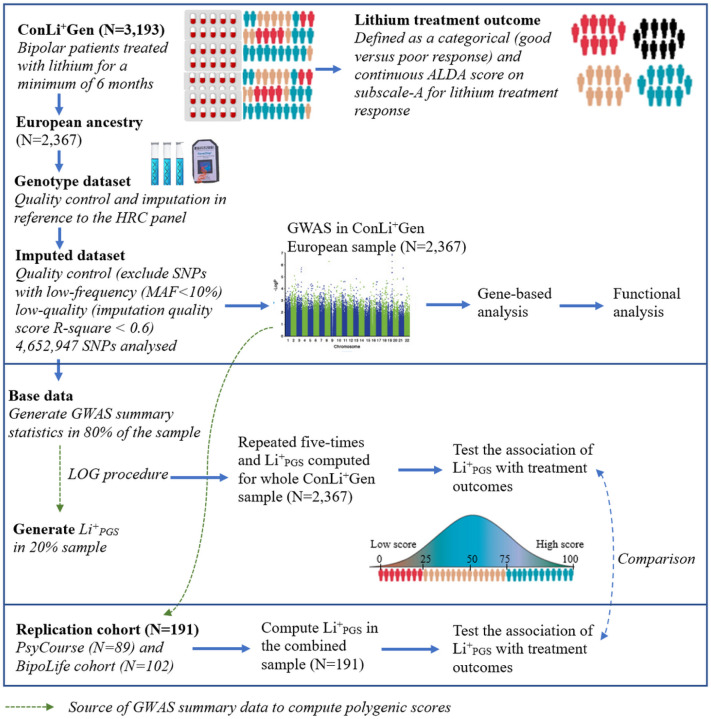
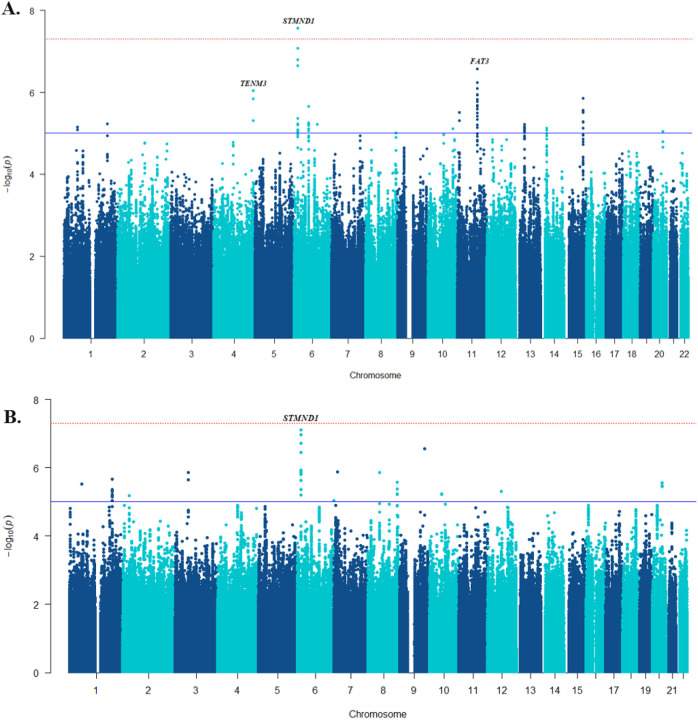
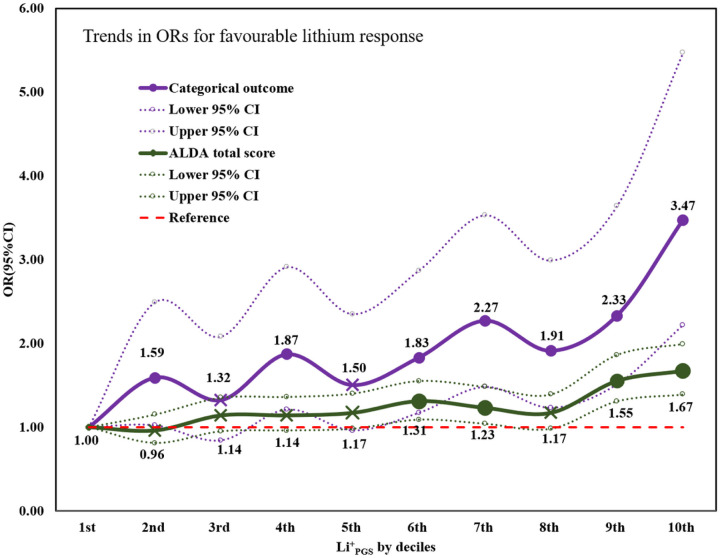
Lithium is regarded as the first-line treatment for bipolar disorder (BD), a severe and disabling mental disorder that affects about 1% of the population worldwide. Nevertheless, lithium is not consistently effective, with only 30% of patients showing a favorable response to treatment. To provide personalized treatment options for bipolar patients, it is essential to identify prediction biomarkers such as polygenic scores. In this study, we developed a polygenic score for lithium treatment response (Li+PGS) in patients with BD. To gain further insights into lithium's possible molecular mechanism of action, we performed a genome-wide gene-based analysis. Using polygenic score modeling, via methods incorporating Bayesian regression and continuous shrinkage priors, Li+PGS was developed in the International Consortium of Lithium Genetics cohort (ConLi+Gen: N=2,367) and replicated in the combined PsyCourse (N=89) and BipoLife (N=102) studies. The associations of Li+PGS and lithium treatment response - defined in a continuous ALDA scale and a categorical outcome (good response vs. poor response) were tested using regression models, each adjusted for the covariates: age, sex, and the first four genetic principal components. Statistical significance was determined at P<����������������������������������������������������������������������������������������������������������������������������������������������������������������������������������������������������������������������������������������������������������������������������������������������������������������������.
锂被视为双相情感障碍(BD)的一线治疗药物,双相情感障碍是一种严重且致残的精神疾病,全球约1%的人口受其影响。然而,锂并非始终有效,只有30%的患者对治疗有良好反应。为了给双相情感障碍患者提供个性化的治疗方案,识别诸如多基因分数等预测生物标志物至关重要。在本研究中,我们为双相情感障碍患者开发了一种锂治疗反应的多基因分数(Li+PGS)。为了进一步深入了解锂可能的分子作用机制,我们进行了全基因组基因分析。通过纳入贝叶斯回归和连续收缩先验的方法,利用多基因分数建模,在国际锂遗传学联盟队列(ConLi+Gen:N = 2367)中开发了Li+PGS,并在PsyCourse(N = 89)和BipoLife(N = 102)联合研究中进行了验证。使用回归模型测试Li+PGS与锂治疗反应之间的关联——以连续的ALDA量表和分类结果(良好反应与不良反应)定义,每个模型都针对协变量进行了调整:年龄、性别和前四个遗传主成分。在P<����������������������������������������������������������������������������������������������������������������������������������������������������������������������������������������������������������������������������������������������������������������������������������������������������������������������时确定统计学显著性。