Discipline of Psychiatry, School of Medicine, University of Adelaide, Adelaide, SA, Australia.
Northern Adelaide Local Health Network, Mental Health Services, Adelaide, SA, Australia.
Transl Psychiatry. 2021 Nov 29;11(1):606. doi: 10.1038/s41398-021-01702-2.
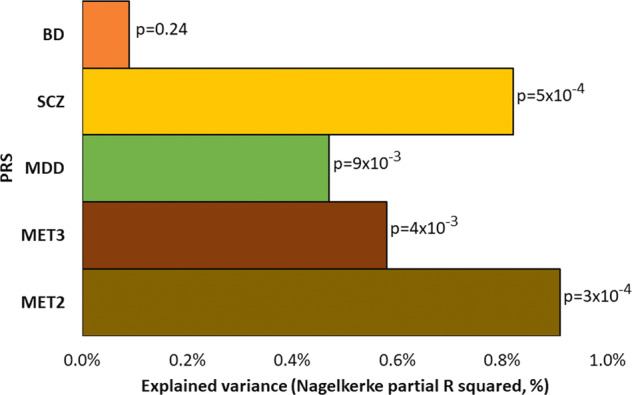
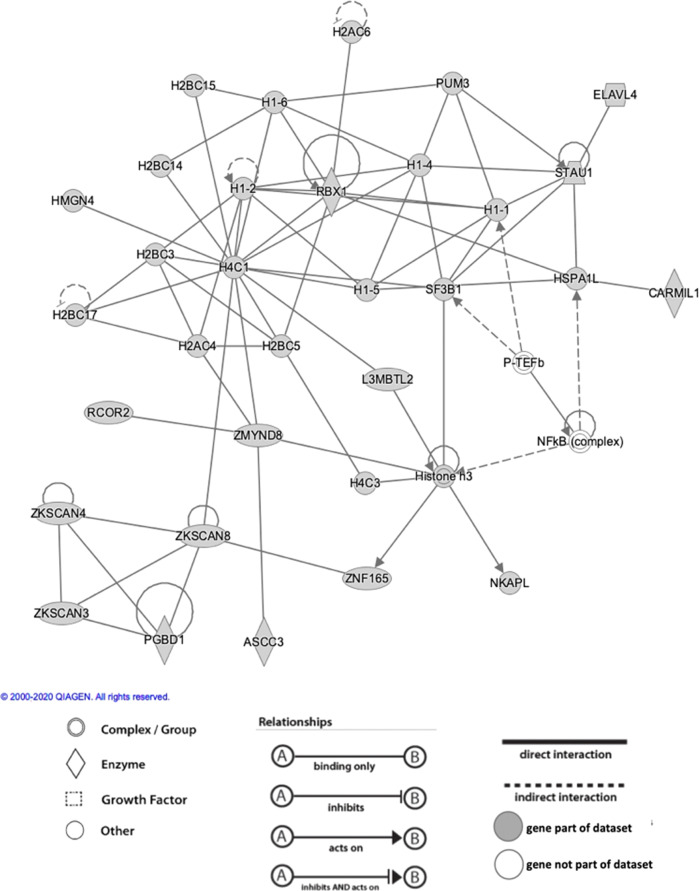
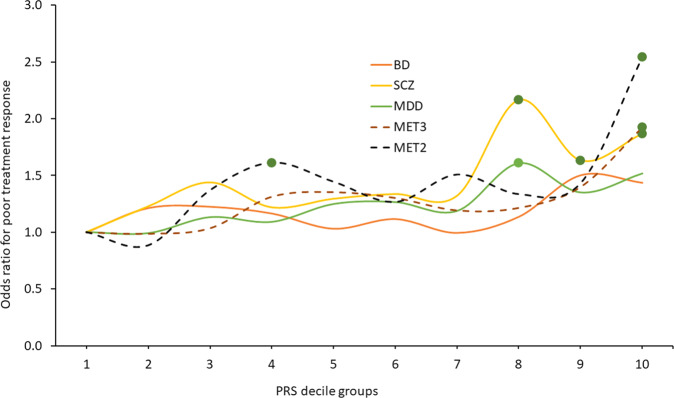
Lithium is the gold standard therapy for Bipolar Disorder (BD) but its effectiveness differs widely between individuals. The molecular mechanisms underlying treatment response heterogeneity are not well understood, and personalized treatment in BD remains elusive. Genetic analyses of the lithium treatment response phenotype may generate novel molecular insights into lithium's therapeutic mechanisms and lead to testable hypotheses to improve BD management and outcomes. We used fixed effect meta-analysis techniques to develop meta-analytic polygenic risk scores (MET-PRS) from combinations of highly correlated psychiatric traits, namely schizophrenia (SCZ), major depression (MD) and bipolar disorder (BD). We compared the effects of cross-disorder MET-PRS and single genetic trait PRS on lithium response. For the PRS analyses, we included clinical data on lithium treatment response and genetic information for n = 2283 BD cases from the International Consortium on Lithium Genetics (ConLiGen; www.ConLiGen.org ). Higher SCZ and MD PRSs were associated with poorer lithium treatment response whereas BD-PRS had no association with treatment outcome. The combined MET2-PRS comprising of SCZ and MD variants (MET2-PRS) and a model using SCZ and MD-PRS sequentially improved response prediction, compared to single-disorder PRS or to a combined score using all three traits (MET3-PRS). Patients in the highest decile for MET2-PRS loading had 2.5 times higher odds of being classified as poor responders than patients with the lowest decile MET2-PRS scores. An exploratory functional pathway analysis of top MET2-PRS variants was conducted. Findings may inform the development of future testing strategies for personalized lithium prescribing in BD.
锂是双相情感障碍 (BD) 的金标准治疗方法,但个体之间的疗效差异很大。治疗反应异质性的分子机制尚不清楚,BD 的个体化治疗仍然难以实现。对锂治疗反应表型的遗传分析可能会为锂的治疗机制提供新的分子见解,并产生可测试的假设,以改善 BD 的管理和结果。我们使用固定效应荟萃分析技术,从高度相关的精神疾病特征(即精神分裂症 (SCZ)、重度抑郁症 (MD) 和双相情感障碍 (BD))的组合中开发了荟萃分析多基因风险评分 (MET-PRS)。我们比较了跨疾病 MET-PRS 和单遗传特征 PRS 对锂反应的影响。对于 PRS 分析,我们包括了来自国际锂遗传学联合会 (ConLiGen; www.ConLiGen.org) 的 n = 2283 例 BD 病例的锂治疗反应临床数据和遗传信息。较高的 SCZ 和 MD PRS 与锂治疗反应较差相关,而 BD-PRS 与治疗结果无关。由 SCZ 和 MD 变体组成的组合 MET2-PRS (MET2-PRS) 以及使用 SCZ 和 MD-PRS 依次构建的模型,与单疾病 PRS 或使用所有三种特征的组合评分 (MET3-PRS) 相比,改善了反应预测。MET2-PRS 负荷最高的患者被归类为不良反应者的几率是 MET2-PRS 评分最低的患者的 2.5 倍。对顶级 MET2-PRS 变体进行了探索性功能途径分析。研究结果可能为 BD 中个性化锂处方的未来测试策略提供信息。