Wang Lei, Gu Wenchao, Kalady Matthew, Xin Wei, Zhou Lan
Case Western Reserve University.
University of Tsukuba.
Res Sq. 2023 Feb 15:rs.3.rs-2489562. doi: 10.21203/rs.3.rs-2489562/v1.
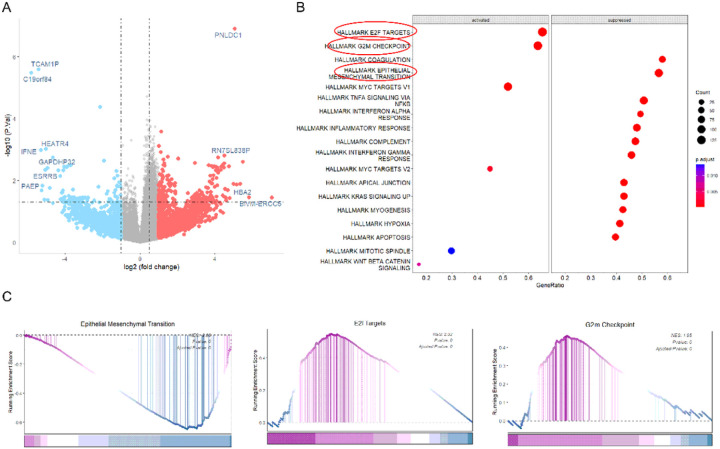
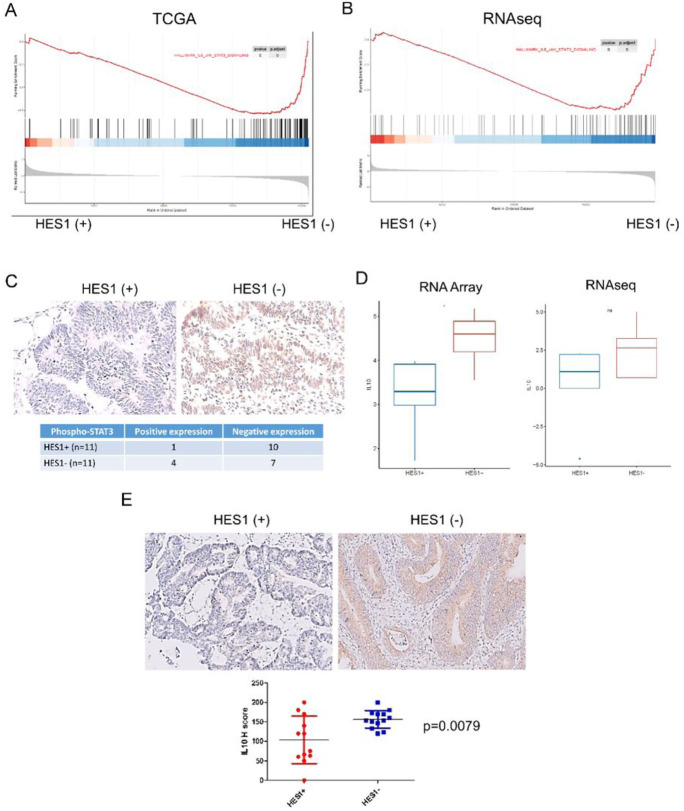
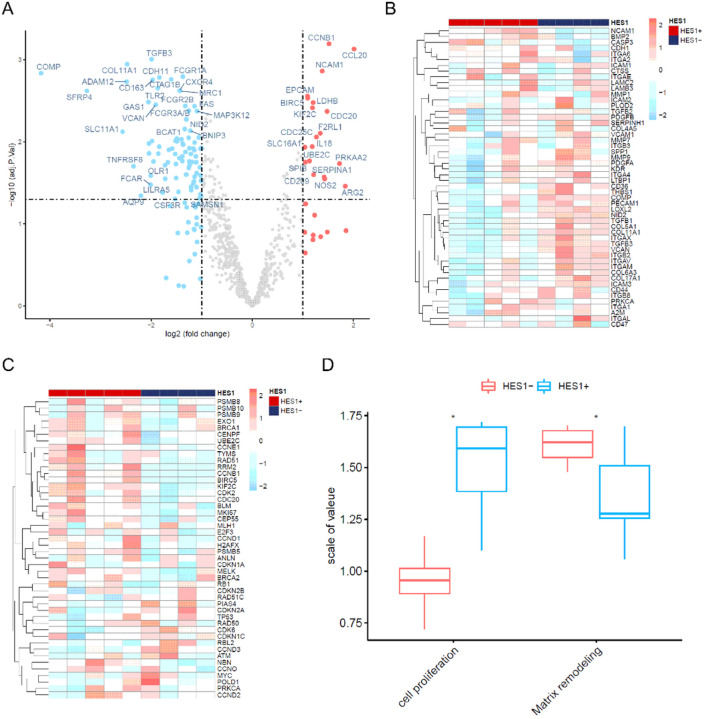
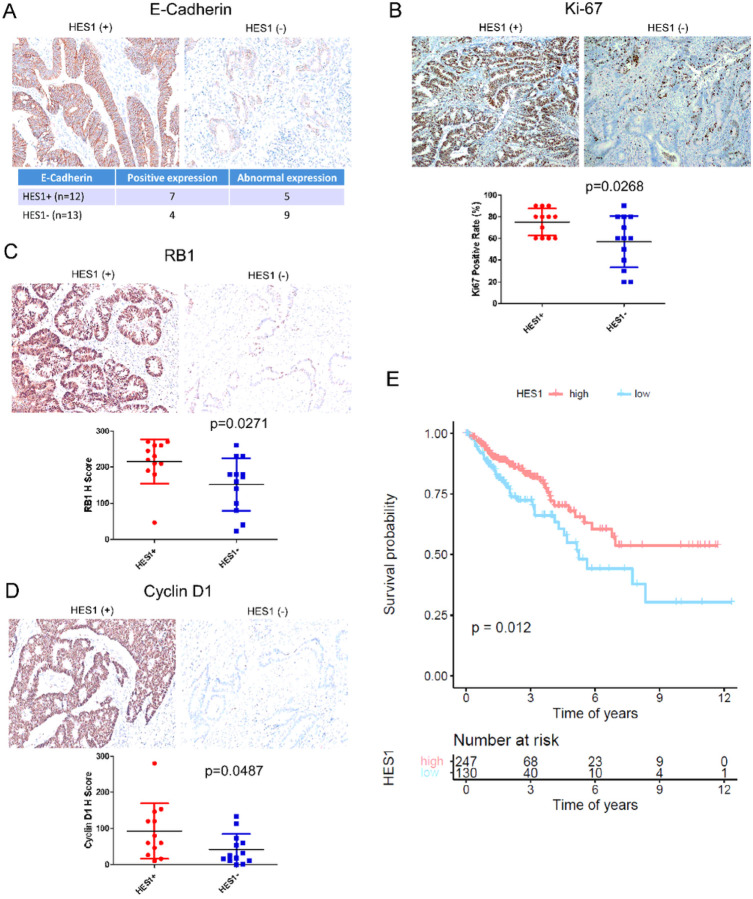
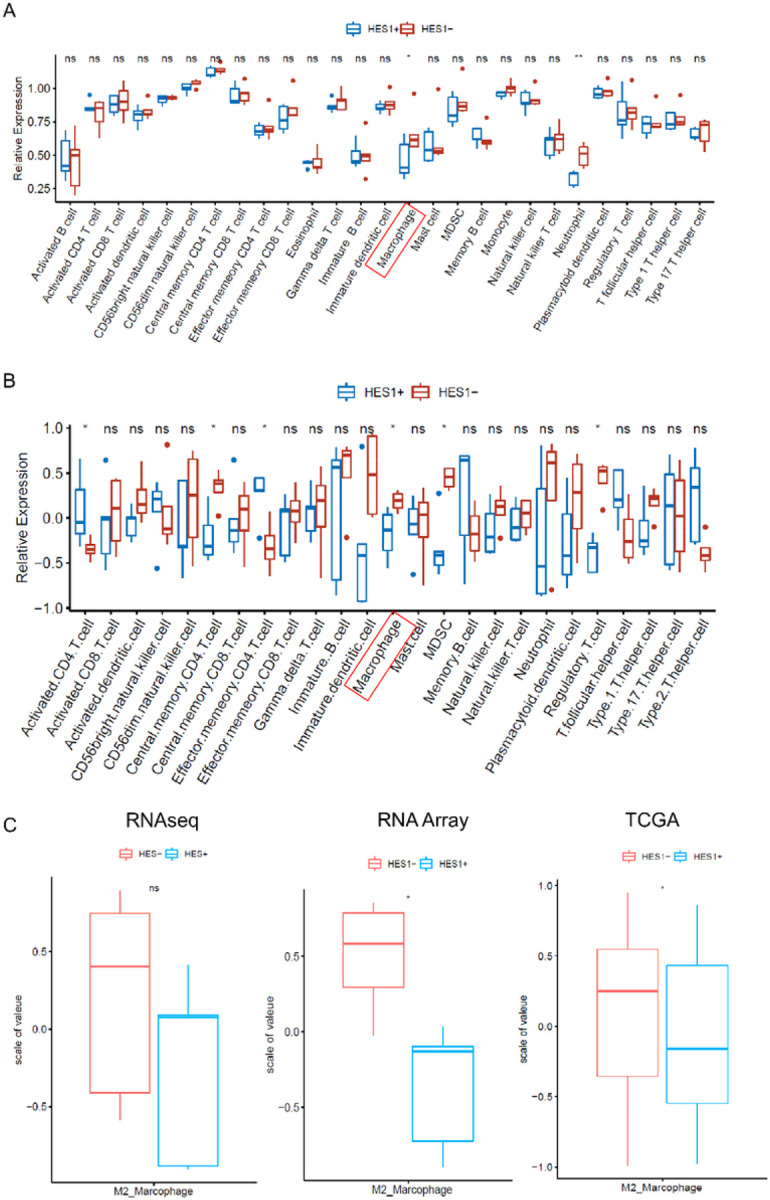
The loss of HES1, a canonical Notch signaling target, may cooperate with KRAS mutations to remodel the extracellular matrix and to suppress the anti-tumor immune response. While HES1 expression is normal in benign hyperplastic polyps and normal colon tissue, HES1 expression is often lost in sessile serrated adenomas/polyps (SSAs/SSPs) and colorectal cancers (CRCs) such as those right-sided CRCs that commonly harbor BRAF or KRAS mutations. To develop a deeper understanding of interaction between KRAS and HES1 in colorectal carcinogenesis, we selected microsatellite stable (MSS) and KRAS mutant or KRAS wild type CRCs that show aberrant expression of HES1 by immunohistochemistry. By comparing the transcriptional landscapes of microsatellite stable (MSS) CRCs with or without nuclear HES1 expression, we investigated differentially expressed genes and activated pathways. We identified pathways and markers in the extracellular matrix and immune microenvironment that are associated with mutations in KRAS. We found that loss of HES1 expression positively correlated with matrix remodeling and epithelial-mesenchymal transition (EMT) but negatively correlated with tumor cell proliferation. Furthermore, loss of HES1 expression in KRAS mutant CRCs correlates with a higher M2 macrophage polarization and activation of IL6 and IL10 immunosuppressive signature. Identifying these HES1-related markers may be useful for prognosis and developing treatment of KRAS-mutant CRCs.
作为典型的Notch信号通路靶点,HES1的缺失可能与KRAS突变协同作用,重塑细胞外基质并抑制抗肿瘤免疫反应。虽然HES1在良性增生性息肉和正常结肠组织中表达正常,但在无蒂锯齿状腺瘤/息肉(SSA/SSP)和结直肠癌(CRC)中,如那些常见携带BRAF或KRAS突变的右侧CRC中,HES1表达常常缺失。为了更深入了解KRAS与HES1在结直肠癌发生过程中的相互作用,我们选择了微卫星稳定(MSS)且通过免疫组化显示HES1表达异常的KRAS突变型或KRAS野生型CRC。通过比较有或无核HES1表达的微卫星稳定(MSS)CRC的转录图谱,我们研究了差异表达基因和激活的通路。我们确定了细胞外基质和免疫微环境中与KRAS突变相关的通路和标志物。我们发现HES1表达缺失与基质重塑和上皮-间质转化(EMT)呈正相关,但与肿瘤细胞增殖呈负相关。此外,KRAS突变型CRC中HES1表达缺失与更高的M2巨噬细胞极化以及IL6和IL10免疫抑制信号的激活相关。识别这些与HES1相关的标志物可能有助于KRAS突变型CRC的预后评估和治疗开发。