UK Dementia Research Institute, Cardiff University, Cardiff, UK.
School of Biosciences, Cardiff University, Cardiff, UK.
Glia. 2023 Jun;71(6):1522-1535. doi: 10.1002/glia.24355. Epub 2023 Feb 24.
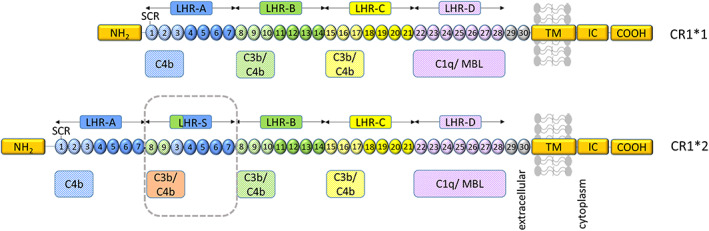
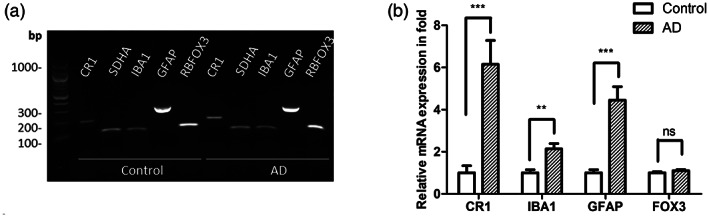
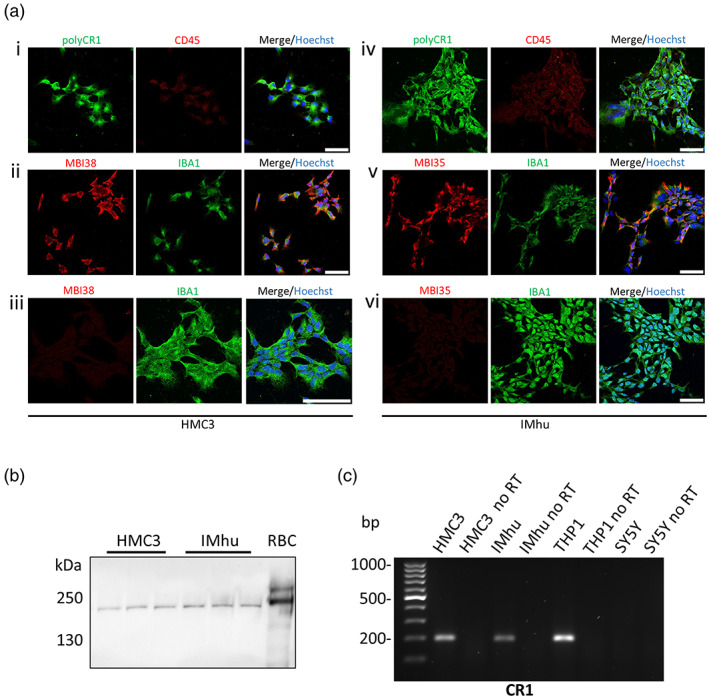
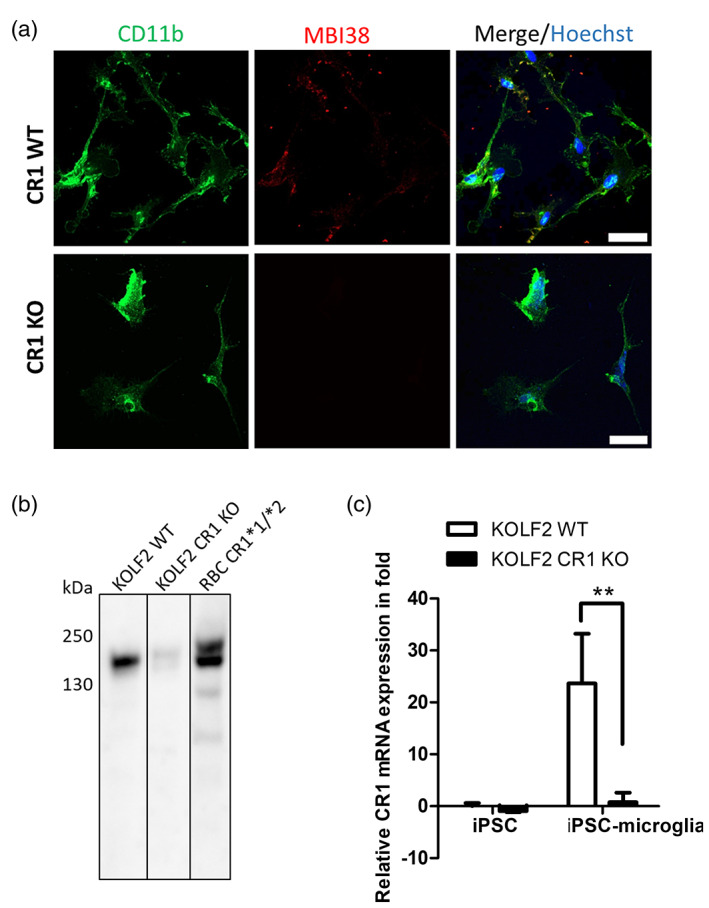
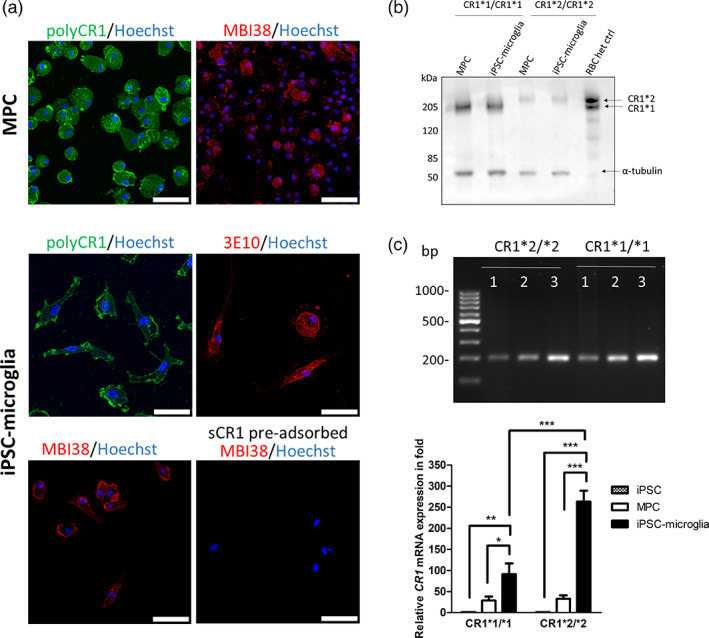
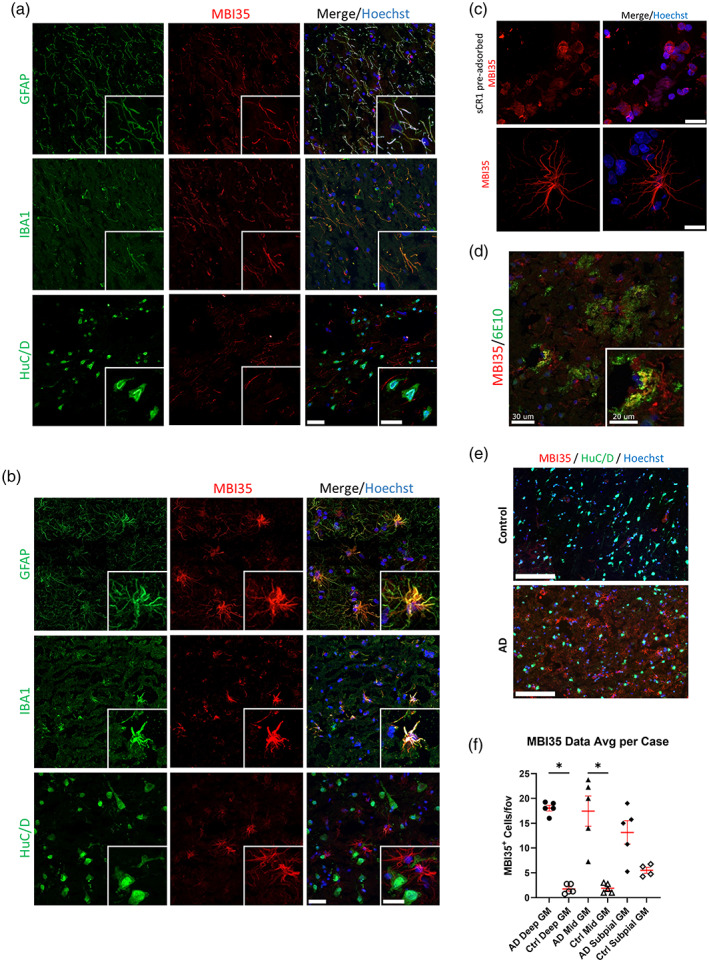
Genome wide association studies (GWAS) have highlighted the importance of the complement cascade in pathogenesis of Alzheimer's disease (AD). Complement receptor 1 (CR1; CD35) is among the top GWAS hits. The long variant of CR1 is associated with increased risk for AD; however, roles of CR1 in brain health and disease are poorly understood. A critical confounder is that brain expression of CR1 is controversial; failure to demonstrate brain expression has provoked the suggestion that peripherally expressed CR1 influences AD risk. We took a multi-pronged approach to establish whether CR1 is expressed in brain. Expression of CR1 at the protein and mRNA level was assessed in human microglial lines, induced pluripotent stem cell (iPSC)-derived microglia from two sources and brain tissue from AD and control donors. CR1 protein was detected in microglial lines and iPSC-derived microglia expressing different CR1 variants when immunostained with a validated panel of CR1-specific antibodies; cell extracts were positive for CR1 protein and mRNA. CR1 protein was detected in control and AD brains, co-localizing with astrocytes and microglia, and expression was significantly increased in AD compared to controls. CR1 mRNA expression was detected in all AD and control brain samples tested; expression was significantly increased in AD. The data unequivocally demonstrate that the CR1 transcript and protein are expressed in human microglia ex vivo and on microglia and astrocytes in situ in the human brain; the findings support the hypothesis that CR1 variants affect AD risk by directly impacting glial functions.
全基因组关联研究(GWAS)强调了补体级联反应在阿尔茨海默病(AD)发病机制中的重要性。补体受体 1(CR1;CD35)是 GWAS 中的重要发现之一。CR1 的长变体与 AD 的风险增加有关;然而,CR1 在大脑健康和疾病中的作用知之甚少。一个关键的混杂因素是大脑中 CR1 的表达存在争议;未能证明大脑中的表达引发了这样的建议,即外周表达的 CR1 影响 AD 的风险。我们采取了多管齐下的方法来确定 CR1 是否在大脑中表达。在人类小胶质细胞系、来自两个来源的诱导多能干细胞(iPSC)衍生的小胶质细胞和 AD 和对照供体的脑组织中评估了 CR1 在蛋白质和 mRNA 水平上的表达。用经过验证的 CR1 特异性抗体进行免疫染色时,在表达不同 CR1 变体的小胶质细胞系和 iPSC 衍生的小胶质细胞中检测到 CR1 蛋白;细胞提取物中存在 CR1 蛋白和 mRNA。在对照和 AD 脑中检测到 CR1 蛋白,与星形胶质细胞和小胶质细胞共定位,并且在 AD 中表达明显高于对照。在所有测试的 AD 和对照脑组织样本中均检测到 CR1 mRNA 表达;AD 中的表达显著增加。这些数据明确表明,CR1 转录本和蛋白在体外的人类小胶质细胞中以及在人类大脑中的小胶质细胞和星形胶质细胞原位表达;研究结果支持了这样的假设,即 CR1 变体通过直接影响胶质细胞功能来影响 AD 的风险。