Thie Conal, Quallen Sean, Ibrahim Ahmed, Xing Tao, Johnson Brian
Department of Mechanical Engineering, University of Idaho, Moscow, ID 83844-0902, USA.
Department of Civil & Environmental Engineering, University of Idaho, Moscow, ID 83844-1022, USA.
Gels. 2023 Jan 19;9(2):86. doi: 10.3390/gels9020086.
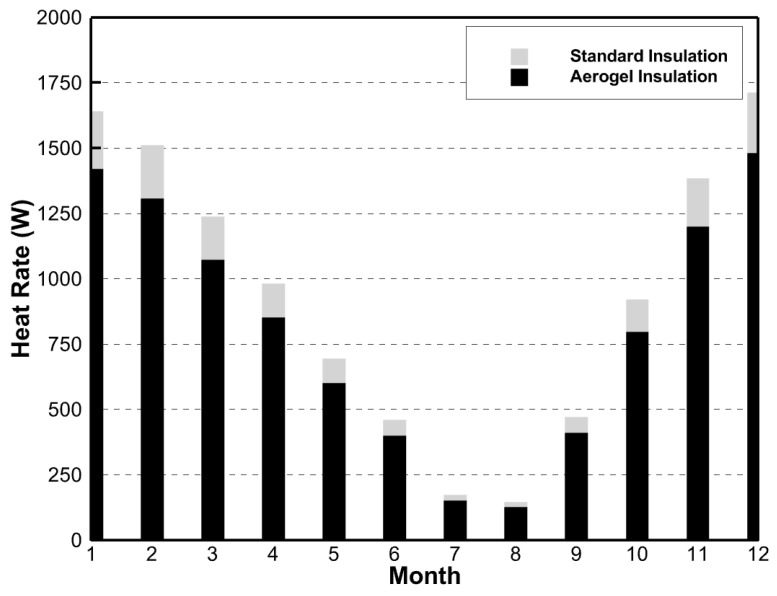
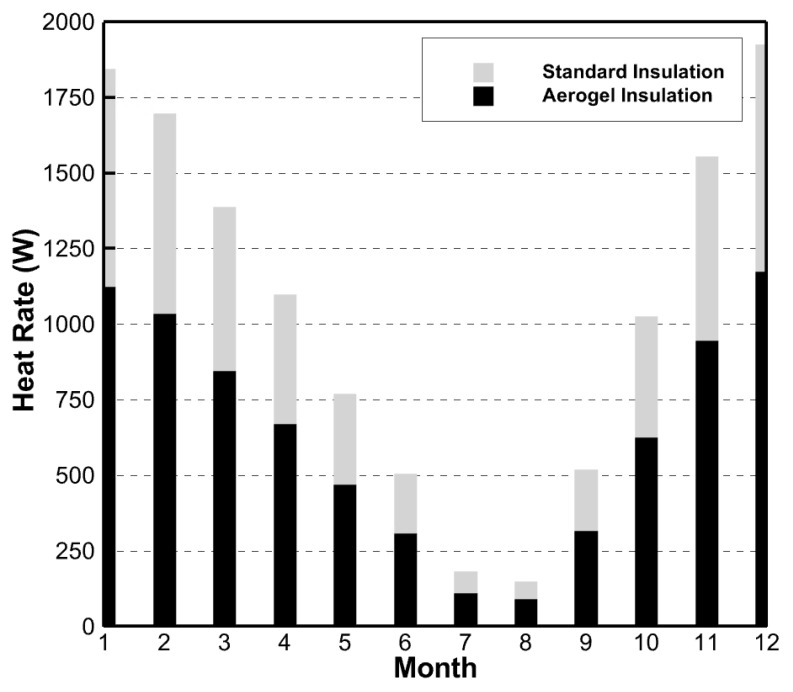
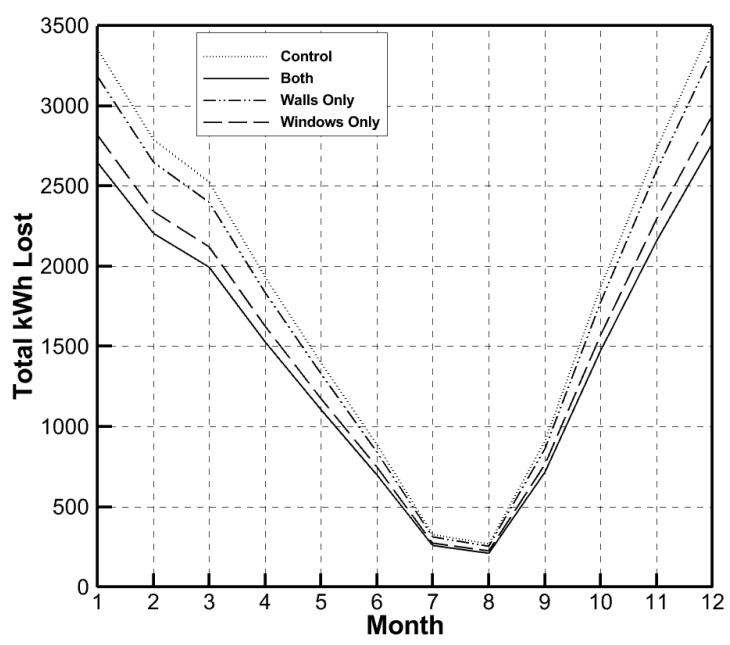
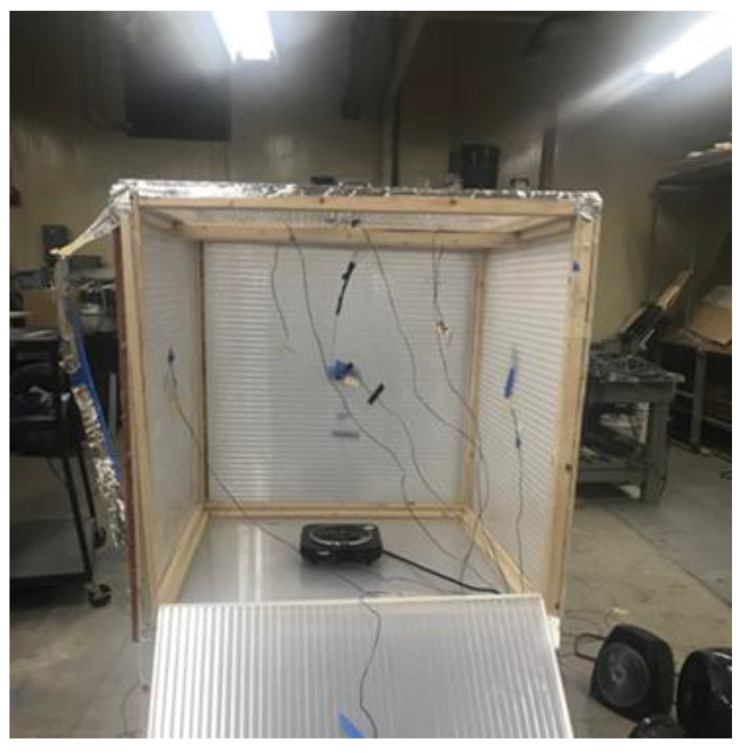
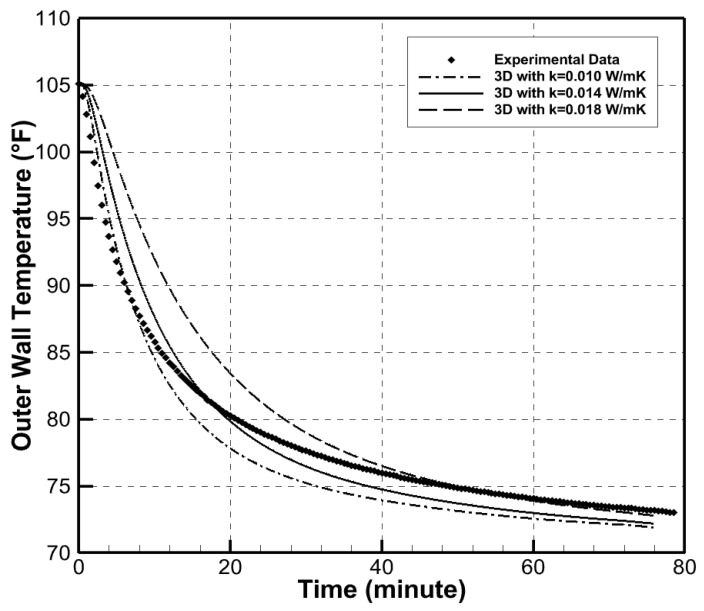
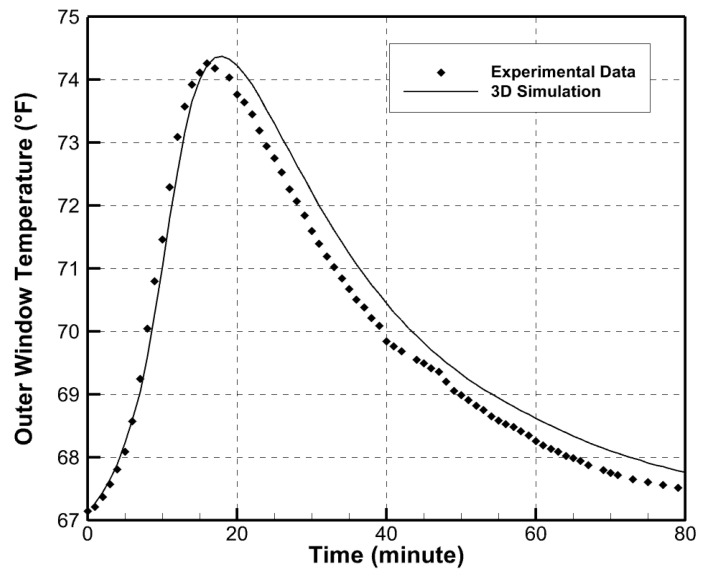
Energy consumption, specifically in the building sector, is expected to rise. One potential way to reduce energy consumption, or to slow this increase, is to reduce the heat loss in residential homes. Silica aerogels have grown in popularity as an insulating material due to their extremely low thermal conductivity. However, the benefits of using silica aerogels as an insulator in residential buildings have not been thoroughly studied. To understand the benefits of using silica aerogels as a thermal insulator in residential homes, experimentally validated simulations were performed. The simulations were performed on a model of a full-scale residential house using the multiphysics software ANSYS FLUENT 2019 R2. The simulations helped predict the actual saving benefits of using aerogels as an insulator. Aerogels have the potential to be used as an insulator in both the walls and windows due to its semitransparency. The results showed that the average kWh savings using one half-inch layer of wall aerogel insulation coupled with window aerogel insulation was 20.9% for the single-family house compared to traditional insulation. On average, the energy lost through the windows was 39.1% lower when using aerogel insulation compared to standard insulating materials. The energy lost through the house walls was 13.3% lower on average when using a thin layer of aerogel insulation. While a thin layer of aerogel insulation provided a benefit when used in the house walls, the potential for savings per quantity used was greater in the windows.
能源消耗,尤其是建筑领域的能源消耗预计将会上升。减少能源消耗或减缓其增长的一种潜在方法是减少住宅的热损失。二氧化硅气凝胶因其极低的热导率而作为一种绝缘材料越来越受欢迎。然而,在住宅建筑中使用二氧化硅气凝胶作为绝缘体的益处尚未得到充分研究。为了了解在住宅中使用二氧化硅气凝胶作为隔热材料的益处,进行了经过实验验证的模拟。这些模拟是在一个全尺寸住宅模型上使用多物理场软件ANSYS FLUENT 2019 R2进行的。这些模拟有助于预测使用气凝胶作为绝缘体的实际节能效益。由于气凝胶的半透明性,它有潜力在墙壁和窗户中用作绝缘体。结果表明,与传统绝缘材料相比,对于独栋房屋,使用半英寸厚的墙壁气凝胶绝缘层加上窗户气凝胶绝缘层,平均每千瓦时节省20.9%。平均而言,与标准绝缘材料相比,使用气凝胶绝缘时通过窗户损失的能量降低了39.1%。当使用薄层气凝胶绝缘时,通过房屋墙壁损失的能量平均降低了13.3%。虽然在房屋墙壁中使用薄层气凝胶绝缘有好处,但在窗户中每使用一定量气凝胶的节能潜力更大。