Shechter Alon, Butcher Steele C, Siegel Robert J, Awesat Jenan, Abitbol Merry, Vaturi Mordehay, Sagie Alex, Kornowski Ran, Shapira Yaron, Yedidya Idit
Department of Cardiology, Rabin Medical Center, Petach Tikva 4941492, Israel.
Faculty of Medicine, Tel Aviv University, Tel Aviv 69978, Israel.
J Cardiovasc Dev Dis. 2023 Jan 28;10(2):49. doi: 10.3390/jcdd10020049.
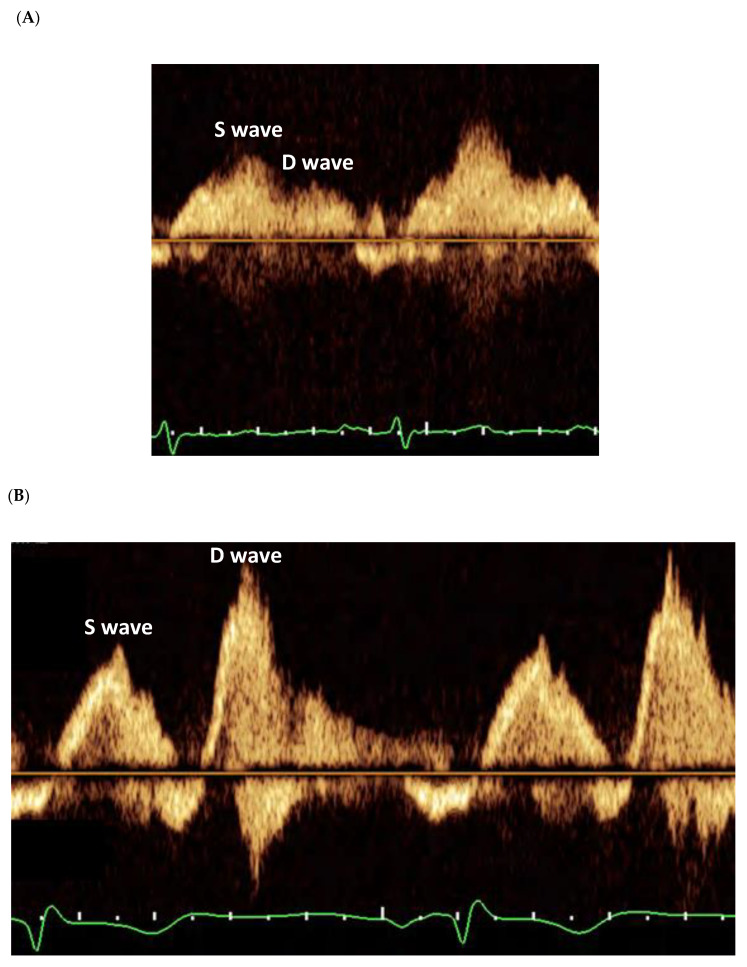
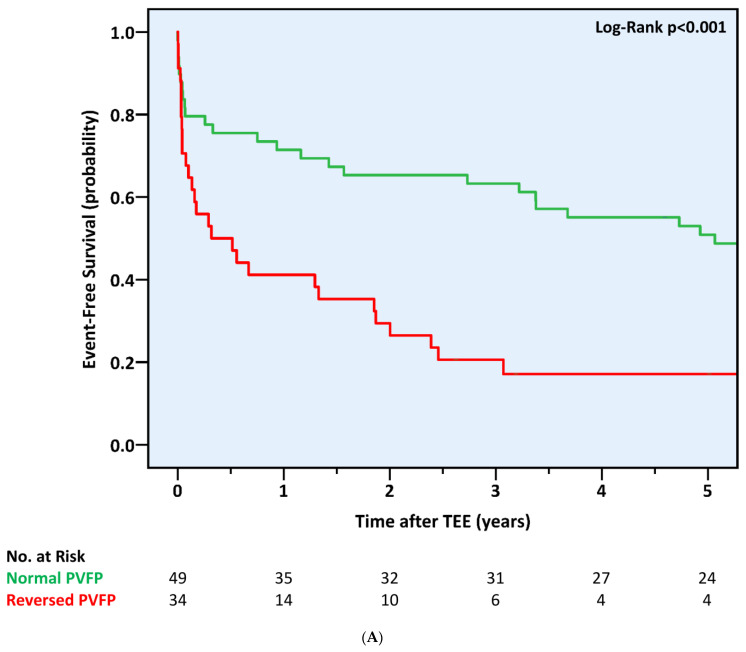
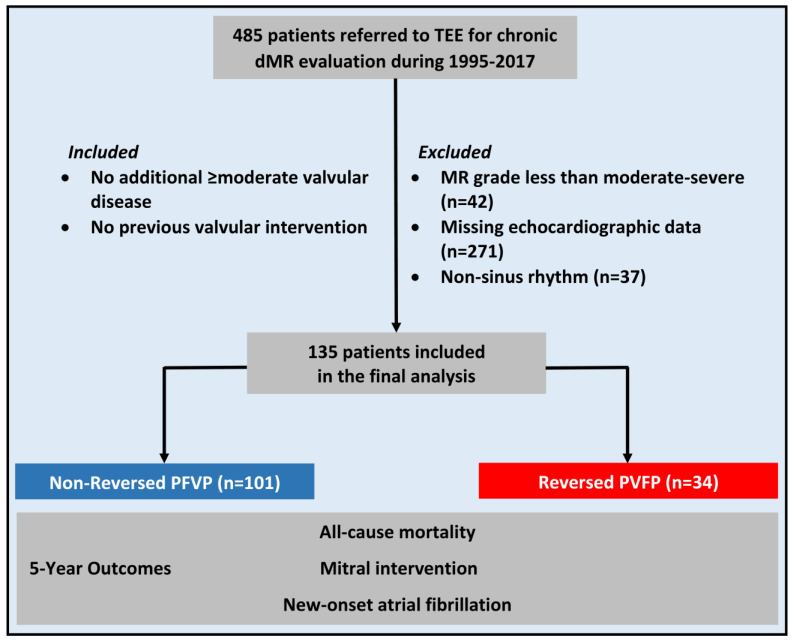
: The prognostic significance of pulmonary venous (PV) flow reversal in degenerative mitral regurgitation (dMR) is not well-established. : We aimed to assess whether reversed PV flow is associated with adverse outcomes in patients with significant dMR. : We retrospectively analyzed consecutive patients referred to a tertiary center for evaluation of dMR of greater than moderate degree, who had normal sinus rhythm, had a left ventricular ejection fraction of above 60%, and did not suffer from any other major valvular disorders. The primary outcome was the combined rate of all-cause mortality, mitral intervention, or new-onset atrial fibrillation (AF) at 5 years following index echocardiogram. Secondary outcomes included individual components of the primary outcome. : Overall, 135 patients (median age 68 (IQR, 58-74) years; 93 (68.9%) males; 89 (65.9%) with severe MR) met the inclusion criteria and were followed for 115.2 (IQR, 60.0-155.0) months. Patients with a reversed PV flow pattern (PVFP) (n = 34) more often presented with severe MR compared to those with a normal (n = 49) and non-reversed PVFP (n = 101) (RR = 2.03 and 1.59, respectively, all < 0.001). At 5 years, they experienced the highest cumulative incidence of the primary outcome (80.2% vs. 59.2% and 67.3%, = 0.008 and 0.018, respectively). Furthermore, a reversed PVFP was independently associated with a higher risk of the primary outcome compared to normal PVFP (HR 2.53, 95% CI 1.21-5.31, = 0.011) and non-reversed PVFP (HR 2.14, 95% CI 1.12-4.10, = 0.022). Conclusion: PV flow reversal is associated with a worse 5-year composite of mortality, mitral intervention, or AF in patients with significant dMR.
在退行性二尖瓣反流(dMR)中,肺静脉(PV)血流逆转的预后意义尚未明确。我们旨在评估PV血流逆转是否与重度dMR患者的不良结局相关。我们回顾性分析了连续转诊至一家三级中心评估中度以上dMR的患者,这些患者窦性心律正常,左心室射血分数高于60%,且未患有任何其他主要瓣膜疾病。主要结局是在索引超声心动图检查后5年时全因死亡率、二尖瓣干预或新发心房颤动(AF)的综合发生率。次要结局包括主要结局的各个组成部分。总体而言,135例患者(中位年龄68岁(四分位间距,58 - 74岁);93例(68.9%)为男性;89例(65.9%)为重度MR)符合纳入标准,并随访了115.2个月(四分位间距,60.0 - 155.0个月)。与PV血流模式正常(n = 49)和未逆转的PV血流模式(n = 101)的患者相比,PV血流逆转模式(PVFP)的患者(n = 34)重度MR更为常见(RR分别为2.03和1.59,均<0.001)。在5年时,他们经历主要结局的累积发生率最高(分别为80.2%、59.2%和67.3%,P分别为0.008和0.018)。此外,与正常PVFP相比,PVFP逆转与主要结局的较高风险独立相关(HR 2.53,95% CI 1.21 - 5.31,P = 0.011),与未逆转的PVFP相比也是如此(HR 2.14,95% CI 1.12 - 4.10,P = 0.022)。结论:在重度dMR患者中,PV血流逆转与5年死亡率、二尖瓣干预或AF的综合情况较差相关。