Herteleer Michiel, Runer Armin, Remppis Magdalena, Brouwers Jonas, Schneider Friedemann, Panagiotopoulou Vasiliki C, Grimm Bernd, Hengg Clemens, Arora Rohit, Nijs Stefaan, Varga Peter
Department of Trauma Surgery, University Hospitals Leuven, 3000 Leuven, Belgium.
University Hospital for Orthopaedics and Traumatology, Medical University Innsbruck, 6020 Innsbruck, Austria.
Bioengineering (Basel). 2023 Jan 18;10(2):128. doi: 10.3390/bioengineering10020128.
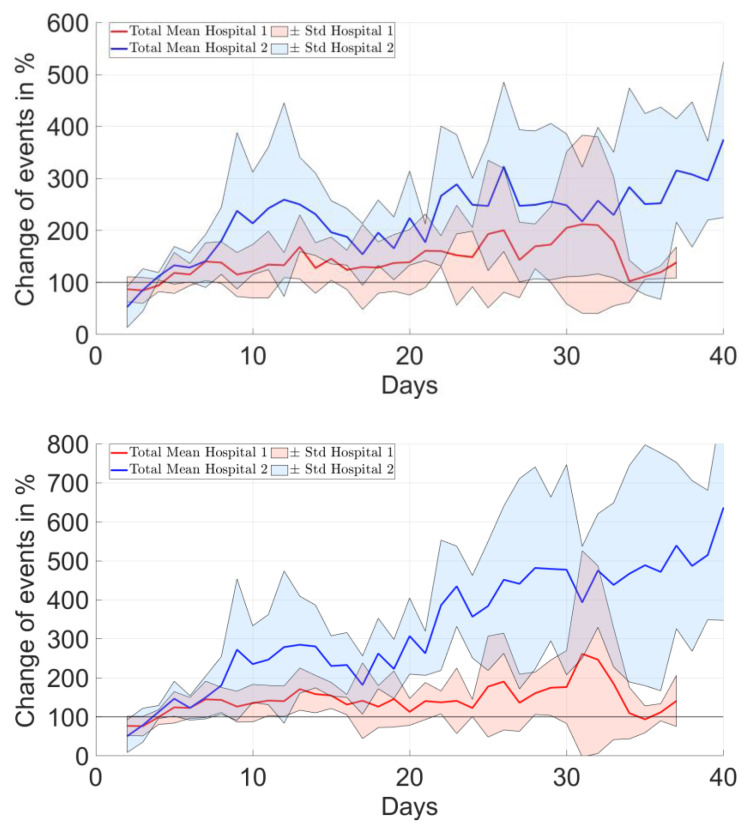
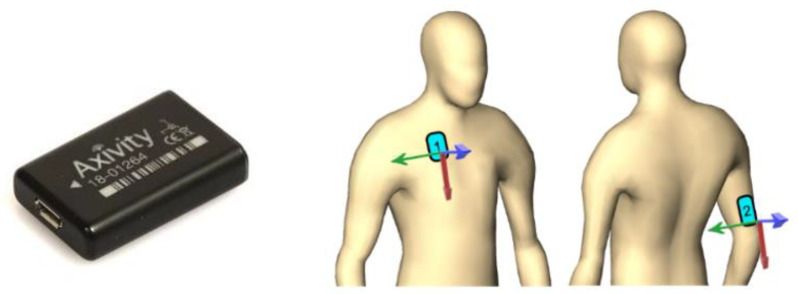
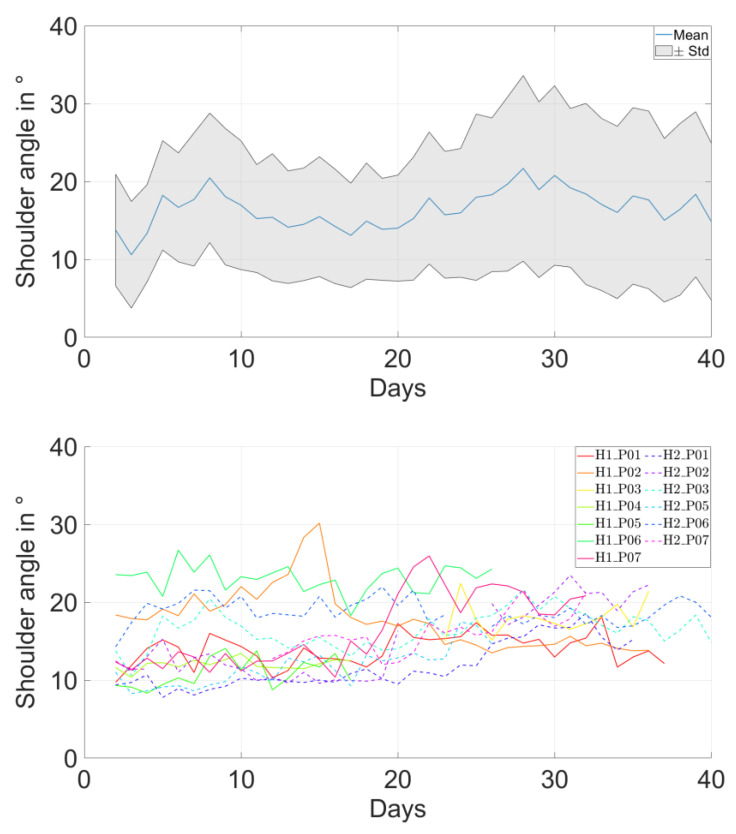
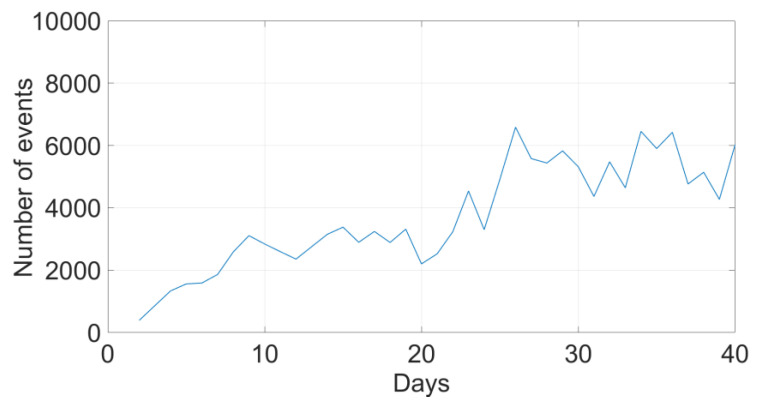
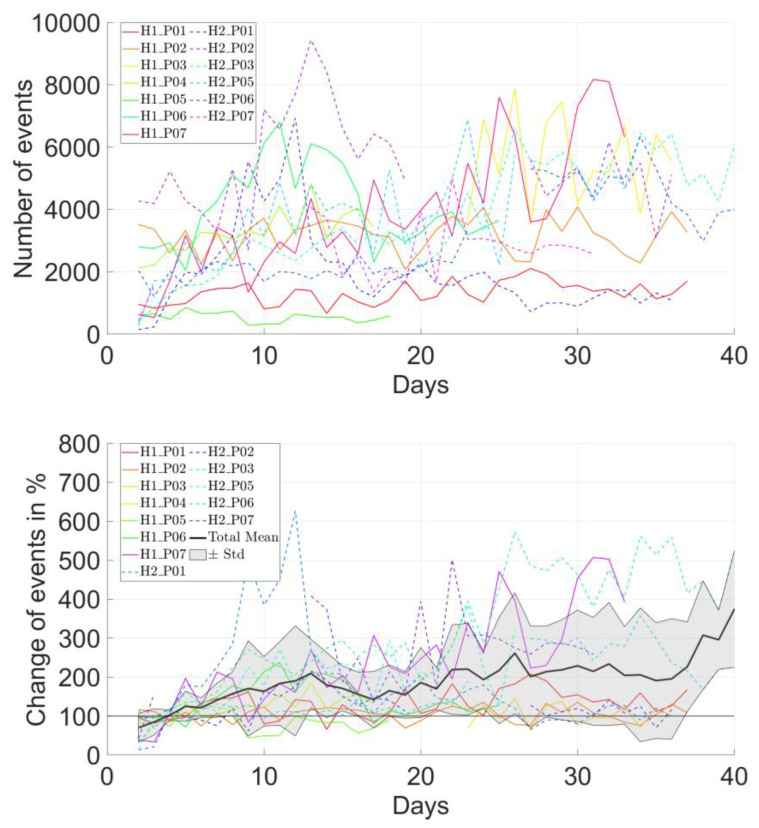
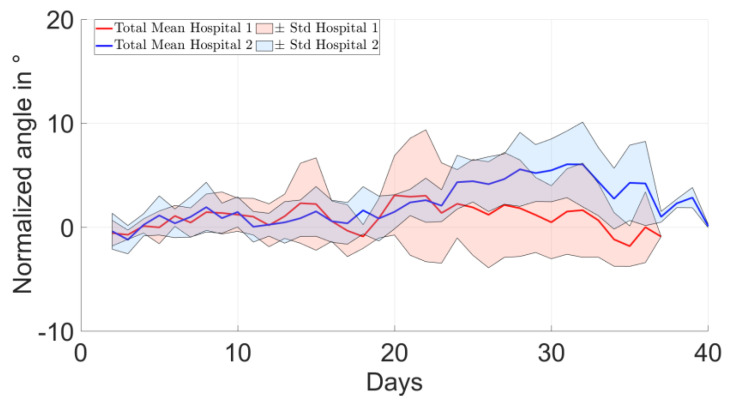
Postoperative shoulder activity after proximal humerus fracture treatment could influence the outcomes of osteosynthesis and may depend on the rehabilitation protocol. This multi-centric prospective study aimed at evaluating the feasibility of continuous shoulder activity monitoring over the first six postoperative weeks, investigating potential differences between two different rehabilitation protocols. Shoulder activity was assessed with pairs of accelerometer-based trackers during the first six postoperative weeks in thirteen elderly patients having a complex proximal humerus fracture treated with a locking plate. Shoulder angles and elevation events were evaluated over time and compared between the two centers utilizing different standard rehabilitation protocols. The overall mean shoulder angle ranged from 11° to 23°, and the number of daily elevation events was between 547 and 5756. Average angles showed longitudinal change <5° over 31 ± 10 days. The number of events increased by 300% on average. Results of the two clinics exhibited no characteristic differences for shoulder angle, but the number of events increased only for the site utilizing immediate mobilization. In addition to considerable inter-patient variation, not the mean shoulder angle but the number of elevations events increased markedly over time. Differences between the two sites in number of daily events may be associated with the different rehabilitation protocols.
肱骨近端骨折治疗后的术后肩部活动可能会影响骨固定的效果,并且可能取决于康复方案。这项多中心前瞻性研究旨在评估术后前六周持续监测肩部活动的可行性,调查两种不同康复方案之间的潜在差异。在13例接受锁定钢板治疗的复杂肱骨近端骨折老年患者术后的前六周,使用基于加速度计的追踪器对肩部活动进行评估。随着时间的推移对肩部角度和抬高事件进行评估,并在两个采用不同标准康复方案的中心之间进行比较。总体平均肩部角度在11°至23°之间,每日抬高事件的数量在547至5756次之间。平均角度在31±10天内纵向变化<5°。事件数量平均增加了300%。两家诊所的结果在肩部角度方面没有表现出特征性差异,但只有采用立即活动方案的站点事件数量增加。除了患者之间存在相当大的差异外,随着时间的推移,不是平均肩部角度而是抬高事件的数量显著增加。两个站点每日事件数量的差异可能与不同的康复方案有关。