Department of Anesthesiology, Tokyo Medical University, 6-7-1 Nishishinjuku, Shinjuku-ku, Tokyo 160-0023, Japan.
Department of Molecular Preventive Medicine, Tokyo Medical University, 6-1-1 Shinjuku, Shinjuku-ku, Tokyo 160-8402, Japan.
Biomolecules. 2023 Jan 17;13(2):191. doi: 10.3390/biom13020191.
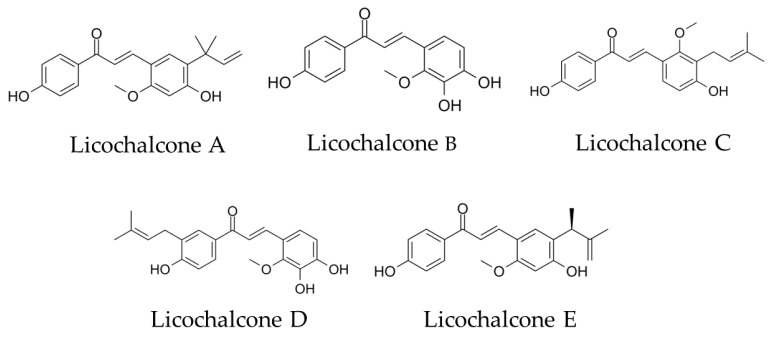
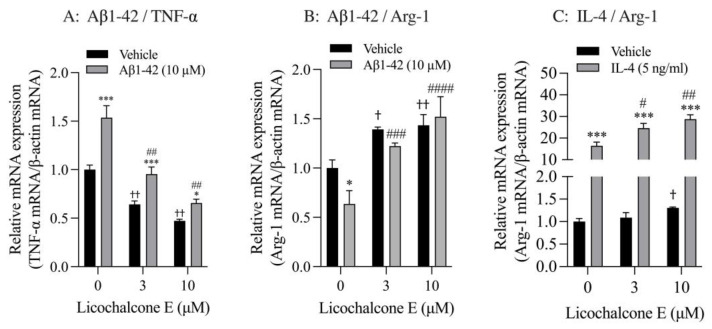
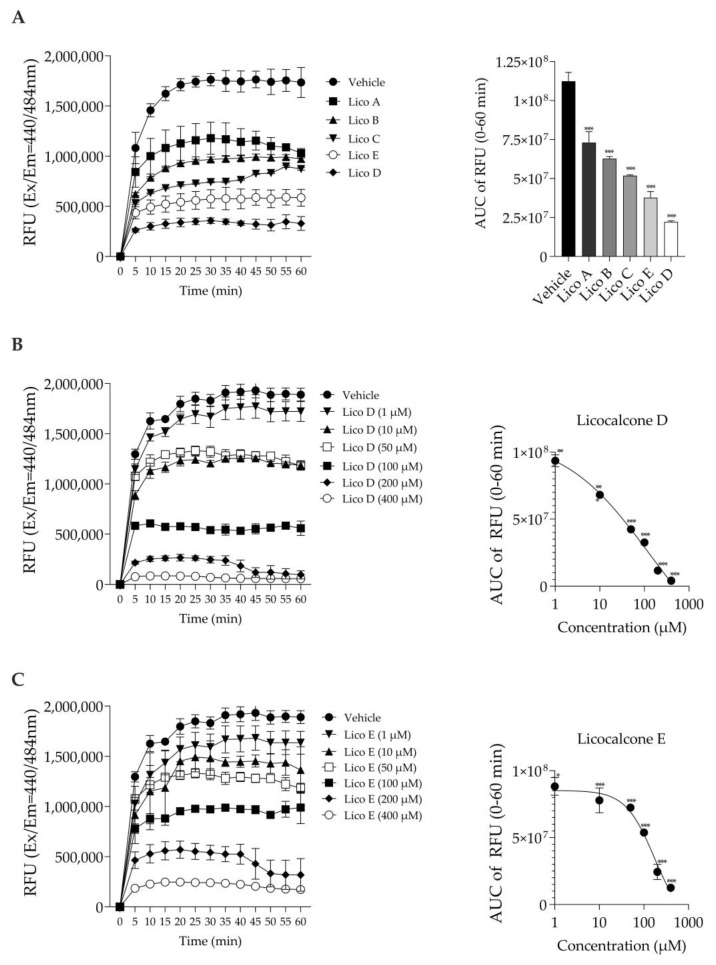
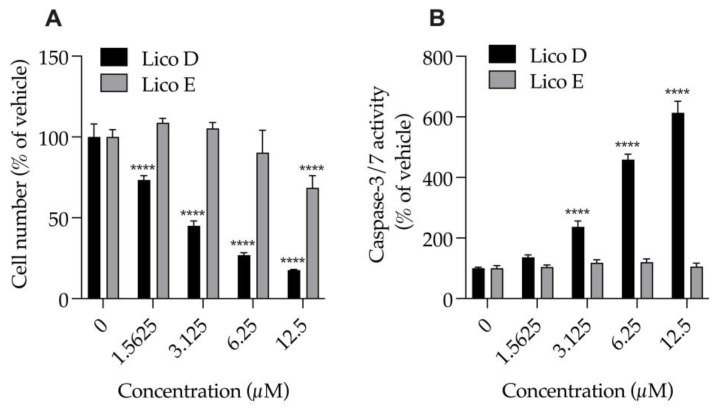
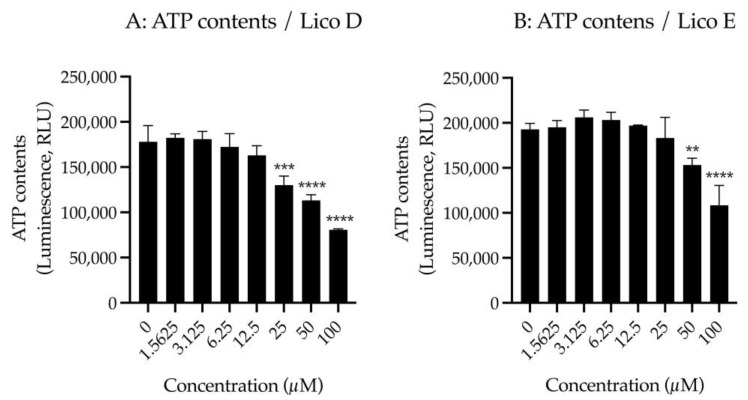
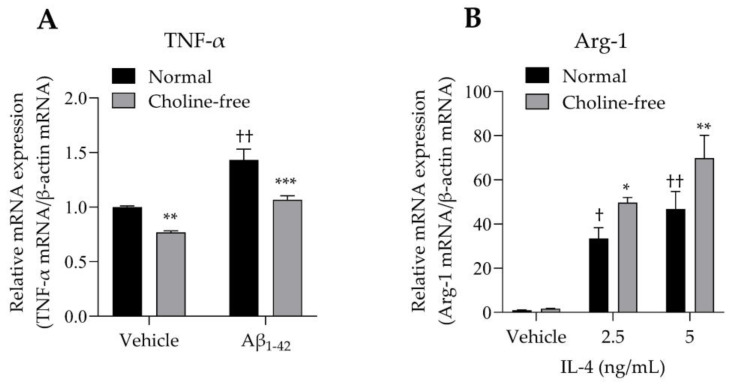
Alzheimer's disease (AD) is thought to be a series of neuroinflammatory diseases caused by abnormal deposits of amyloid-β (Aβ) and tau protein in the brain as part of its etiology. We focused on Aβ aggregation and M1 and M2 microglial polarity in microglia to search for novel therapeutic agents. It has been reported that the inhibition of choline uptake via choline transporter-like protein 1 (CTL1) in microglia preferentially induces M2 microglial polarity. However, the role of the choline transport system on the regulation of microglial M1/M2 polarity in AD is not fully understood. Licochalcones (Licos) A-E, flavonoids extracted from licorice, have been reported to have immunological anti-inflammatory effects, and Lico A inhibits Aβ aggregation. In this study, we compared the efficacy of five Licos, from Lico A to E, at inhibiting Aβ1-42 aggregation. Among the five Licos, Lico E was selected to investigate the relationship between the inhibition of choline uptake and microglial M1/M2 polarization using the immortalized mouse microglial cell line SIM-A9. We newly found that Lico E inhibited choline uptake and Aβ1-42 aggregation in SIM-A9 cells in a concentration-dependent manner, suggesting that the inhibitory effect of Lico E on choline uptake is mediated by CTL1. The mRNA expression of tumor necrosis factor (TNF-α), a marker of M1 microglia, was increased by Aβ1-42, and its effect was inhibited by choline deprivation and Lico E in a concentration-dependent manner. In contrast, the mRNA expression of arginase-1 (Arg-1), a marker of M2 microglia, was increased by IL-4, and its effect was enhanced by choline deprivation and Lico E. We found that Lico E has an inhibitory effect on Aβ aggregation and promotes polarity from M1 to M2 microglia via inhibition of the CTL1 function in microglia. Thus, Lico E may become a leading compound for a novel treatment of AD.
阿尔茨海默病(AD)被认为是一系列神经炎症性疾病,其病因是脑内淀粉样β(Aβ)和tau 蛋白的异常沉积。我们专注于小胶质细胞中的 Aβ 聚集和 M1 和 M2 小胶质细胞极性,以寻找新的治疗药物。据报道,通过小胶质细胞中的胆碱转运蛋白样蛋白 1(CTL1)抑制胆碱摄取,优先诱导 M2 小胶质细胞极性。然而,胆碱转运系统在 AD 中小胶质细胞 M1/M2 极性调节中的作用尚不完全清楚。从甘草中提取的黄酮类化合物甘草查尔酮(Licos)A-E 已被报道具有免疫抗炎作用,Lico A 抑制 Aβ 聚集。在这项研究中,我们比较了五种 Licos(从 Lico A 到 E)抑制 Aβ1-42 聚集的效果。在这五种 Licos 中,选择 Lico E 用于研究通过永生化小鼠小胶质细胞系 SIM-A9 抑制胆碱摄取与小胶质细胞 M1/M2 极化之间的关系。我们新发现 Lico E 以浓度依赖的方式抑制 SIM-A9 细胞中的胆碱摄取和 Aβ1-42 聚集,表明 Lico E 对胆碱摄取的抑制作用是通过 CTL1 介导的。肿瘤坏死因子(TNF-α)的 mRNA 表达,M1 小胶质细胞的标志物,被 Aβ1-42 增加,其作用被胆碱剥夺和 Lico E 以浓度依赖的方式抑制。相反,M2 小胶质细胞标志物精氨酸酶-1(Arg-1)的 mRNA 表达被 IL-4 增加,其作用被胆碱剥夺和 Lico E 增强。我们发现 Lico E 对 Aβ 聚集有抑制作用,并通过抑制小胶质细胞中的 CTL1 功能促进 M1 向 M2 小胶质细胞的极性转变。因此,Lico E 可能成为治疗 AD 的一种新的先导化合物。