Department of Pharmaceutical Sciences, Taneja College of Pharmacy, University of South Florida, Tampa, FL 33612, USA.
Department of Neurology, College of Medicine, University of South Florida, Tampa, FL 33612, USA.
Biomolecules. 2023 Jan 25;13(2):232. doi: 10.3390/biom13020232.
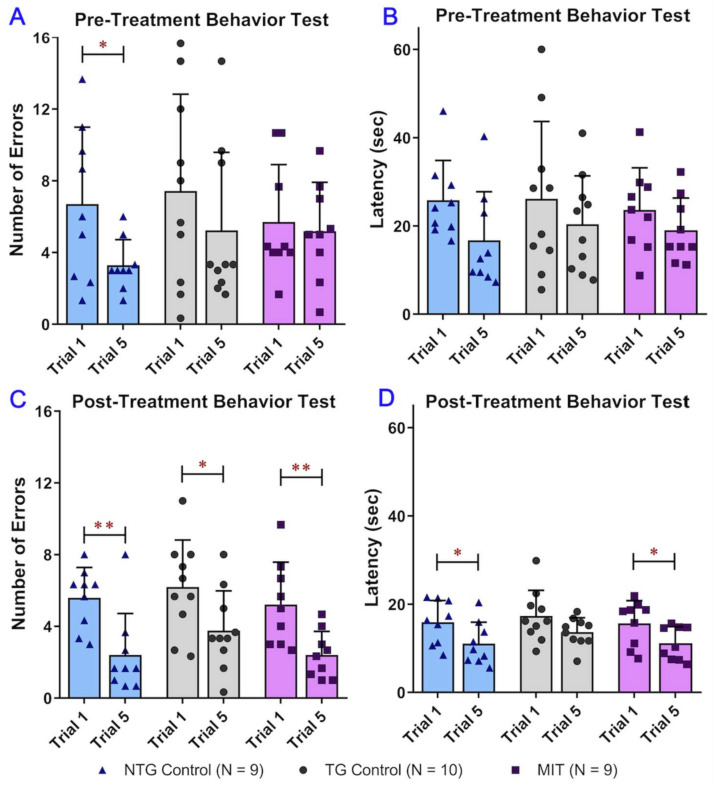
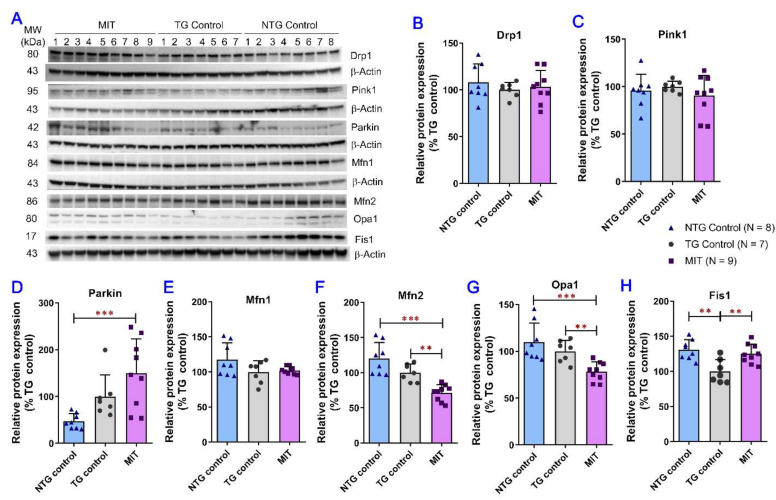
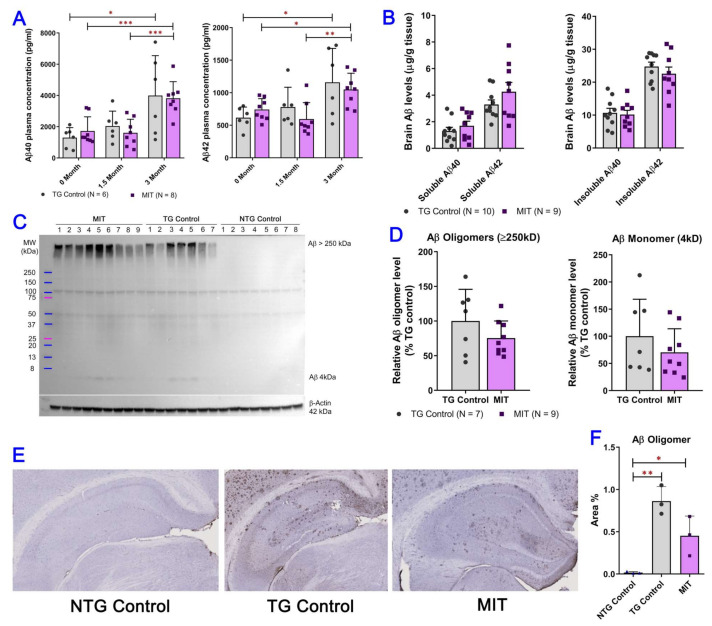
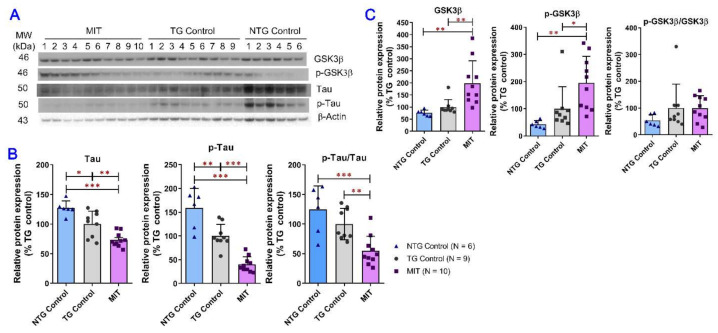
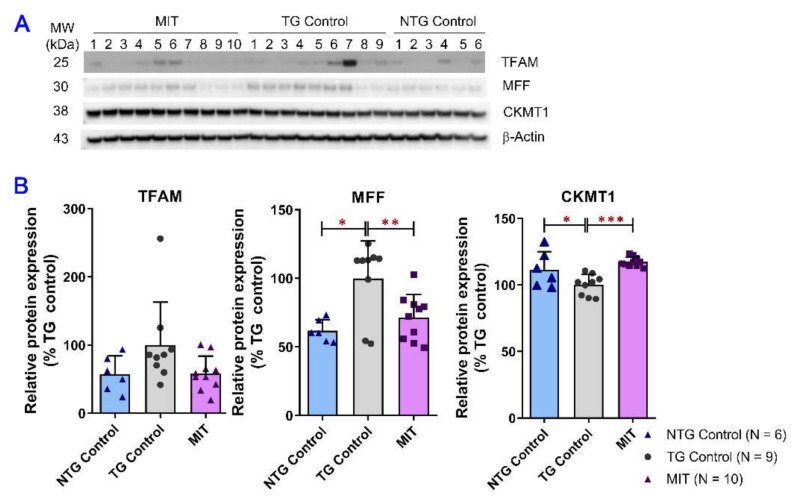
Melatonin, insulin, and Δ9-tetrahydrocannabinol (THC) have been shown to reverse cognitive deficits and attenuate neuropathologies in transgenic mouse models of Alzheimer's disease (AD) when used individually. Here, we evaluated the therapeutic properties of long-term intranasal treatment with a novel nanoformulation containing melatonin, insulin, and THC in aged APPswe/PS1ΔE9 (APP/PS1) mice, a transgenic model of AD. Transgenic mice at the age of 12 months were intranasally administered with a new nanoformulation containing melatonin, insulin, and THC at doses of 0.04, 0.008, and 0.02 mg/kg, respectively, once daily for 3 months. The spatial memory of the mice was assessed using the radial arm water maze (RAWM) test before and after drug treatment. Brain tissues were collected at the end of the treatment period for the assessment of Aβ load, tauopathy state, and markers of mitochondrial function. The RAWM test revealed that the treatment with the melatonin-insulin-THC (MIT) nasal spray improved the spatial learning memory of APP/PS1 mice significantly. Results of protein analyses of brain homogenates indicated that MIT treatment significantly decreased the tau phosphorylation implicated in tau toxicity ( < 0.05) and the expression of CKMT1 associated with mitochondrial dysfunction. Moreover, MIT significantly decreased the expression of two mitochondrial fusion-related proteins, Mfn2 and Opa1 ( < 0.01 for both), while increasing the expression of a mitophagy regulator, Parkin, suggesting a compensatory enhancement of mitophagy due to MIT-promoted mitochondrial fusion. In conclusion, this study was the first to demonstrate the ability of an MIT nanoformulation to improve spatial memory in AD mice through its multi-targeting effects on Aβ production, tau phosphorylation, and mitochondrial dynamics. Thus, MIT may be a safe and effective therapeutic for AD.
褪黑素、胰岛素和Δ9-四氢大麻酚(THC)已被证明可逆转阿尔茨海默病(AD)转基因小鼠模型中的认知缺陷并减轻神经病理学,当单独使用时。在这里,我们评估了含有褪黑素、胰岛素和 THC 的新型纳米制剂长期鼻内治疗对 AD 转基因模型 APPswe/PS1ΔE9(APP/PS1)老年小鼠的治疗特性。12 月龄的转基因小鼠每天接受一次鼻腔给予含有褪黑素、胰岛素和 THC 的新型纳米制剂,剂量分别为 0.04、0.008 和 0.02 mg/kg,持续 3 个月。在药物治疗前后,使用放射臂水迷宫(RAWM)测试评估小鼠的空间记忆。在治疗结束时收集脑组织,用于评估 Aβ 负荷、tau 病状态和线粒体功能标志物。RAWM 测试表明,褪黑素-胰岛素-THC(MIT)鼻喷剂治疗可显著改善 APP/PS1 小鼠的空间学习记忆。脑匀浆蛋白分析结果表明,MIT 治疗显著降低了与 tau 毒性相关的 tau 磷酸化(<0.05)和与线粒体功能障碍相关的 CKMT1 表达。此外,MIT 还显著降低了两种线粒体融合相关蛋白 Mfn2 和 Opa1 的表达(<0.01),同时增加了线粒体自噬调节剂 Parkin 的表达,这表明由于 MIT 促进的线粒体融合,代偿性增强了线粒体自噬。总之,这项研究首次证明了 MIT 纳米制剂通过其对 Aβ 产生、tau 磷酸化和线粒体动力学的多靶点作用,改善 AD 小鼠的空间记忆的能力。因此,MIT 可能是一种安全有效的 AD 治疗药物。