Giglio Rosaria Vincenza, Patti Angelo Maria, Rizvi Ali Abbas, Stoian Anca Panta, Ciaccio Marcello, Papanas Nikolaos, Janez Andrej, Sonmez Alper, Banach Maciej, Sahebkar Amirhossein, Rizzo Manfredi
Department of Biomedicine, Neuroscience and Advanced Diagnostics, University of Palermo, 90127 Palermo, Italy.
Department of Laboratory Medicine, University Hospital, 90127 Palermo, Italy.
Biomedicines. 2023 Jan 20;11(2):291. doi: 10.3390/biomedicines11020291.
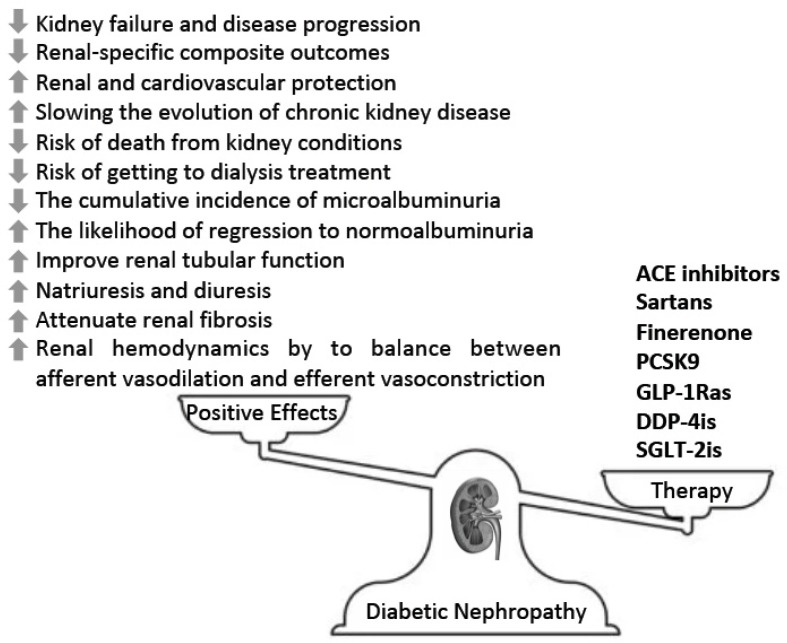
Diabetic nephropathy (DN) is the leading cause of end-stage renal disease (ESRD) worldwide. Its pathogenesis encompasses functional alterations involving elevated intraglomerular and systemic pressure, increased activity of the renin-angiotensin system (RAS) and oxidative stress, and the eventual development of renal fibrosis. The management of DN involves the optimization of blood pressure (BP) and blood glucose targets. However, treatment of these risk factors slows down but does not stop the progression of DN. Innovative pharmacologic therapies for dyslipidemia and type 2 diabetes mellitus (T2DM) could play a key role in bridging this gap and attenuating the residual risk of DN beyond traditional risk factor management. Glucagon-like peptide-1 receptor agonists (GLP-1 RAs), sodium-glucose cotransporter-2 inhibitors (SGLT-2is), and inhibitors of mineralocorticoid receptor-mediated sodium reabsorption are recently introduced drug classes that have been shown to have positive effects on kidney function in individuals with T2DM. The aim of this review is to provide an update on the therapeutic options available in order to prevent or slow the onset and progression of DN in diabetic patients.
糖尿病肾病(DN)是全球终末期肾病(ESRD)的主要原因。其发病机制包括涉及肾小球内压和全身压力升高、肾素-血管紧张素系统(RAS)活性增加和氧化应激的功能改变,以及最终肾纤维化的发展。DN的管理包括优化血压(BP)和血糖目标。然而,对这些危险因素的治疗会减缓但不会阻止DN的进展。用于治疗血脂异常和2型糖尿病(T2DM)的创新药物疗法可能在弥合这一差距以及减轻传统危险因素管理之外的DN残余风险方面发挥关键作用。胰高血糖素样肽-1受体激动剂(GLP-1 RAs)、钠-葡萄糖协同转运蛋白-2抑制剂(SGLT-2is)以及盐皮质激素受体介导的钠重吸收抑制剂是最近引入的药物类别,已显示对T2DM患者的肾功能有积极影响。本综述的目的是提供关于可用治疗选择的最新信息,以预防或减缓糖尿病患者DN的发生和进展。