Ghosh Nilanjan, Chacko Leena, Bhattacharya Hiranmoy, Vallamkondu Jayalakshmi, Nag Sagnik, Dey Abhijit, Karmakar Tanushree, Reddy P Hemachandra, Kandimalla Ramesh, Dewanjee Saikat
Molecular Pharmacology Research Laboratory, Department of Pharmaceutical Technology, Jadavpur University, Kolkata 700032, India.
BioAnalytical Lab, Meso Scale Discovery, Rockville, MD 20850-3173, USA.
Biomedicines. 2023 Apr 7;11(4):1126. doi: 10.3390/biomedicines11041126.
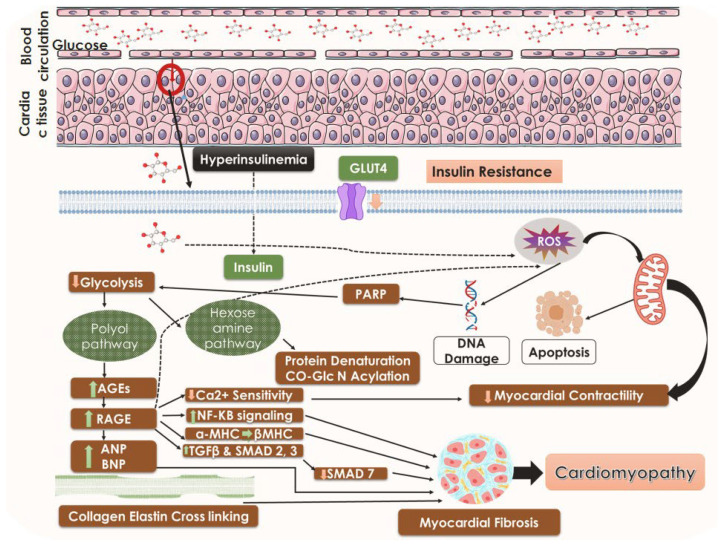
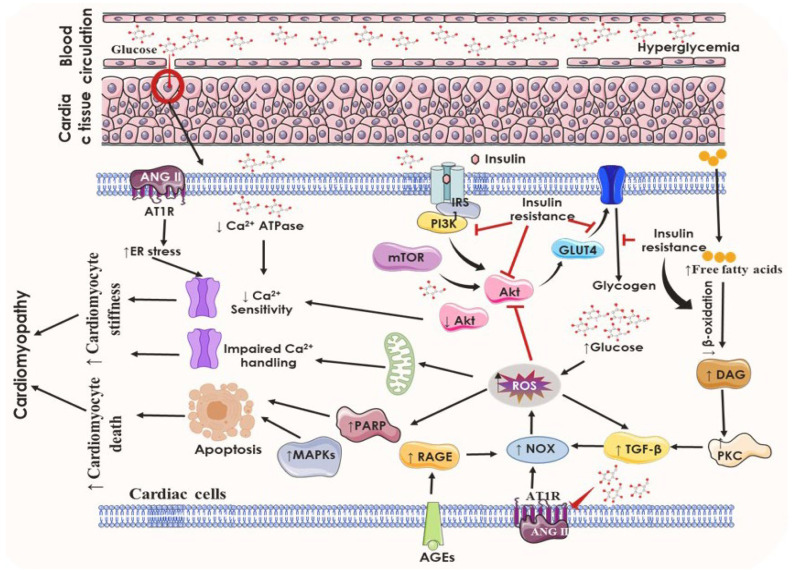
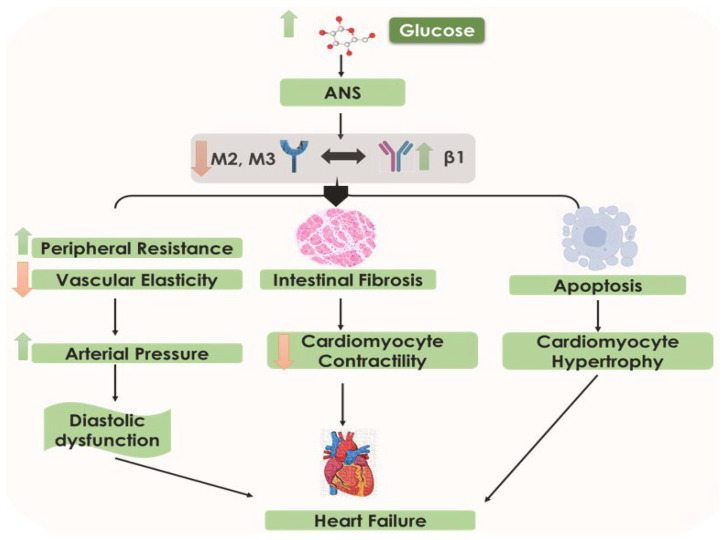
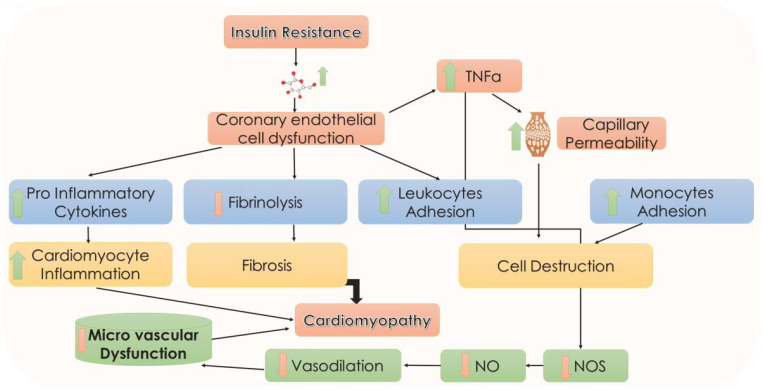
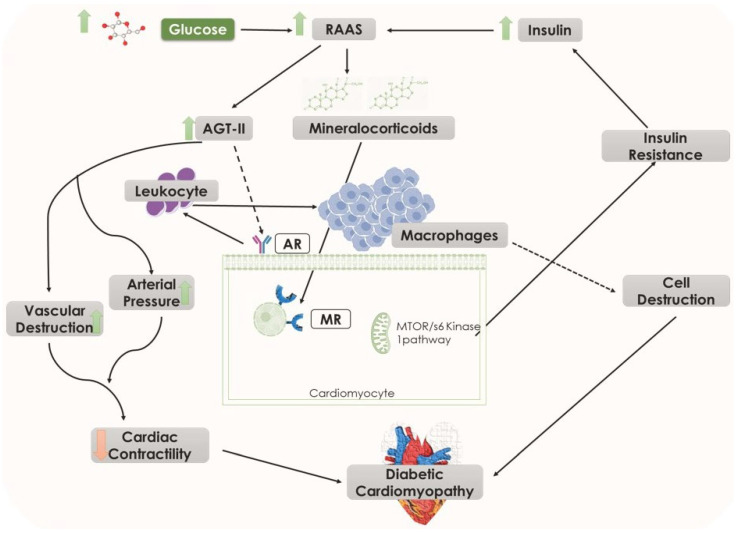
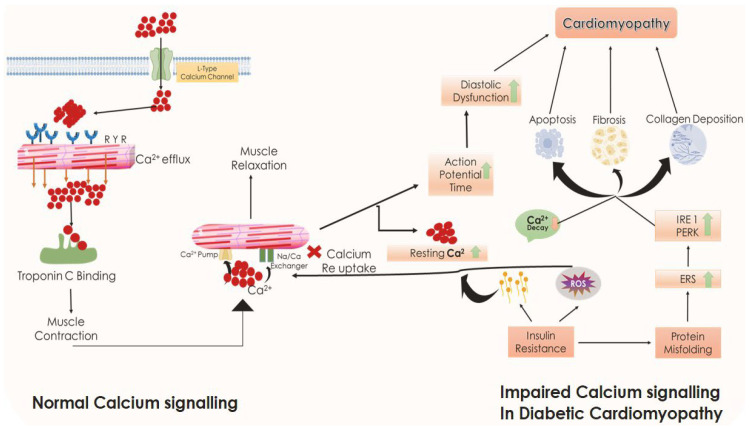
Diabetes mellitus (DM) and cardiovascular complications are two unmet medical emergencies that can occur together. The rising incidence of heart failure in diabetic populations, in addition to apparent coronary heart disease, ischemia, and hypertension-related complications, has created a more challenging situation. Diabetes, as a predominant cardio-renal metabolic syndrome, is related to severe vascular risk factors, and it underlies various complex pathophysiological pathways at the metabolic and molecular level that progress and converge toward the development of diabetic cardiomyopathy (DCM). DCM involves several downstream cascades that cause structural and functional alterations of the diabetic heart, such as diastolic dysfunction progressing into systolic dysfunction, cardiomyocyte hypertrophy, myocardial fibrosis, and subsequent heart failure over time. The effects of glucagon-like peptide-1 (GLP-1) analogues and sodium-glucose cotransporter-2 (SGLT-2) inhibitors on cardiovascular (CV) outcomes in diabetes have shown promising results, including improved contractile bioenergetics and significant cardiovascular benefits. The purpose of this article is to highlight the various pathophysiological, metabolic, and molecular pathways that contribute to the development of DCM and its significant effects on cardiac morphology and functioning. Additionally, this article will discuss the potential therapies that may be available in the future.
糖尿病(DM)和心血管并发症是两种可能同时出现的未得到满足的医疗急症。除了明显的冠心病、缺血和高血压相关并发症外,糖尿病患者中心力衰竭发病率的上升带来了更具挑战性的情况。糖尿病作为一种主要的心脏-肾脏代谢综合征,与严重的血管危险因素相关,并且在代谢和分子水平上是各种复杂病理生理途径的基础,这些途径会进展并汇聚为糖尿病性心肌病(DCM)的发展。DCM涉及多个下游级联反应,这些反应会导致糖尿病心脏的结构和功能改变,例如舒张功能障碍进展为收缩功能障碍、心肌细胞肥大、心肌纤维化以及随时间推移导致心力衰竭。胰高血糖素样肽-1(GLP-1)类似物和钠-葡萄糖协同转运蛋白-2(SGLT-2)抑制剂对糖尿病患者心血管(CV)结局的影响已显示出有前景的结果,包括改善收缩生物能量学和显著的心血管益处。本文的目的是强调导致DCM发展的各种病理生理、代谢和分子途径及其对心脏形态和功能的重大影响。此外,本文将讨论未来可能可用的潜在治疗方法。