Ocskay Klementina, Mátrai Péter, Hegyi Péter, Párniczky Andrea
Heim Pál National Pediatric Institute, 1089 Budapest, Hungary.
Institute for Translational Medicine, Medical School, University of Pécs, 7623 Pécs, Hungary.
Biomedicines. 2023 Jan 23;11(2):321. doi: 10.3390/biomedicines11020321.
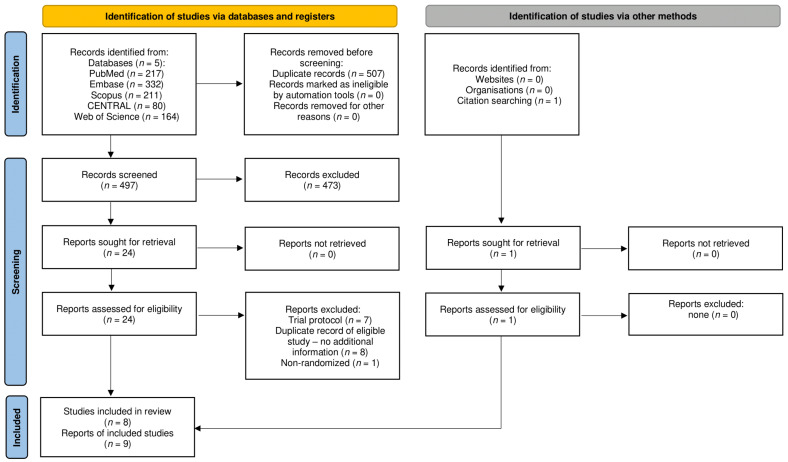
Fluid therapy is the cornerstone of early supportive therapy in acute pancreatitis (AP). Regrettably, the type of fluid is still debated among clinicians, despite recent evidence from randomized controlled trials (RCTs). We aimed to incorporate all evidence from RCTs comparing lactated Ringer's solution (LR) with normal saline (NS) in adult and pediatric AP patients, with particular emphasis on clinically relevant outcomes. We evaluated RCTs comparing intravenous fluid resuscitation with LR to NS in adult or pediatric AP patients according to a prospectively registered protocol (CRD42021224542). Moderate-to-severe AP (MSAP), mortality, length of hospitalization (LoH), need for intensive care, the incidence of systemic (organ failure, OF) and local complications (in total), necrosis and pseudocyst formation were analyzed separately. Risk ratio (RR) and median difference (MD) were calculated with 95% confidence intervals (CI) using a random effect model. Risk of bias and quality of evidence were assessed. Altogether, 8 eligible RCTs were found, including 557 patients (LR: 278; NS: 279). LR reduced the risk of MSAP by 31% (RR: 0.59, 95% CI: 0.36-0.97, high quality) and the risk of death by 62% (RR: 0.48; 95% CI: 0.24-0.98, very low quality). LR was associated with a significantly lower risk of need for intensive care (RR: 0.50, 95% CI: 0.33-0.77), OF (RR: 0.78, 95% CI: 0.61-0.99) and local complications (RR: 0.64, 95% CI: 0.46-0.89). No significant risk reduction was observed for LoH (MD: -0.57 days, CI: -1.33-0.19), necrosis, pseudocyst and inflammatory parameters by LR compared to NS. LR reduces severity, mortality, need of intensive care and systemic and local complications in AP.
液体疗法是急性胰腺炎(AP)早期支持治疗的基石。遗憾的是,尽管最近有随机对照试验(RCT)的证据,但液体类型在临床医生中仍存在争议。我们旨在纳入所有比较乳酸林格氏液(LR)与生理盐水(NS)用于成人和儿童AP患者的RCT证据,特别强调临床相关结局。我们根据前瞻性注册方案(CRD42021224542)评估了比较成人或儿童AP患者静脉液体复苏使用LR与NS的RCT。分别分析了中重度AP(MSAP)、死亡率、住院时间(LoH)、重症监护需求、全身(器官衰竭,OF)和局部并发症(总计)的发生率、坏死和假性囊肿形成情况。采用随机效应模型计算风险比(RR)和中位数差值(MD)及其95%置信区间(CI)。评估偏倚风险和证据质量。共找到8项符合条件的RCT,包括557例患者(LR:278例;NS:279例)。LR使MSAP风险降低31%(RR:0.59,95%CI:0.36 - 0.97,高质量),死亡风险降低62%(RR:0.48;95%CI:0.24 - 0.98,极低质量)。LR与显著更低的重症监护需求风险(RR:0.50,95%CI:0.33 - 0.77)、OF风险(RR:0.78,95%CI:0.61 - 0.99)和局部并发症风险(RR:0.64,95%CI:0.46 - 0.89)相关。与NS相比,未观察到LR对LoH(MD: - 0.57天,CI: - 1.33 - 0.19)、坏死、假性囊肿和炎症参数有显著的风险降低作用。LR可降低AP的严重程度、死亡率、重症监护需求以及全身和局部并发症。