Salim Saad Y, AlMalki Nour, Macala Kimberly F, Wiedemeyer Alyssa, Mueller Thomas F, Churchill Thomas A, Bourque Stephane L, Khadaroo Rachel G
Department of Surgery, University of Alberta, Edmonton, AB T6G 2B7, Canada.
Centre of Excellence for Gastrointestinal Inflammation and Immunity Research (CEGIIR), University of Alberta, Edmonton, AB T6G 2X8, Canada.
Biomedicines. 2023 Feb 8;11(2):483. doi: 10.3390/biomedicines11020483.
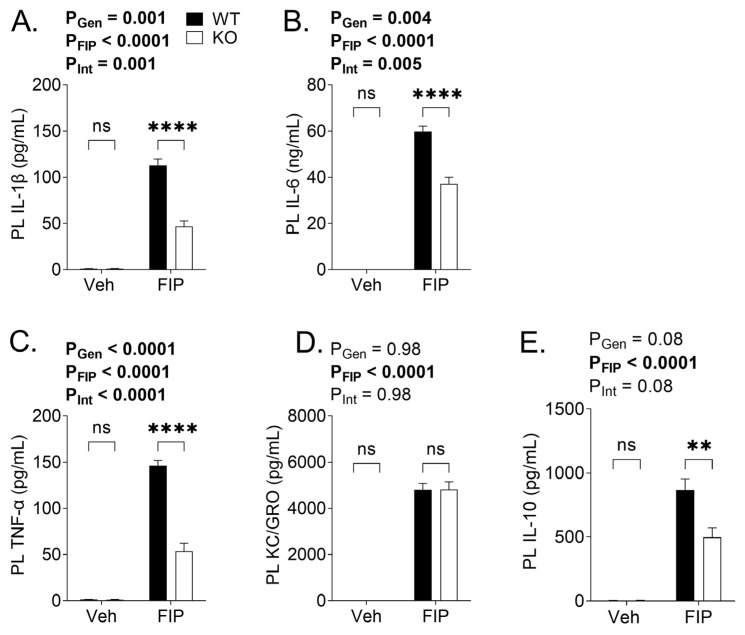
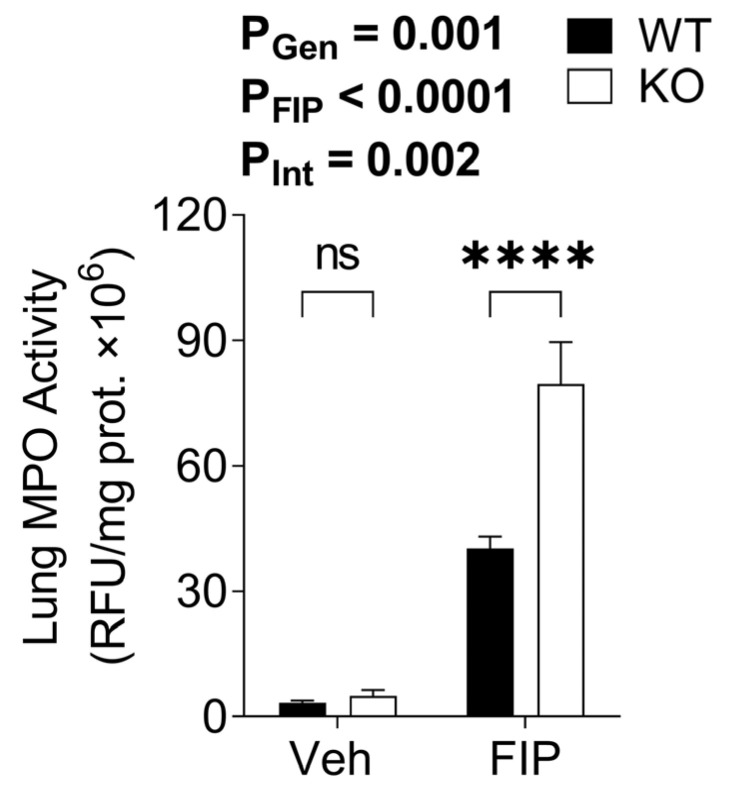
Sepsis remains one of the leading causes of death worldwide. Oncostatin M (OSM), an interleukin (IL)-6 family cytokine, can be found at high levels in septic patients. However, little is known about its role in sepsis. This study aimed to determine if the genetic knockout of OSM receptor (OSMR) type II signaling would improve survival in a murine model of sepsis. Aged (>50 weeks) OSMR type II knockout (KO) mice and wild-type (WT) littermates received an intraperitoneal injection of fecal slurry (FS) or vehicle. The KO mice had better survival 48 h after the injection of FS than the WT mice ( = 0.005). Eighteen hours post-FS injection, the KO mice had reduced peritoneal, serum, and tissue cytokine levels (including IL-1β, IL-6, TNFα, KG/GRO, and IL-10) compared to the WT mice ( < 0.001 for all). Flow cytometry revealed decreased recruitment of CD11b F4/80 Ly6c macrophages in the peritoneum of KO mice compared to WT mice (34 ± 6 vs. 4 ± 3%, P = 0.005). Isolated peritoneal macrophages from aged KO mice had better live killing capacity than those from WT mice ( < 0.001). Peritoneal lavage revealed greater bacterial counts in KO mice than in WT mice (KO: 305 ± 22 vs. 116 ± 6 CFU (×10)/mL; < 0.001). In summary, deficiency in OSMR type II receptor signaling provided a survival benefit in the progression of sepsis. This coincided with reduced serum levels of pro-inflammatory (IL-1β, TNFα, and KC/GRO) and anti-inflammatory markers (IL-10), increased bacterial killing ability of macrophages, and reduced macrophage infiltration into to site of infection.
脓毒症仍然是全球主要的死亡原因之一。抑瘤素M(OSM)是一种白细胞介素(IL)-6家族细胞因子,在脓毒症患者体内水平较高。然而,其在脓毒症中的作用却鲜为人知。本研究旨在确定II型OSM受体(OSMR)信号通路的基因敲除是否能提高脓毒症小鼠模型的生存率。对年龄大于50周的II型OSMR基因敲除(KO)小鼠和野生型(WT)同窝小鼠腹腔注射粪便悬液(FS)或赋形剂。注射FS后48小时,KO小鼠的生存率高于WT小鼠(P = 0.005)。FS注射18小时后,与WT小鼠相比,KO小鼠的腹腔、血清和组织细胞因子水平(包括IL-1β、IL-6、TNFα、KG/GRO和IL-10)降低(所有P均<0.001)。流式细胞术显示,与WT小鼠相比,KO小鼠腹腔中CD11b+F4/80+Ly6c+巨噬细胞的募集减少(34±6%对4±3%,P = 0.005)。与WT小鼠相比,老年KO小鼠分离出的腹腔巨噬细胞具有更强的活杀能力(P<0.001)。腹腔灌洗显示,KO小鼠的细菌计数高于WT小鼠(KO:305±22对116±6 CFU(×10)/mL;P<0.001)。总之,II型OSMR受体信号通路缺陷在脓毒症进展过程中具有生存获益。这与促炎(IL-1β、TNFα和KC/GRO)和抗炎标志物(IL-10)血清水平降低、巨噬细胞细菌杀伤能力增强以及巨噬细胞向感染部位浸润减少相一致。