Department of Physical Medicine and Rehabilitation, Harvard Medical School, Boston, MA 02129, USA.
Laboratory of SCI, Stem Cell and Recovery Neurobiology Research, Department of Physical Medicine and Rehabilitation, Spaulding Rehabilitation Hospital Network, Mass General Brigham, and Harvard Medical School, Boston, MA 02115, USA.
Cells. 2023 Feb 14;12(4):618. doi: 10.3390/cells12040618.
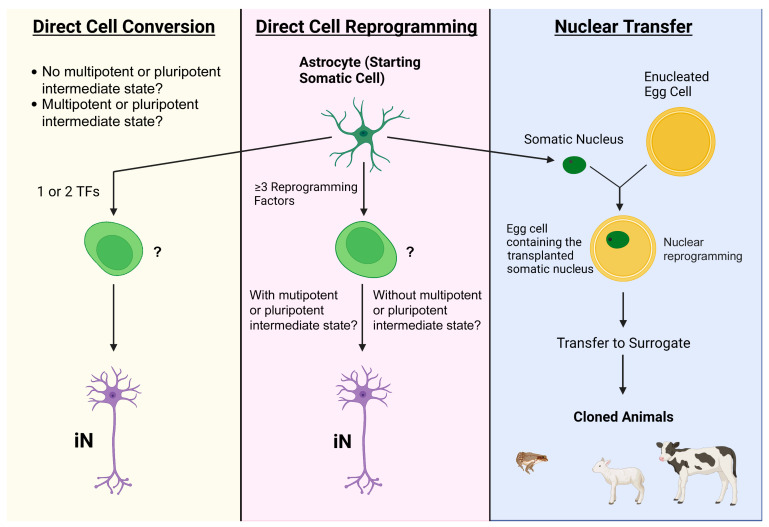
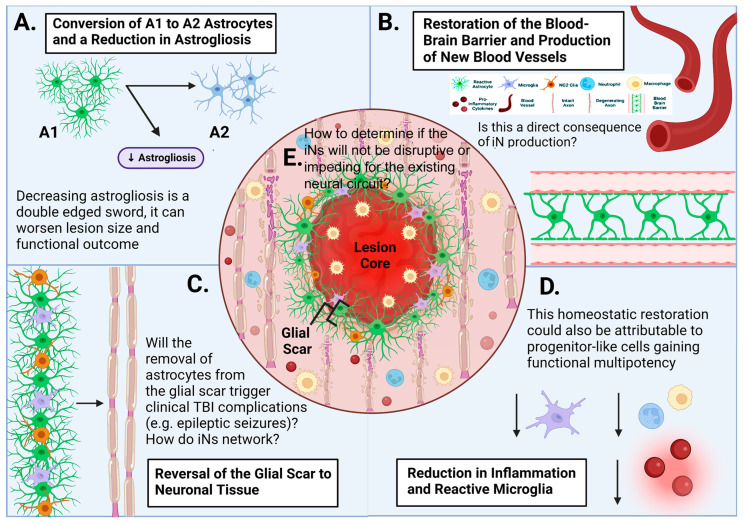
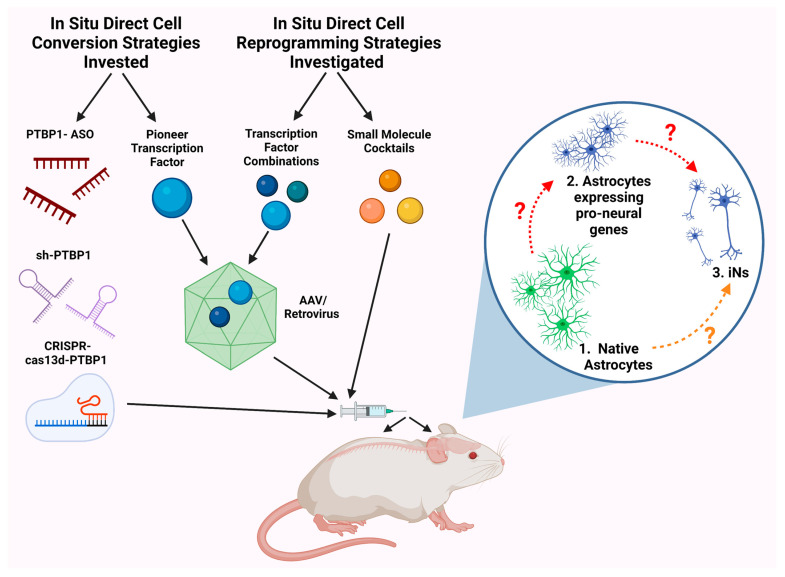
Central nervous system (CNS) repair after injury or disease remains an unresolved problem in neurobiology research and an unmet medical need. Directly reprogramming or converting astrocytes to neurons (AtN) in adult animals has been investigated as a potential strategy to facilitate brain and spinal cord recovery and advance fundamental biology. Conceptually, AtN strategies rely on forced expression or repression of lineage-specific transcription factors to make endogenous astrocytes become "induced neurons" (iNs), presumably without re-entering any pluripotent or multipotent states. The AtN-derived cells have been reported to manifest certain neuronal functions in vivo. However, this approach has raised many new questions and alternative explanations regarding the biological features of the end products (e.g., iNs versus neuron-like cells, neural functional changes, etc.), developmental biology underpinnings, and neurobiological essentials. For this paper per se, we proposed to draw an unconventional distinction between direct cell conversion and direct cell reprogramming, relative to somatic nuclear transfer, based on the experimental methods utilized to initiate the transformation process, aiming to promote a more in-depth mechanistic exploration. Moreover, we have summarized the current tactics employed for AtN induction, comparisons between the bench endeavors concerning outcome tangibility, and discussion of the issues of published AtN protocols. Lastly, the urgency to clearly define/devise the theoretical frameworks, cell biological bases, and bench specifics to experimentally validate primary data of AtN studies was highlighted.
中枢神经系统(CNS)损伤或疾病后的修复仍然是神经生物学研究中未解决的问题,也是未满足的医学需求。在成年动物中直接重编程或转化星形胶质细胞为神经元(AtN)已被研究作为促进大脑和脊髓恢复以及推进基础生物学的潜在策略。从概念上讲,AtN 策略依赖于谱系特异性转录因子的强制表达或抑制,以使内源性星形胶质细胞成为“诱导神经元”(iNs),大概不会重新进入任何多能或多潜能状态。据报道,AtN 衍生的细胞在体内表现出某些神经元功能。然而,这种方法引发了许多关于终产物的生物学特征(例如,iNs 与神经元样细胞、神经功能变化等)、发育生物学基础和神经生物学要点的新问题和替代解释。就本文而言,我们建议根据启动转化过程中使用的实验方法,相对于体细胞核转移,在直接细胞转换和直接细胞重编程之间做出非传统的区分,旨在促进更深入的机制探索。此外,我们总结了目前用于 AtN 诱导的策略,比较了有关结果可操作性的实验努力,以及讨论了已发表的 AtN 方案的问题。最后,强调了迫切需要明确界定/设计理论框架、细胞生物学基础和实验验证 AtN 研究原始数据的实验细节。