Irmer Barnabas, Chandrabalan Suganja, Maas Lukas, Bleckmann Annalen, Menck Kerstin
Department of Medicine A, Hematology, Oncology, and Pneumology, University of Münster, 48149 Munster, Germany.
Department of Medicine A, Hematology, Oncology, and Pneumology, University Hospital Münster, 48149 Munster, Germany.
Cancers (Basel). 2023 Feb 18;15(4):1307. doi: 10.3390/cancers15041307.
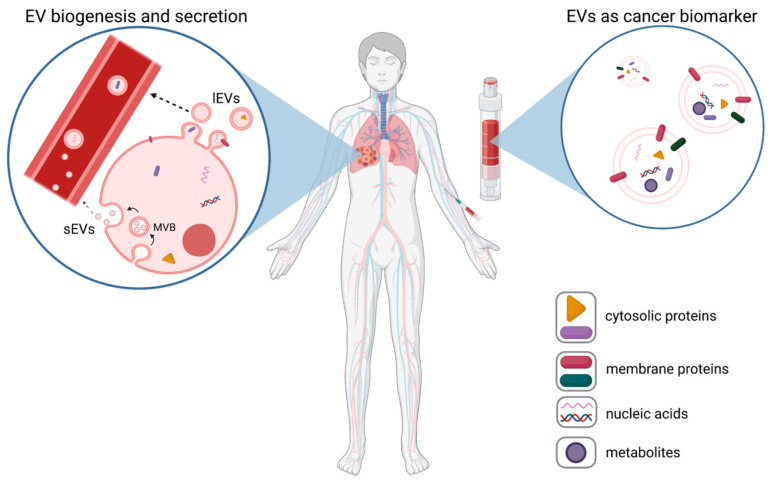
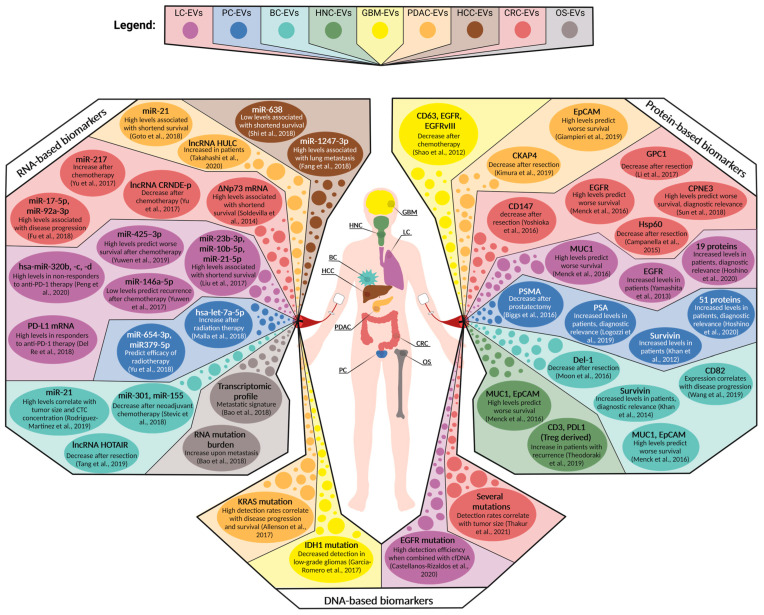
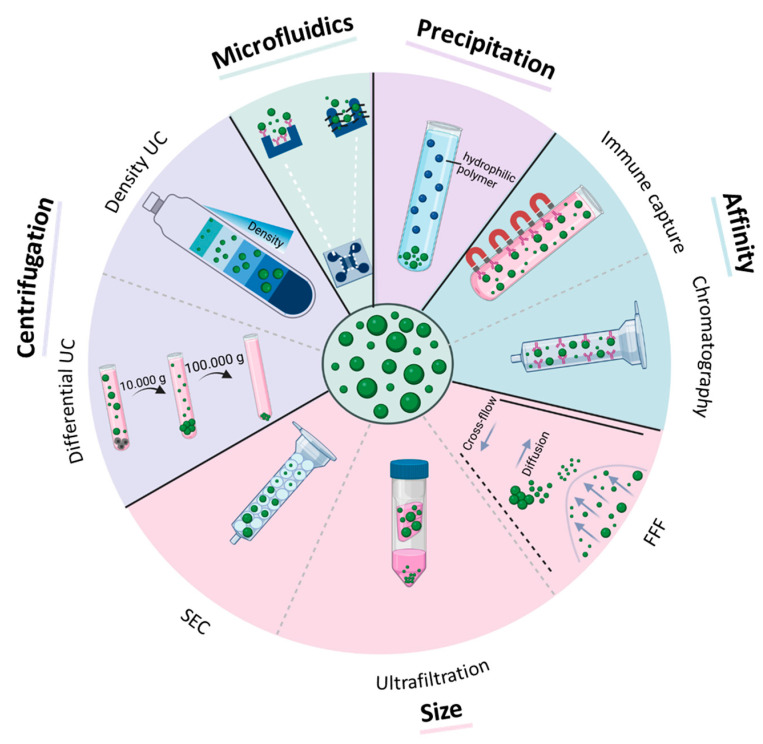
Extracellular vesicles (EVs) are secreted by all living cells and are ubiquitous in every human body fluid. They are quite heterogeneous with regard to biogenesis, size, and composition, yet always reflect their parental cells with their cell-of-origin specific cargo loading. Since numerous studies have demonstrated that EV-associated proteins, nucleic acids, lipids, and metabolites can represent malignant phenotypes in cancer patients, EVs are increasingly being discussed as valuable carriers of cancer biomarkers in liquid biopsy samples. However, the lack of standardized and clinically feasible protocols for EV purification and characterization still limits the applicability of EV-based cancer biomarker analysis. This review first provides an overview of current EV isolation and characterization techniques that can be used to exploit patient-derived body fluids for biomarker quantification assays. Secondly, it outlines promising tumor-specific EV biomarkers relevant for cancer diagnosis, disease monitoring, and the prediction of cancer progression and therapy resistance. Finally, we summarize the advantages and current limitations of using EVs in liquid biopsy with a prospective view on strategies for the ongoing clinical implementation of EV-based biomarker screenings.
细胞外囊泡(EVs)由所有活细胞分泌,存在于人体的每一种体液中。它们在生物发生、大小和组成方面具有很大的异质性,但总是通过其特定来源细胞的货物装载来反映其亲代细胞。由于大量研究表明,与EV相关的蛋白质、核酸、脂质和代谢物可代表癌症患者的恶性表型,因此EVs越来越多地被视为液体活检样本中癌症生物标志物的重要载体。然而,缺乏标准化且临床可行的EV纯化和表征方案仍然限制了基于EV的癌症生物标志物分析的应用。本综述首先概述了当前可用于利用患者体液进行生物标志物定量检测的EV分离和表征技术。其次,概述了与癌症诊断、疾病监测以及癌症进展和治疗耐药性预测相关的有前景的肿瘤特异性EV生物标志物。最后,我们总结了在液体活检中使用EV的优势和当前局限性,并前瞻性地展望了基于EV的生物标志物筛查在临床中持续实施的策略。