Heghedűș-Mîndru Gabriel, Negrea Petru, Trașcă Teodor Ioan, Ștef Ducu Sandu, Cocan Ileana, Heghedűș-Mîndru Ramona Cristina
Faculty of Food Engineering, University of Life Science "King Mihai I" from Timisoara, 300645 Timisoara, Romania.
Faculty of Industrial Chemistry and Environmental Engineering, Polytechnic University of Timisoara, Piata Victoriei, RO, 300006 Timisoara, Romania.
Foods. 2023 Feb 8;12(4):749. doi: 10.3390/foods12040749.
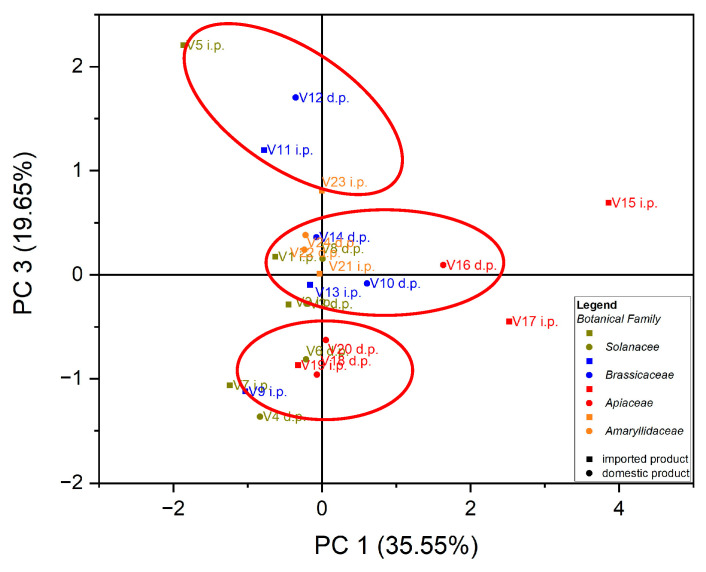
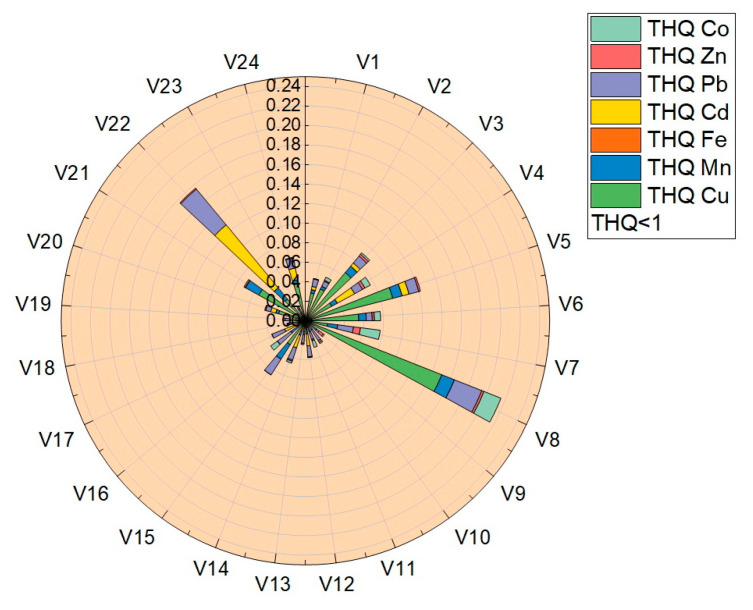
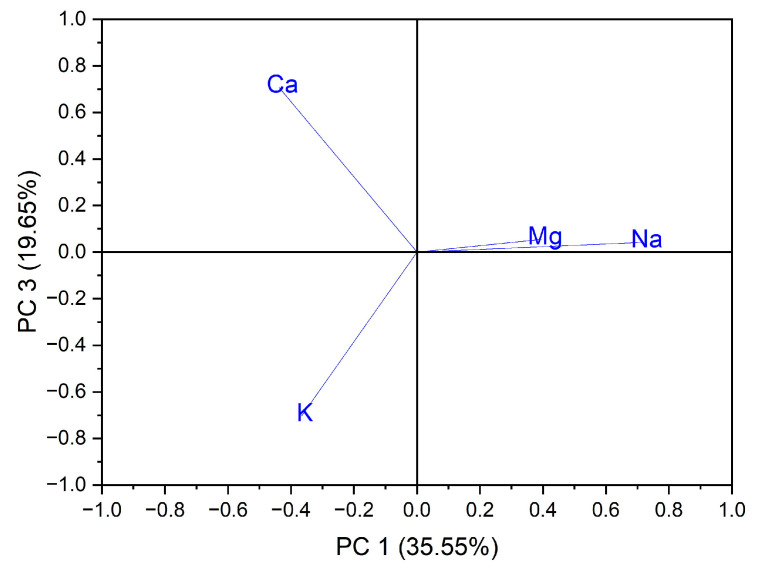
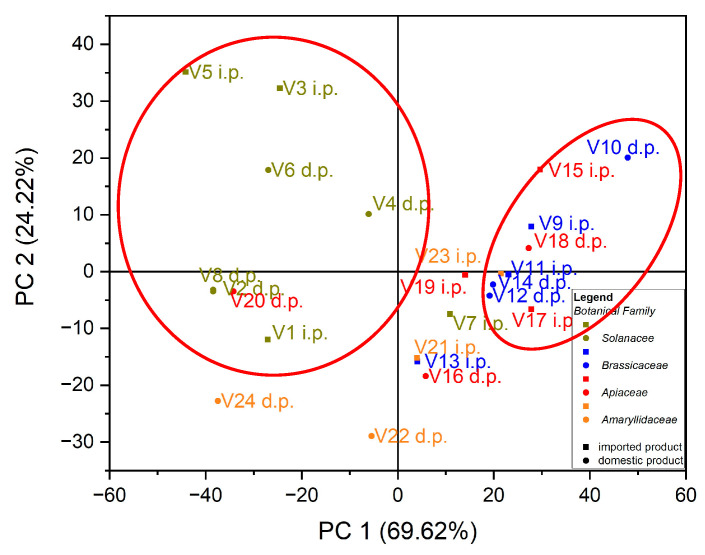
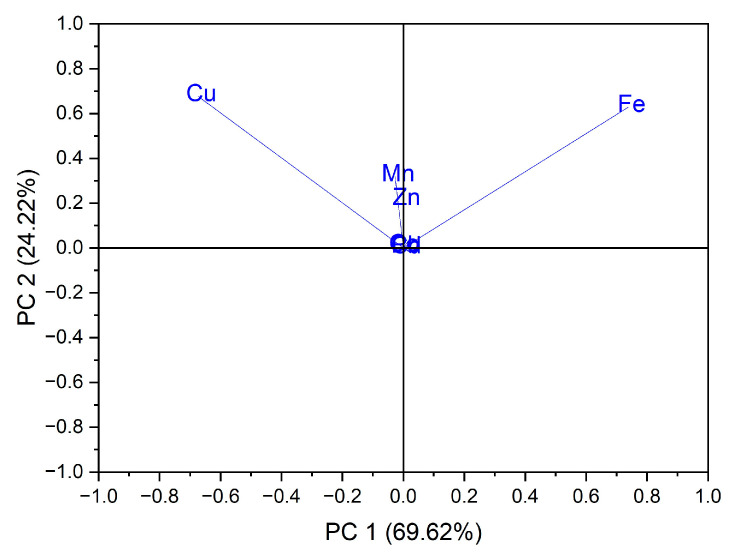
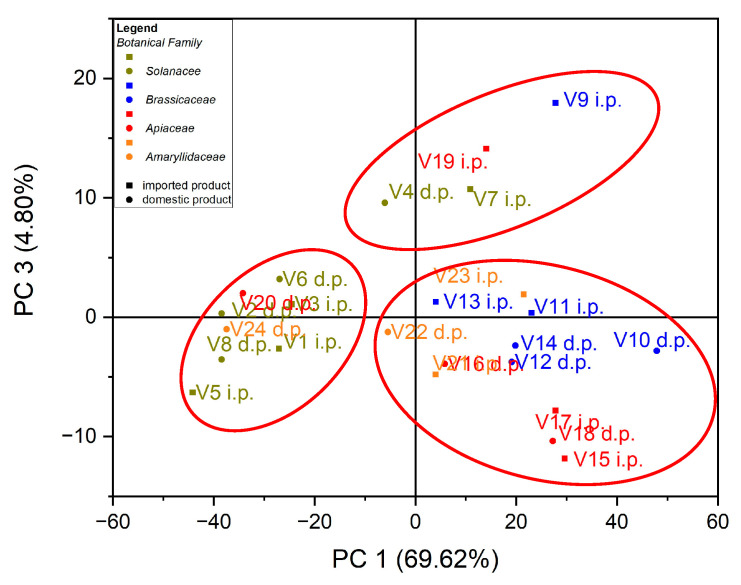
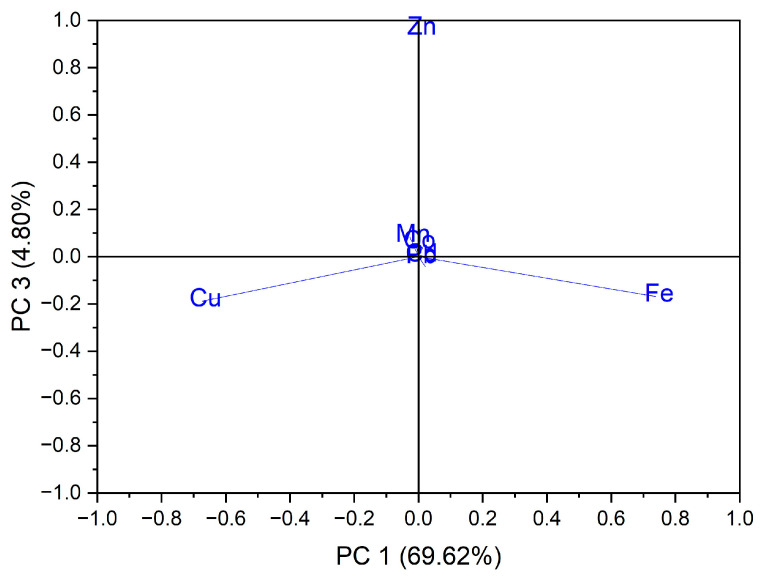
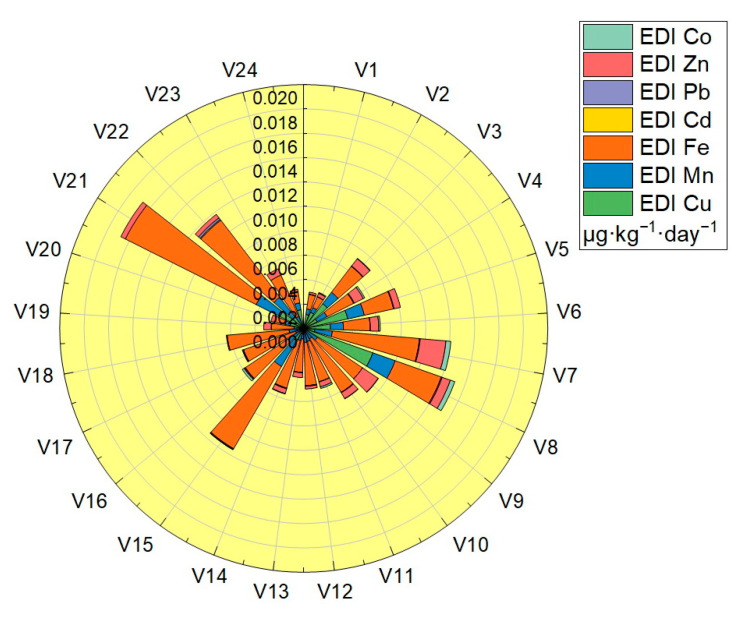
Vegetable consumption is recommended and encouraged by all nutritionists and doctors across the planet. However, in addition to minerals which are beneficial to the body, certain minerals with a negative influence on human health can sneak in. It is very important that in the case of some minerals their content in vegetables is known, so that the recommended limits are not exceeded. The purpose of this study was to evaluate the macro elements (Na, K, Ca, Mg) and trace elements (Cu, Mn, Fe, Cd, Pb, Zn, Co) in 24 samples of vegetables from four botanical families (, Brassicaceae, Apiaceae and Amaryllidaceae), purchased from the market in Timișoara, Romania, both imported products as well as local products. The atomic-absorption-spectrometry technique (FAAS) was used to evaluate the macro elements and trace elements. The values obtained for the macro elements and trace elements were used as input data for the analysis of multivariate data, the principal component analysis (PCA) in which the vegetable samples were grouped according to their contribution of certain mineral elements, as well as according to some of the botanical families to which they belong. At the same time, based on the values obtained for trace elements, an assessment of the risk to human health in terms of consumption of the vegetables studied was carried out. The risk assessment for human health was determined on the basis of the estimated daily dose (EDI), the values of the target hazard coefficient (THQ), the values of the total target hazard coefficient (TTHQ) and the carcinogenic risk (CR). Following the determination of THQ, the values obtained followed the order THQ > THQ > THQ > THQ > THQ > THQ > THQ. The results on the content of macro elements and trace elements, as well as the assessment of the risk to human health when consuming the assessed vegetables, were within the limits of European Union (EU) and World Health Organization and Food and Agriculture Organization (WHO/FAO)legislation.
全球所有营养学家和医生都推荐并鼓励食用蔬菜。然而,除了对身体有益的矿物质外,某些对人体健康有负面影响的矿物质也可能混入其中。了解某些矿物质在蔬菜中的含量非常重要,这样就不会超过推荐限量。本研究的目的是评估从罗马尼亚蒂米什瓦拉市场购买的四个植物科(十字花科、伞形科和石蒜科)的24种蔬菜样本中的常量元素(钠、钾、钙、镁)和微量元素(铜、锰、铁、镉、铅、锌、钴),既有进口产品也有本地产品。采用原子吸收光谱法(火焰原子吸收光谱法)评估常量元素和微量元素。将常量元素和微量元素获得的值用作多变量数据分析的输入数据,即主成分分析(PCA),在主成分分析中,蔬菜样本根据其对某些矿物质元素的贡献以及所属的一些植物科进行分组。同时,根据微量元素获得的值,对所研究蔬菜消费对人体健康的风险进行了评估。基于估计每日摄入量(EDI)、目标危害系数(THQ)值、总目标危害系数(TTHQ)值和致癌风险(CR)确定了对人体健康的风险评估。在确定THQ后,获得的值顺序为THQ>THQ>THQ>THQ>THQ>THQ>THQ。常量元素和微量元素含量的结果以及食用评估蔬菜时对人体健康风险的评估均在欧盟(EU)以及世界卫生组织和粮食及农业组织(WHO/FAO)立法的范围内。