Vitiello Paola, Sagnelli Caterina, Ronchi Andrea, Franco Renato, Caccavale Stefano, Mottola Maria, Pastore Francesco, Argenziano Giuseppe, Creta Massimiliano, Calogero Armando, Fiorelli Alfonso, Casale Beniamino, Sica Antonello
Dermatology Unit, University of Campania Luigi Vanvitelli, 80131 Naples, Italy.
Department of Mental Health and Public Medicine, University of Campania Luigi Vanvitelli, 80131 Naples, Italy.
Healthcare (Basel). 2023 Feb 18;11(4):614. doi: 10.3390/healthcare11040614.
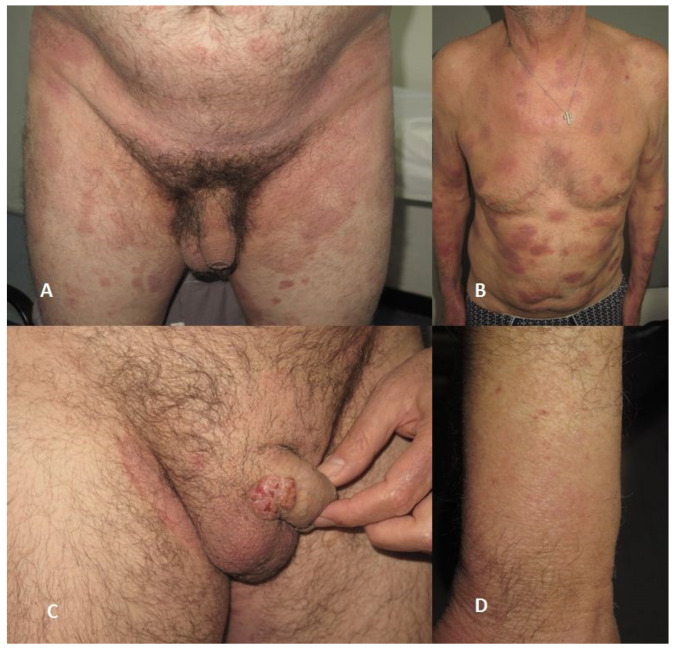
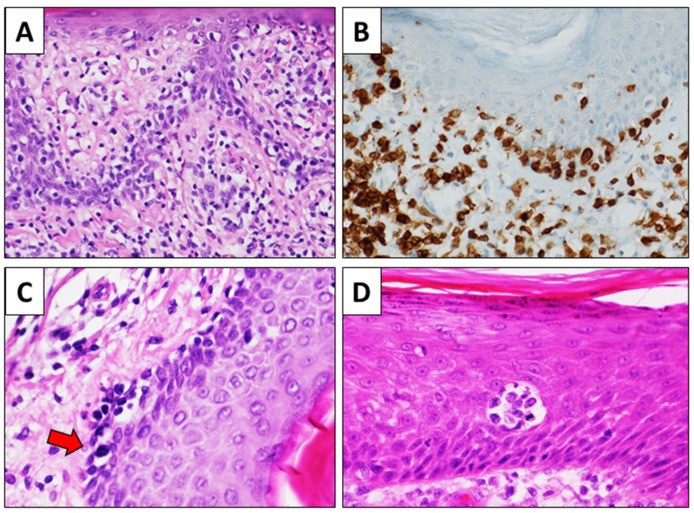
Mycosis fungoides is the most common primary cutaneous T-cell lymphoma, characterized by skin-homing CD4+ T cells derivation, indolent course, and low-grade of malignancy. Mycosis fungoides's classic type typically onsets with cutaneous erythematous patches, plaque, and tumor. In WHO-EORTC classification, folliculotropic mycosis fungoides, pagetoid reticulosis, and granulomatous slack skin are recognized as distinct variants of mycosis fungoides, because of their clinical and histological features, behavior, and /or prognosis. Mycosis fungoides often shows diagnostic difficulties, due to its absence of specific features and lesional polymorphism. A patient's treatment requires staging. In about 10% of cases, mycosis fungoides can progress to lymph nodes and internal organs. Prognosis is poor at advanced stage and management needs a multidisciplinary team approach. Advanced stage disease including tumors, erythroderma, and nodal, visceral, or blood involvement needs skin directed therapy associated with systemic drugs. Skin directed therapy includes steroids, nitrogen mustard, bexarotene gel, phototherapy UVB, and photochemiotherapy, i.e., total skin electron radiotherapy. Systemic therapies include retinoids, bexarotene, interferon, histone deacetylase inhibitors, photopheresis, targeted immunotherapy, and cytotoxic chemotherapy. Complexity of mycosis fungoides associated with long-term chronic evolution and multiple therapy based on disease stage need a multidisciplinary team approach to be treated.
蕈样肉芽肿是最常见的原发性皮肤T细胞淋巴瘤,其特征为归巢于皮肤的CD4 + T细胞衍生、病程惰性且恶性程度低。蕈样肉芽肿的经典类型通常以皮肤红斑、斑块和肿瘤起病。在世界卫生组织(WHO)-欧洲肿瘤研究与治疗组织(EORTC)分类中,亲毛囊性蕈样肉芽肿、派杰样网状细胞增生症和肉芽肿性皮肤松弛症被认为是蕈样肉芽肿的不同变体,因其临床和组织学特征、行为及/或预后各异。由于缺乏特异性特征和病变多态性,蕈样肉芽肿常存在诊断困难。患者的治疗需要进行分期。约10%的病例中,蕈样肉芽肿可进展至淋巴结和内脏器官。晚期预后较差,治疗需要多学科团队协作。晚期疾病包括肿瘤、红皮病以及淋巴结、内脏或血液受累,需要采用皮肤定向治疗并联合全身用药。皮肤定向治疗包括使用类固醇、氮芥、贝沙罗汀凝胶、窄谱中波紫外线(UVB)光疗以及光化学疗法,即全身皮肤电子放疗。全身治疗包括维甲酸类药物、贝沙罗汀、干扰素、组蛋白去乙酰化酶抑制剂、光分离置换法、靶向免疫治疗以及细胞毒性化疗。蕈样肉芽肿的复杂性与长期慢性演变以及基于疾病分期的多种治疗方法相关,需要多学科团队协作进行治疗。