Physical Activity and Diabetes Laboratory, Alberta Diabetes Institute, Edmonton, AB T6G 2E1, Canada.
Immunology and Infection Program, Department of Biological Sciences, University of Alberta, Edmonton, AB T6G 2E9, Canada.
Int J Environ Res Public Health. 2023 Feb 4;20(4):2772. doi: 10.3390/ijerph20042772.
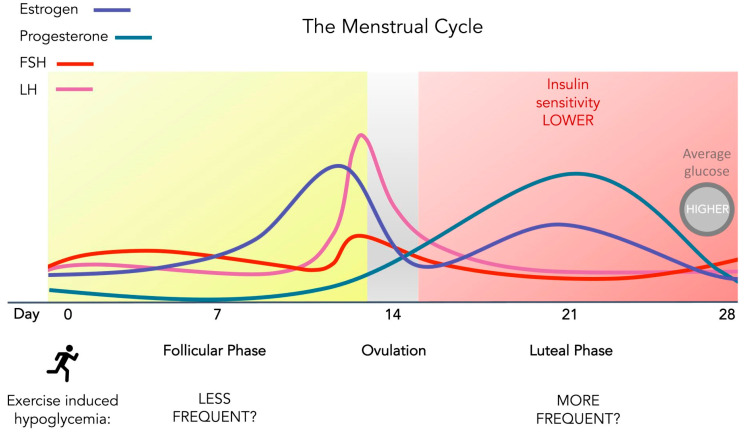
Regular exercise is associated with substantial health benefits for individuals with type 1 diabetes (T1D). However, the fear of hypoglycemia (low blood glucose) due to activity-induced declines in blood glucose levels acts as a major barrier to partaking in exercise in this population. For females with T1D, hormonal fluctuations during the menstrual cycle and their effects on blood glucose levels can act as an additional barrier. The impact that these cyclic changes may have on blood glucose and insulin needs and the consequent risk of hypoglycemia during or after exercise are still unknown in this population. Therefore, in this narrative review, we gathered existing knowledge about the menstrual cycle in T1D and the effects of different cyclic phases on substrate metabolism and glucose response to exercise in females with T1D to increase knowledge and understanding around exercise in this underrepresented population. This increased knowledge in such an understudied area can help to better inform exercise guidelines for females with T1D. It can also play an important role in eliminating a significant barrier to exercise in this population, which has the potential to increase activity, improve mental health and quality of life, and decrease the risk of diabetes-related complications.
定期运动对 1 型糖尿病(T1D)患者的健康有很大益处。然而,由于运动引起血糖水平下降而产生的低血糖(低血糖)恐惧,成为该人群参与运动的主要障碍。对于患有 T1D 的女性,月经周期中的激素波动及其对血糖水平的影响可能是另一个障碍。在该人群中,这些周期性变化对血糖和胰岛素需求的影响以及运动期间或之后发生低血糖的风险仍不清楚。因此,在本综述中,我们收集了关于 T1D 中月经周期的现有知识,以及不同周期阶段对女性 T1D 患者底物代谢和运动后血糖反应的影响,以增加对该代表性不足人群运动的认识和理解。在这个研究不足的领域增加知识可以帮助更好地为 T1D 女性制定运动指南。它还可以在消除该人群运动的一个重要障碍方面发挥重要作用,这有可能增加活动量,改善心理健康和生活质量,并降低与糖尿病相关的并发症风险。