Swiss Research Institute for Public Health and Addiction, Zurich University, Konradstrasse 32, 8005 Zurich, Switzerland.
Marie Meierhofer Childrens's Institute, Pfingstweidstrasse 16, 8005 Zurich, Switzerland.
Int J Environ Res Public Health. 2023 Feb 13;20(4):3263. doi: 10.3390/ijerph20043263.
At-risk alcohol use, particularly binge drinking, is widespread among adolescents and young adults in most Western countries. is a mobile app-based program for alcohol prevention that provides individualized coaching using a conversational agent. The current study tested the acceptance, use, and evaluation of this newly developed program and explored its potential effectiveness.
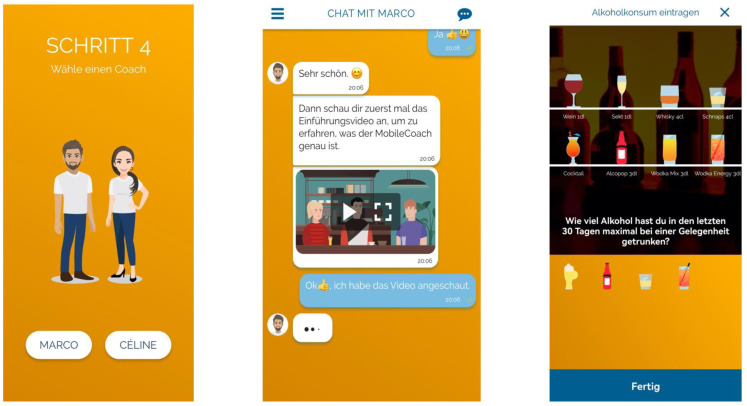
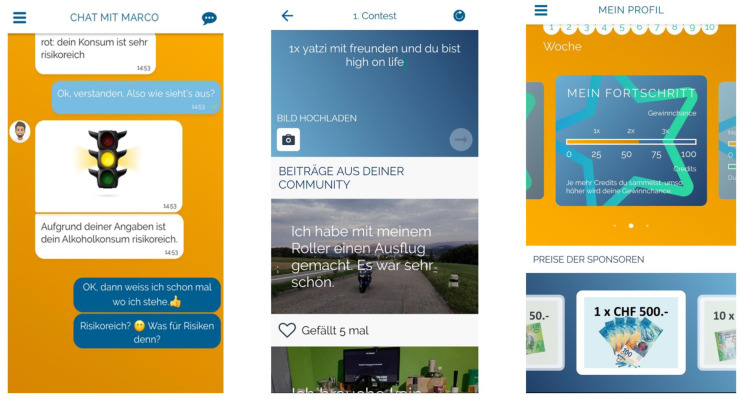
Longitudinal pre-post study among upper secondary and vocational school students in Switzerland. Within the prevention program, a virtual coach motivated participants to deal with alcohol sensitively, and provided feedback on alcohol use and strategies to resist alcohol for a period of 10 weeks. Information was provided in weekly dialogs, within contests with other participants, and interactive challenges. By means of a follow-up survey after the end of the 10-week program, indicators of the use, acceptance, and effectiveness of the program were examined.
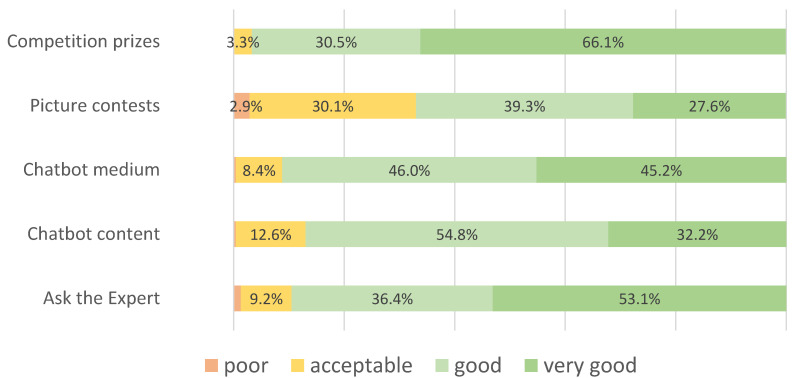
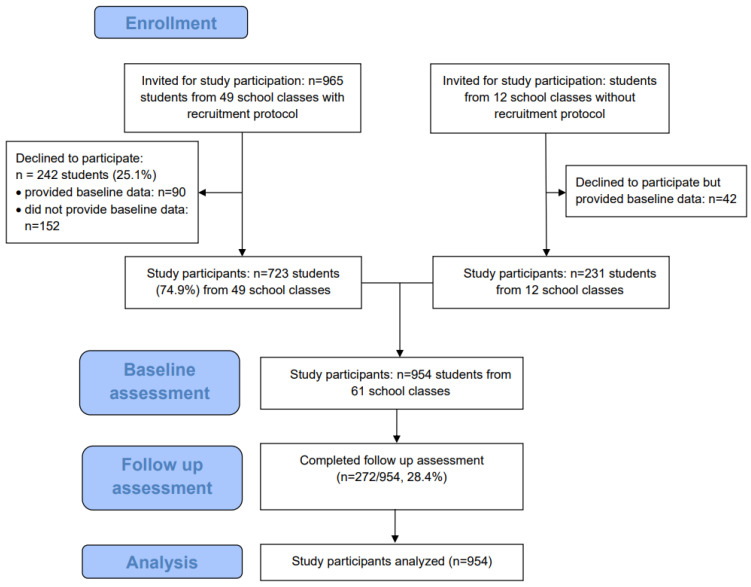
Between October 2020 and July 2022, the program was advertised in upper secondary and vocational schools. Recruiting schools and school classes was difficult due to the COVID-19 containment measures in place during this period. Nevertheless, the program could be implemented in 61 upper secondary and vocational school classes with a total of 954 participating students. Three out of four students who were present in the school classes participated in the program and the associated study. Online follow up assessment at week 10 was completed by 272 program participants (28.4%). Based on program use and evaluations by the participants, the overall acceptance of the intervention was good. The proportion of students who engaged in binge drinking was significantly reduced from 32.7% at baseline to 24.3% at follow up. Furthermore, the longitudinal analyses revealed decreases in the maximum number of alcoholic drinks consumed on an occasion and the mean number of standard drinks per month, whereas self-efficacy to resist alcohol increased between baseline and follow up.
The mobile app-based program proved to be an attractive intervention, in which the majority of students were interested when proactively recruited at school classes. It allows for individualized coaching in large groups of adolescents and young adults and is promising for reducing at-risk alcohol use.
在大多数西方国家,青少年和年轻人中普遍存在危险的饮酒行为,尤其是 binge drinking。是一种基于移动应用程序的预防酒精使用的程序,它使用对话代理为用户提供个性化的指导。本研究测试了这个新开发的程序的接受程度、使用情况和评估,并探索了其潜在的有效性。
在瑞士的高中和职业学校学生中进行的纵向预-后研究。在预防酒精使用的程序中,一个虚拟教练激励参与者以敏感的方式处理酒精,并在 10 周的时间内对他们的酒精使用情况和抵抗酒精的策略提供反馈。信息每周在对话中提供,在与其他参与者的竞赛中提供,并通过互动挑战提供。在为期 10 周的项目结束后进行的后续调查中,检查了该项目的使用、接受和有效性的指标。
在 2020 年 10 月至 2022 年 7 月期间,该项目在高中和职业学校进行了宣传。由于在这段时间内实施的 COVID-19 遏制措施,招募学校和班级很困难。尽管如此,该项目还是可以在 61 个高中和职业学校班级中实施,共有 954 名学生参加。在学校班级中,有四分之三的学生参加了该项目及其相关研究。在第 10 周进行的在线后续评估完成了 272 名项目参与者(28.4%)。基于参与者对该干预措施的使用和评估,该干预措施的总体接受度良好。从基线时的 32.7%到随访时的 24.3%, binge drinking 的学生比例显著降低。此外,纵向分析显示,单次饮酒的最大饮料量和每月平均标准饮料量均有所减少,而抵抗酒精的自我效能感在基线和随访之间有所增加。
基于移动应用程序的预防酒精使用的程序证明是一种有吸引力的干预措施,当在学校班级中主动招募时,大多数学生都很感兴趣。它允许对大量青少年和年轻人进行个性化的指导,并且有望减少危险的酒精使用。