College of Medicine & Public Health, Rural and Remote Health, Flinders University, Renmark, SA 5341, Australia.
Health Vertical Centre for Healthy Futures, Torrens University, Sydney, NSW 2007, Australia.
Int J Environ Res Public Health. 2023 Feb 13;20(4):3298. doi: 10.3390/ijerph20043298.
Rural populations experience poorer access to the necessary health services for chronic health conditions. Although studies of rural healthcare access continue to expand, most are based on quantitative data, yet normative views and lived experiences of rural adults might offer a better understanding of healthcare access and their specific unmet needs. This qualitative study sought the views of both rural-centric older people and healthcare professionals to understand health needs, barriers, and enablers of accessing health services, with a focus on chronic health condition(s).
Between April and July 2022, separate in-depth interviews were conducted with 20 older people (≥60 years) in a rural South Australian community. Additionally, focus group interviews were conducted with 15 healthcare professionals involved in providing health services to older adults. Transcripts were coded using the NVivo software and data were thematically analysed.
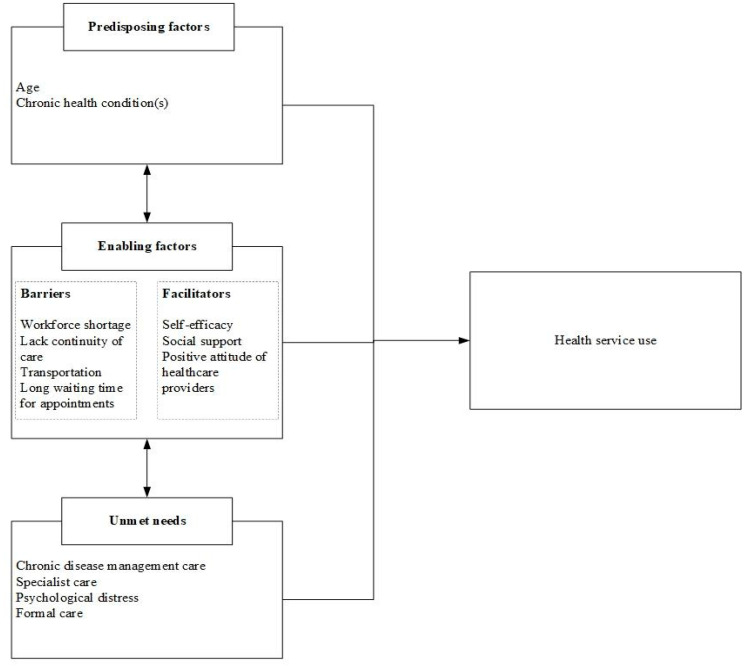
Participants described a range of unmet care needs including chronic disease management, specialist care, psychological distress, and the need for formal care services. Four barriers to meeting care needs were identified: Workforce shortages, a lack of continuity of care, self-transportation, and long waiting times for appointments. Self-efficacy, social support, and positive provider attitudes emerged as crucial enabling factors of service use among rural ageing populations.
Older adults confront four broad ranges of unmet needs: Chronic disease management care, specialist care, psychological care, and formal care. There are potential facilitators, such as self-efficacy, provider positive attitudes, and social support, that could be leveraged to improve healthcare services access for older adults.
农村人口获得慢性病所需的基本医疗服务的机会较差。尽管农村医疗保健服务的研究在不断扩展,但大多数研究都是基于定量数据,然而农村成年人的规范观点和生活体验可能会更好地理解医疗保健的获取及其特定的未满足需求。本定性研究旨在了解农村中心老年人和医疗保健专业人员对健康需求、获取健康服务的障碍和促进因素的看法,重点关注慢性健康状况。
2022 年 4 月至 7 月,在南澳大利亚州的一个农村社区中,分别对 20 名 60 岁以上的老年人进行了深入访谈。此外,还对 15 名参与为老年人提供医疗服务的医疗保健专业人员进行了焦点小组访谈。使用 NVivo 软件对转录本进行编码,并对数据进行主题分析。
参与者描述了一系列未满足的护理需求,包括慢性病管理、专科护理、心理困扰以及对正规护理服务的需求。确定了四个满足护理需求的障碍:劳动力短缺、护理连续性不足、自我运输以及预约等待时间长。自我效能、社会支持和积极的提供者态度是农村老年人口服务使用的关键促进因素。
老年人面临四大类未满足的需求:慢性病管理护理、专科护理、心理护理和正规护理。有一些潜在的促进因素,如自我效能、提供者的积极态度和社会支持,可以利用这些因素来改善老年人的医疗保健服务获取。