Farm Animal Genetic Resources Exploration Innovation Key Laboratory of Sichuan Province, College of Animal Science and Technology, Sichuan Agricultural University, Chengdu 611130, China.
Int J Mol Sci. 2023 Feb 4;24(4):3115. doi: 10.3390/ijms24043115.
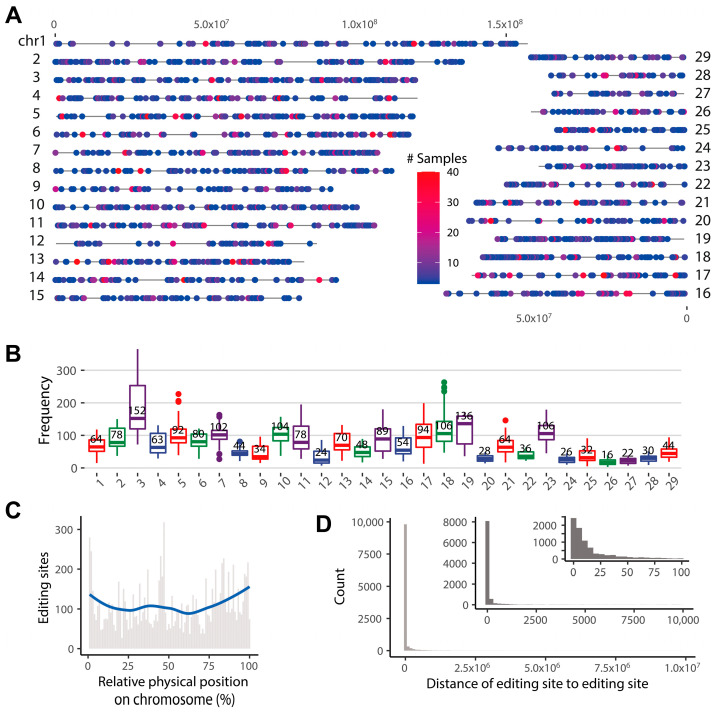
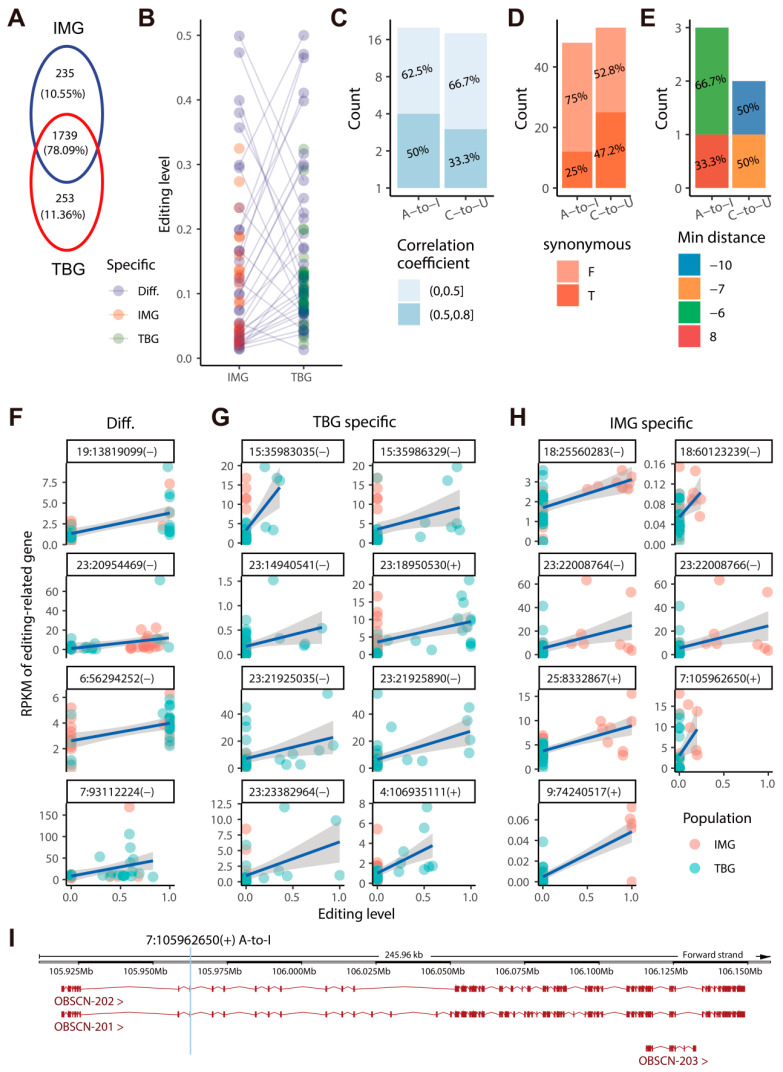
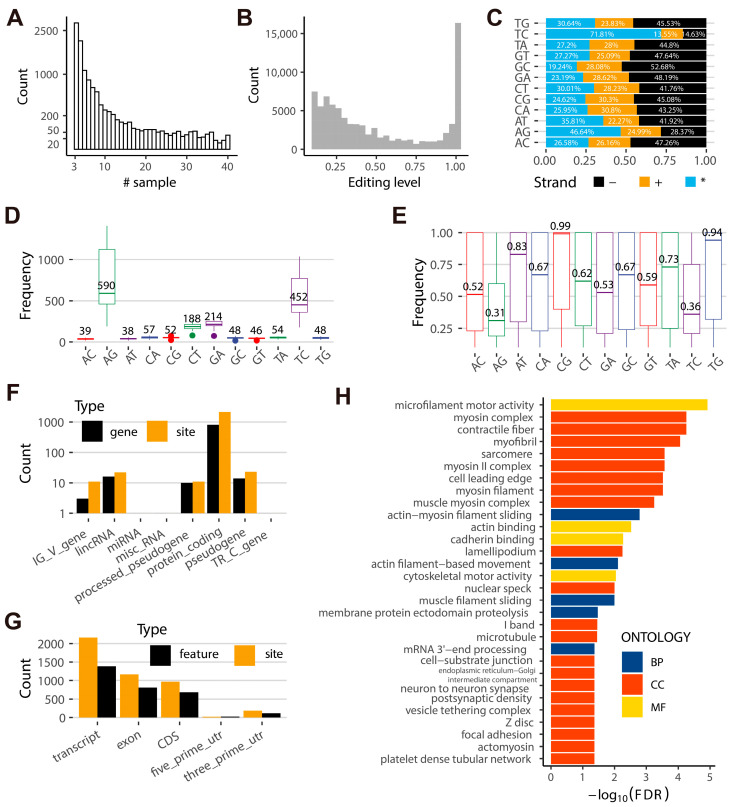
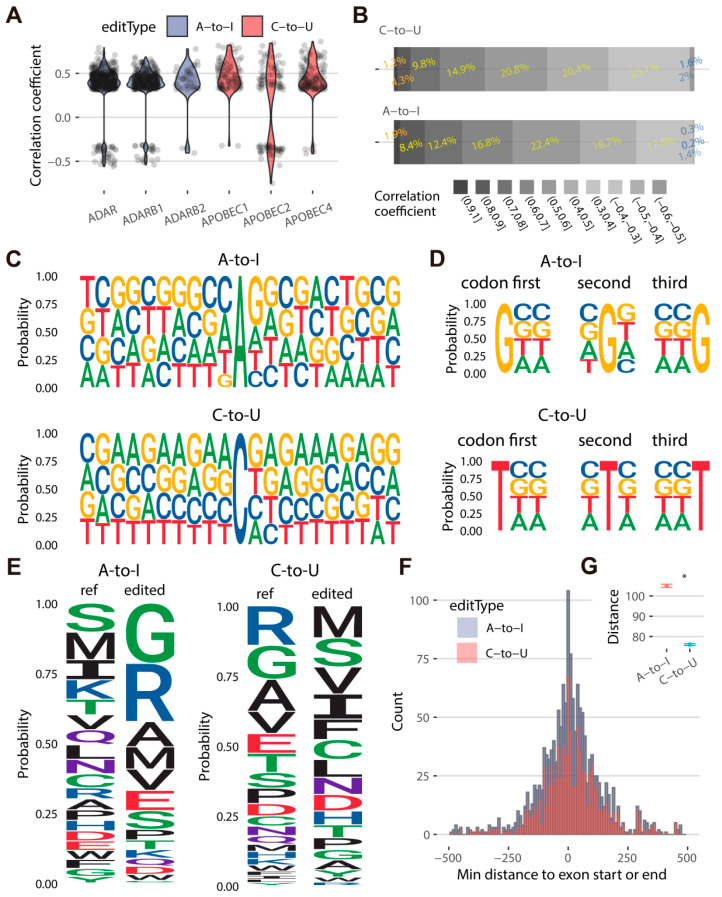
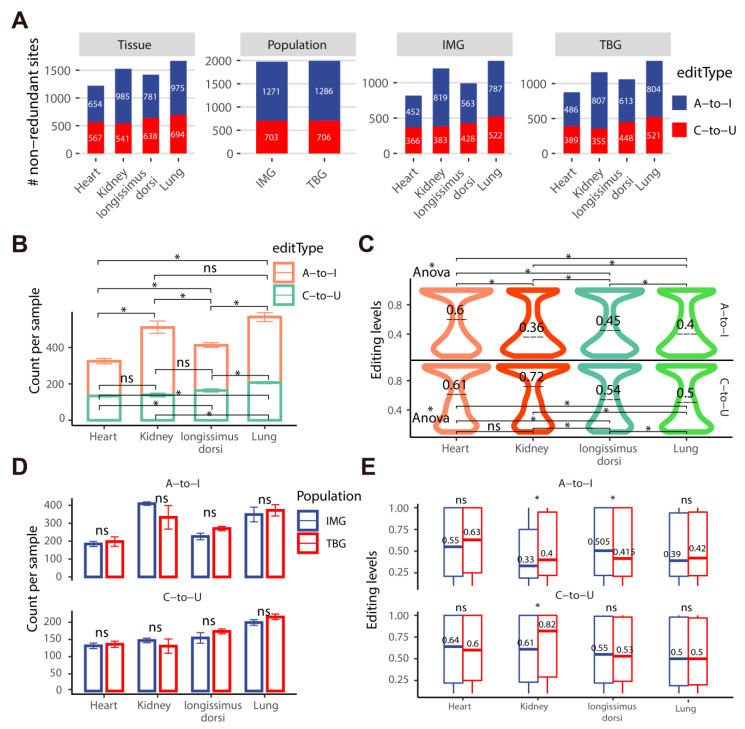
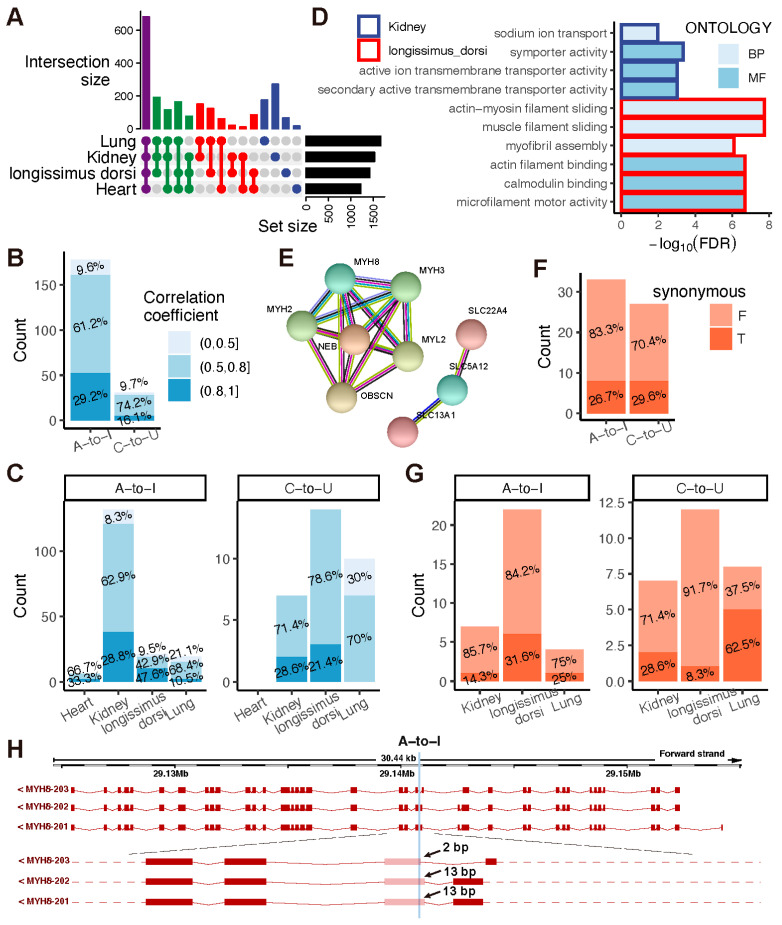
High-altitude environments dramatically influenced the genetic evolution of vertebrates. However, little is known about the role of RNA editing on high-altitude adaptation in non-model species. Here, we profiled the RNA editing sites (RESs) of heart, lung, kidney, and longissimus dorsi muscle from Tibetan cashmere goats (TBG, 4500 m) and Inner Mongolia cashmere goats (IMG, 1200 m) to reveal RNA editing-related functions of high-altitude adaptation in goats. We identified 84,132 high-quality RESs that were unevenly distributed across the autosomes in TBG and IMG, and more than half of the 10,842 non-redundant editing sites were clustered. The majority (62.61%) were adenosine-to-inosine (A-to-I) sites, followed by cytidine-to-uridine (C-to-U) sites (19.26%), and 32.5% of them had a significant correlation with the expression of catalytic genes. Moreover, A-to-I and C-to-U RNA editing sites had different flanking sequences, amino acid mutations, and alternative splicing activity. TBG had higher editing levels of A-to-I and C-to-U than IMG in the kidney, whereas a lower level was found in the longissimus dorsi muscle. Furthermore, we identified 29 IMG and 41 TBG population-specific editing sites (pSESs) and 53 population-differential editing sites (pDESs) that were functionally involved in altering RNA splicing or recoding protein products. It is worth noting that 73.3% population-differential, 73.2% TBG-specific, and 80% IMG-specific A-to-I sites were nonsynonymous sites. Moreover, the pSESs and pDESs editing-related genes play critical functions in energy metabolisms such as ATP binding molecular function, translation, and adaptive immune response, which may be linked to goat high-altitude adaptation. Our results provide valuable information for understanding the adaptive evolution of goats and studying plateau-related diseases.
高海拔环境极大地影响了脊椎动物的遗传进化。然而,对于非模式物种高原适应过程中 RNA 编辑的作用知之甚少。在这里,我们对来自西藏绒山羊(4500m)和内蒙古绒山羊(1200m)的心、肺、肾和背最长肌的 RNA 编辑位点(RES)进行了分析,以揭示山羊高原适应过程中与 RNA 编辑相关的功能。我们鉴定了 84132 个高质量的 RES,它们在 TBG 和 IMG 的常染色体上不均匀分布,超过 10842 个非冗余编辑位点的一半被聚类。大多数(62.61%)是腺苷到肌苷(A-to-I)位点,其次是胞嘧啶到尿嘧啶(C-to-U)位点(19.26%),其中 62.61%与催化基因的表达显著相关。此外,A-to-I 和 C-to-U RNA 编辑位点具有不同的侧翼序列、氨基酸突变和选择性剪接活性。在肾脏中,TBG 的 A-to-I 和 C-to-U 编辑水平高于 IMG,而在背最长肌中则较低。此外,我们鉴定了 29 个 IMG 和 41 个 TBG 群体特异性编辑位点(pSES)和 53 个群体差异编辑位点(pDES),它们在改变 RNA 剪接或重新编码蛋白产物方面具有功能。值得注意的是,73.3%的群体差异、73.2%的 TBG 特异性和 80%的 IMG 特异性 A-to-I 位点是非同义位点。此外,pSES 和 pDES 相关编辑基因在能量代谢等方面发挥着关键作用,如 ATP 结合分子功能、翻译和适应性免疫反应,这可能与山羊高原适应有关。我们的研究结果为理解山羊的适应性进化和研究高原相关疾病提供了有价值的信息。