Cardiovascular & Aging Research, Department of Endocrinology, Metabolism, Cardiovascular System, Faculty of Science and Medicine, University of Fribourg, CH-1700 Fribourg, Switzerland.
Int J Mol Sci. 2023 Feb 10;24(4):3587. doi: 10.3390/ijms24043587.
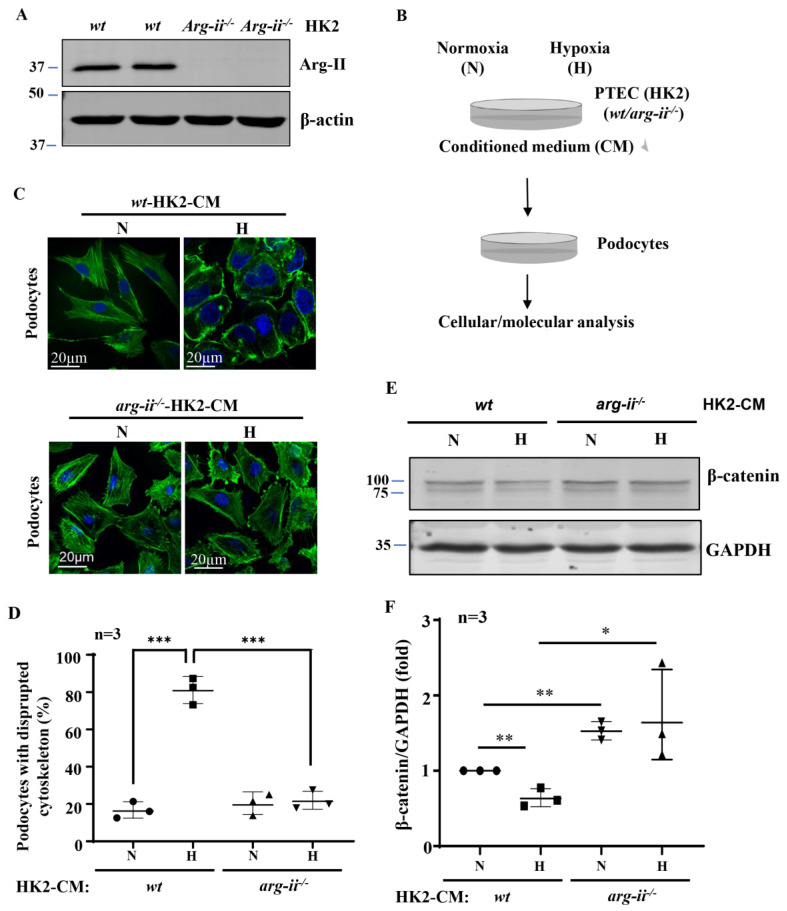
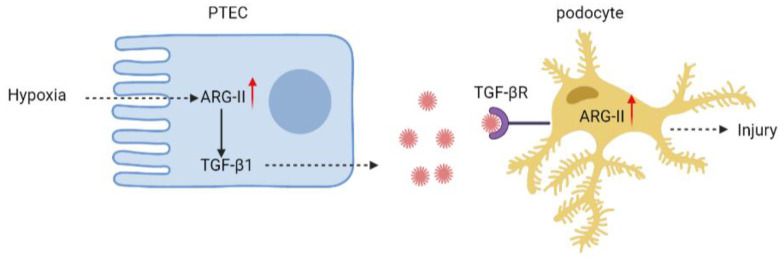
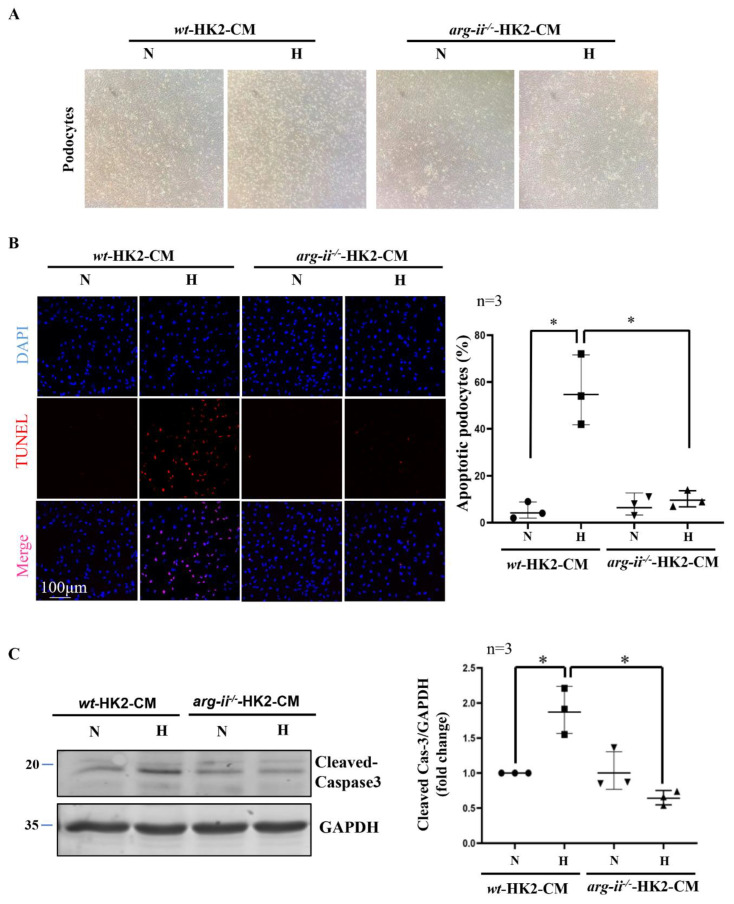
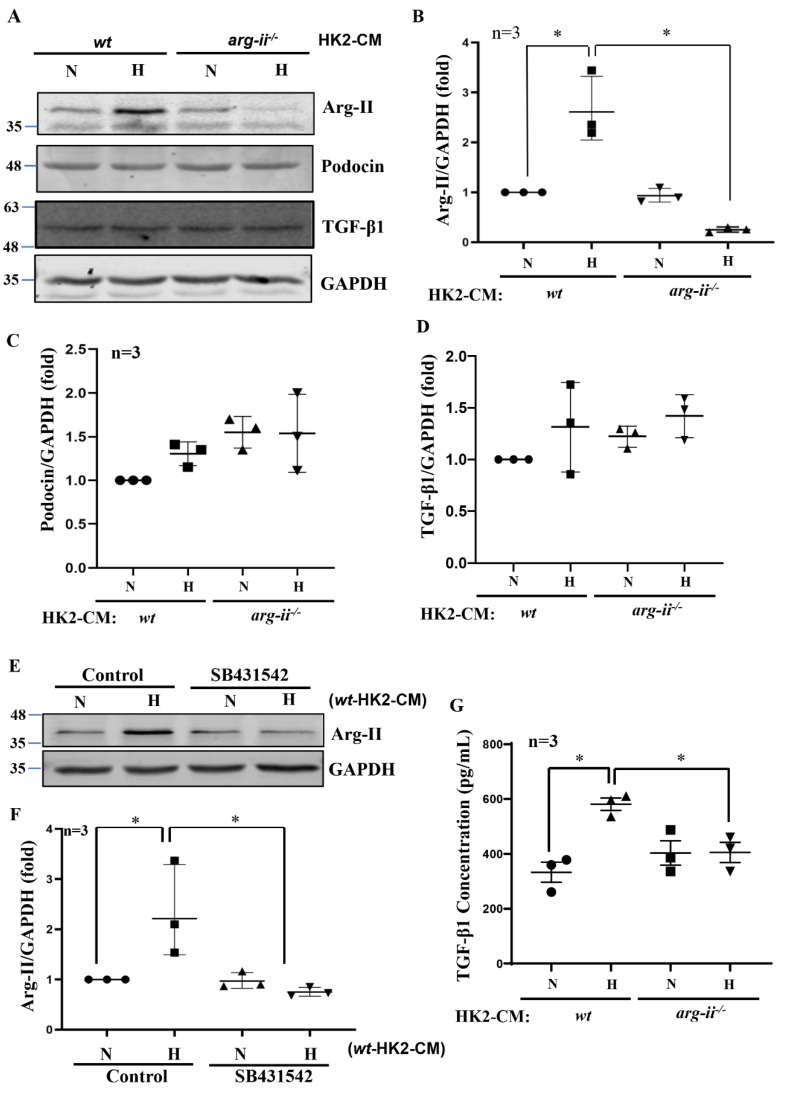
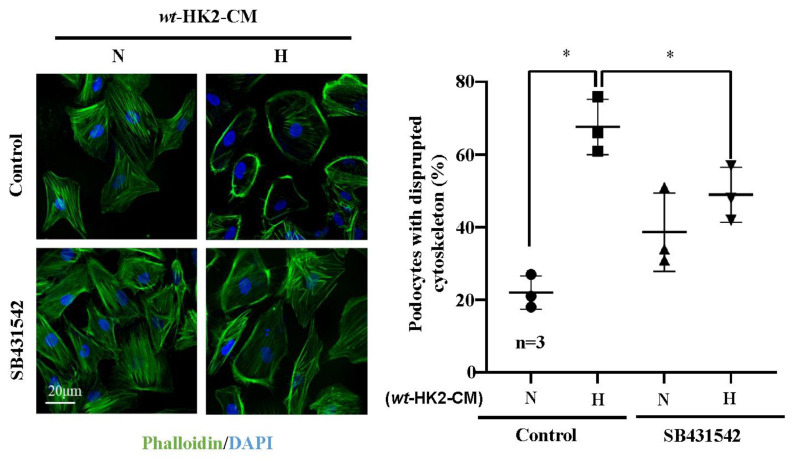
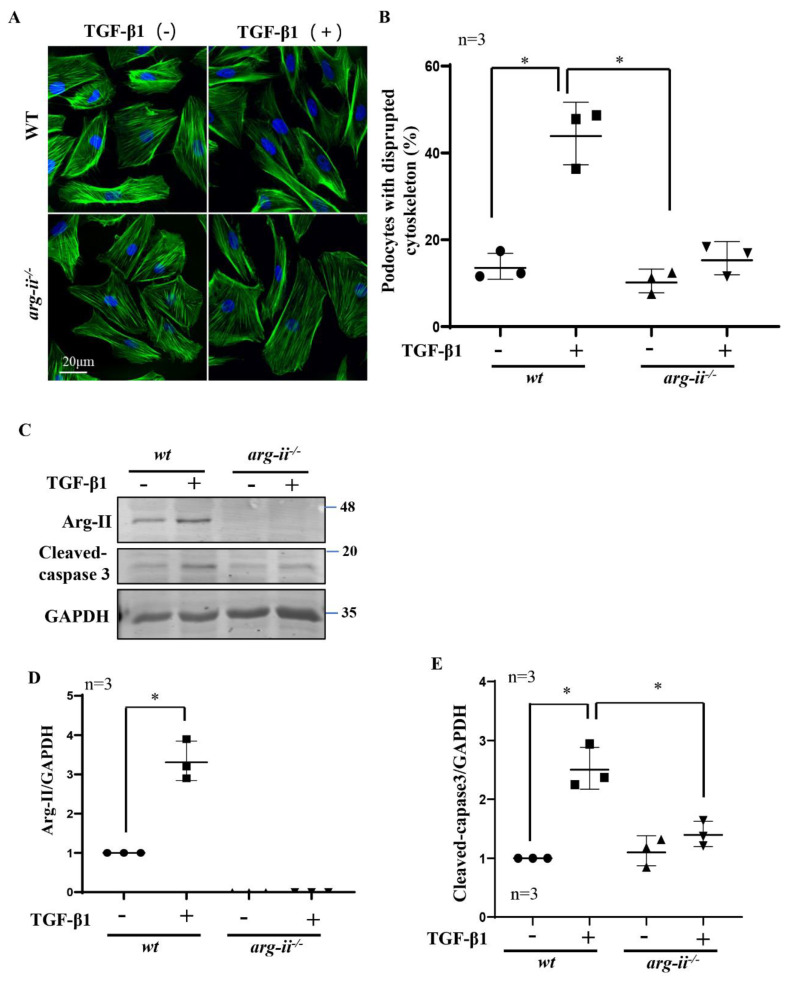
Hypoxia is an important risk for renal disease. The mitochondrial enzyme arginase-II (Arg-II) is expressed and/or induced by hypoxia in proximal tubular epithelial cells (PTECs) and in podocytes, leading to cellular damage. Because PTECs are vulnerable to hypoxia and located in proximity to podocytes, we examined the role of Arg-II in the crosstalk of PTECs under hypoxic conditions with podocytes. A human PTEC cell line (HK2) and a human podocyte cell line (AB8/13) were cultured. gene was ablated by CRISPR/Case9 in both cell types. HK2 cells were exposed to normoxia (21% O) or hypoxia (1% O) for 48 h. Conditioned medium (CM) was collected and transferred to the podocytes. Podocyte injuries were then analyzed. Hypoxic (not normoxic) HK2-CM caused cytoskeletal derangement, cell apoptosis, and increased Arg-II levels in differentiated podocytes. These effects were absent when in HK2 was ablated. The detrimental effects of the hypoxic HK2-CM were prevented by TGF-β1 type-I receptor blocker SB431542. Indeed, TGF-β1 levels in hypoxic HK2-CM (but not -HK2-CM) were increased. Furthermore, the detrimental effects of TGF-β1 on podocytes were prevented in -podocytes. This study demonstrates crosstalk between PTECs and podocytes through the Arg-II-TGF-β1 cascade, which may contribute to hypoxia-induced podocyte damage.
缺氧是肾脏疾病的一个重要危险因素。线粒体酶精氨酸酶-II(Arg-II)在近端肾小管上皮细胞(PTEC)和足细胞中由缺氧表达和/或诱导,导致细胞损伤。由于 PTEC 对缺氧敏感且位于足细胞附近,因此我们研究了 Arg-II 在缺氧条件下 PTEC 与足细胞相互作用中的作用。培养人 PTEC 细胞系(HK2)和人足细胞系(AB8/13)。在这两种细胞类型中,通过 CRISPR/Cas9 敲除 基因。将 HK2 细胞暴露于常氧(21% O)或缺氧(1% O)48 小时。收集条件培养基(CM)并转移至足细胞。然后分析足细胞损伤。缺氧(而非常氧)HK2-CM 导致分化的足细胞骨架紊乱、细胞凋亡和 Arg-II 水平升高。当在 HK2 中敲除 时,这些作用不存在。TGF-β1 型 I 型受体阻滞剂 SB431542 可预防缺氧 HK2-CM 的有害作用。事实上,缺氧 HK2-CM(而非 -HK2-CM)中的 TGF-β1 水平增加。此外,TGF-β1 对 -podocytes 的有害作用也被预防。这项研究表明,PTEC 和足细胞通过 Arg-II-TGF-β1 级联相互作用,这可能导致缺氧诱导的足细胞损伤。