Laboratory of Enzyme Technology, Department of Biotechnology, School of Applied Biology and Biotechnology, Agricultural University of Athens, 75 Iera Odos Street, 11855 Athens, Greece.
Turku Bioscience Centre, University of Turku and Åbo Akademi University, 20520 Turku, Finland.
Int J Mol Sci. 2023 Feb 12;24(4):3700. doi: 10.3390/ijms24043700.
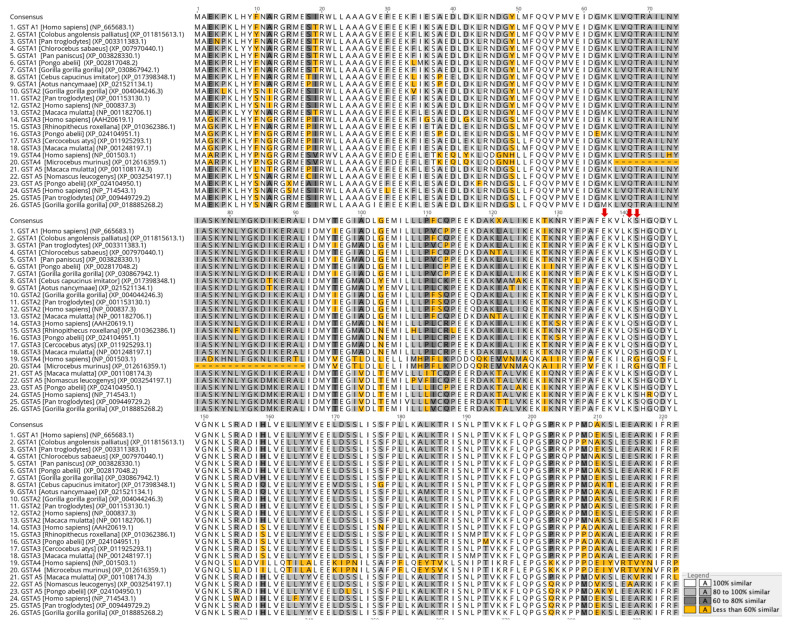
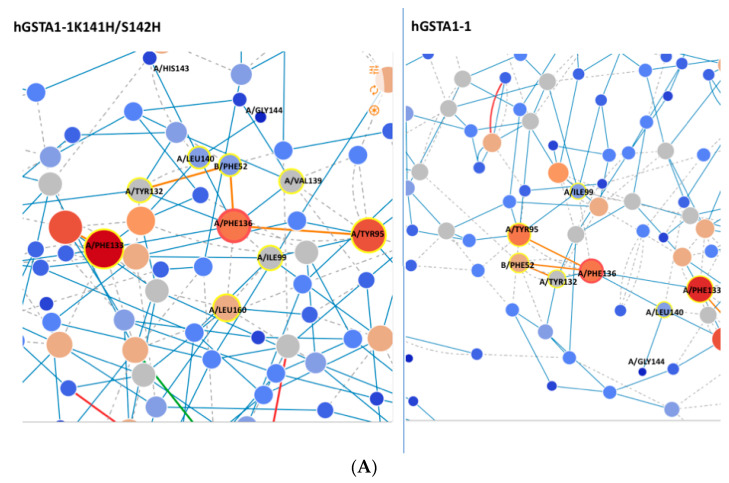
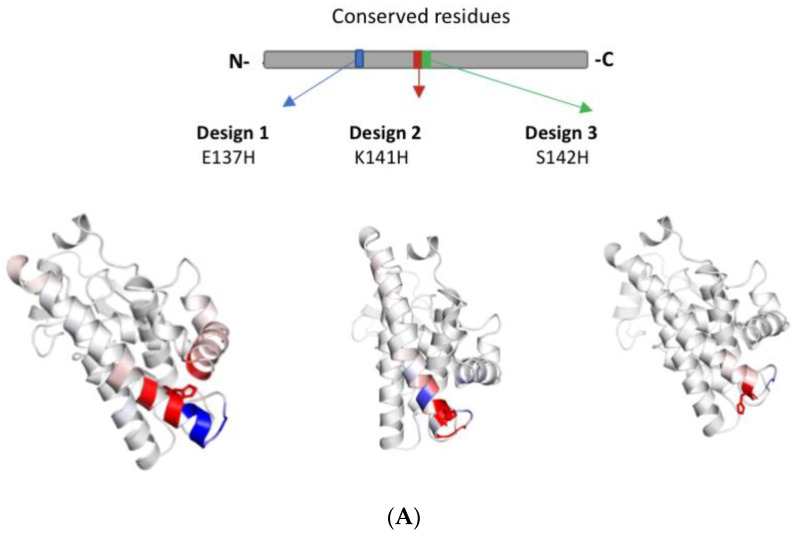
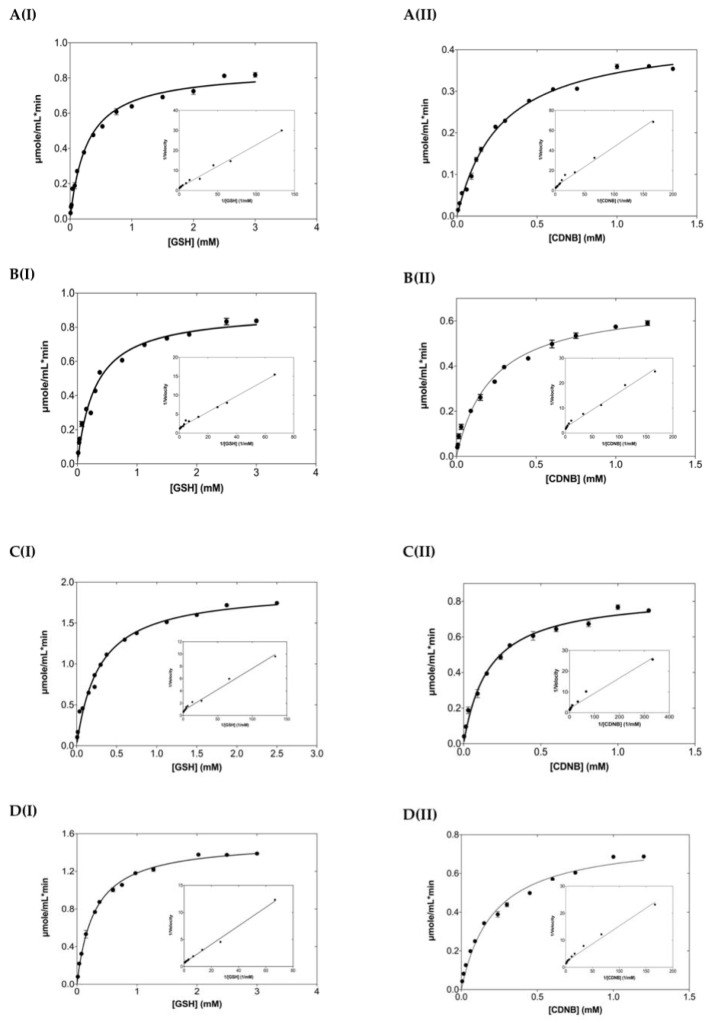
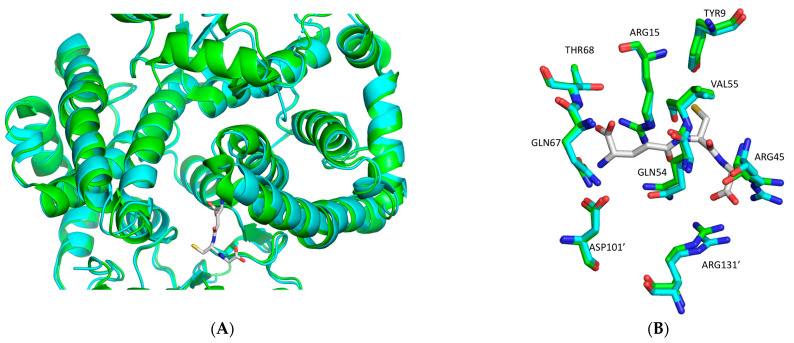
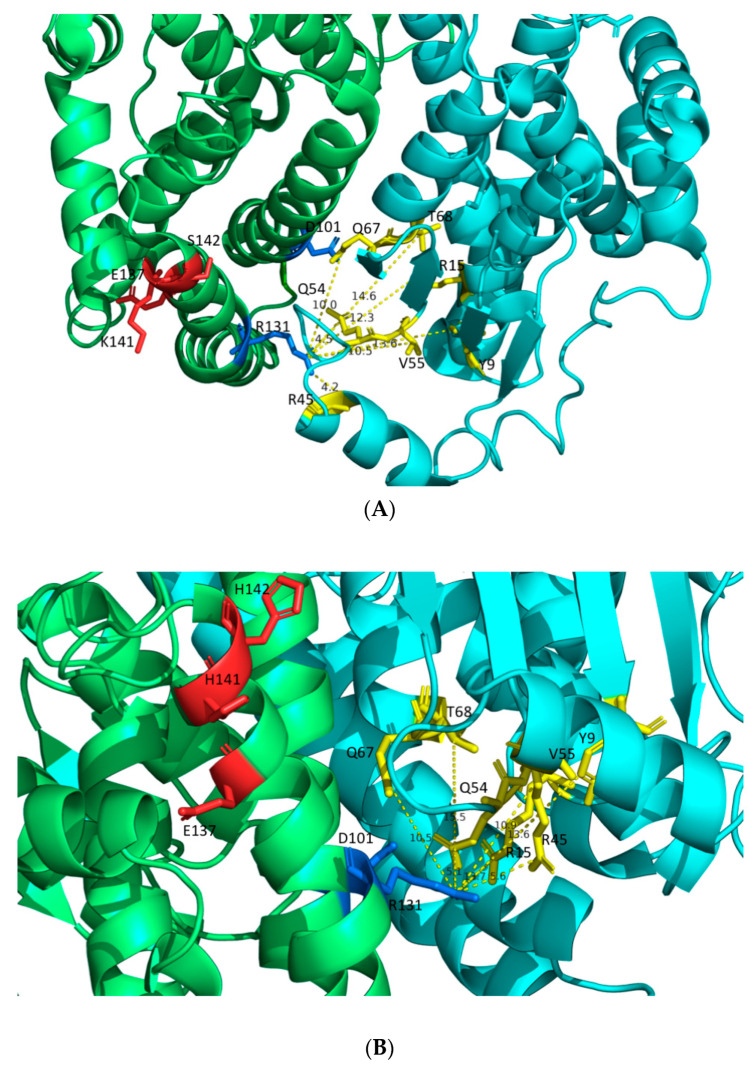
Glutathione transferases (GSTs) are promiscuous enzymes whose main function is the detoxification of electrophilic compounds. These enzymes are characterized by structural modularity that underpins their exploitation as dynamic scaffolds for engineering enzyme variants, with customized catalytic and structural properties. In the present work, multiple sequence alignment of the alpha class GSTs allowed the identification of three conserved residues (E137, K141, and S142) at α-helix 5 (H5). A motif-directed redesign of the human glutathione transferase A1-1 (hGSTA1-1) was performed through site-directed mutagenesis at these sites, creating two single- and two double-point mutants (E137H, K141H, K141H/S142H, and E137H/K141H). The results showed that all the enzyme variants displayed enhanced catalytic activity compared to the wild-type enzyme hGSTA1-1, while the double mutant hGSTA1-K141H/S142H also showed improved thermal stability. X-ray crystallographic analysis revealed the molecular basis of the effects of double mutations on enzyme stability and catalysis. The biochemical and structural analysis presented here will contribute to a deeper understanding of the structure and function of alpha class GSTs.
谷胱甘肽转移酶(GSTs)是一种多功能酶,其主要功能是解毒亲电化合物。这些酶的结构具有模块化的特点,这为它们作为工程酶变体的动态支架提供了基础,具有定制的催化和结构特性。在本工作中,通过对α类 GSTs 的多重序列比对,鉴定出α螺旋 5(H5)上的三个保守残基(E137、K141 和 S142)。通过在这些位点进行定点突变,对人谷胱甘肽转移酶 A1-1(hGSTA1-1)进行了基于模体的重新设计,产生了两种单突变体和两种双突变体(E137H、K141H、K141H/S142H 和 E137H/K141H)。结果表明,与野生型酶 hGSTA1-1 相比,所有酶变体均显示出增强的催化活性,而双突变体 hGSTA1-K141H/S142H 还显示出改善的热稳定性。X 射线晶体学分析揭示了双突变对酶稳定性和催化的影响的分子基础。这里提出的生化和结构分析将有助于更深入地了解α类 GSTs 的结构和功能。