Department of Experimental Medicine, Sapienza University of Rome, Viale Regina Elena 324, 00161 Rome, Italy.
Int J Mol Sci. 2023 Feb 15;24(4):3933. doi: 10.3390/ijms24043933.
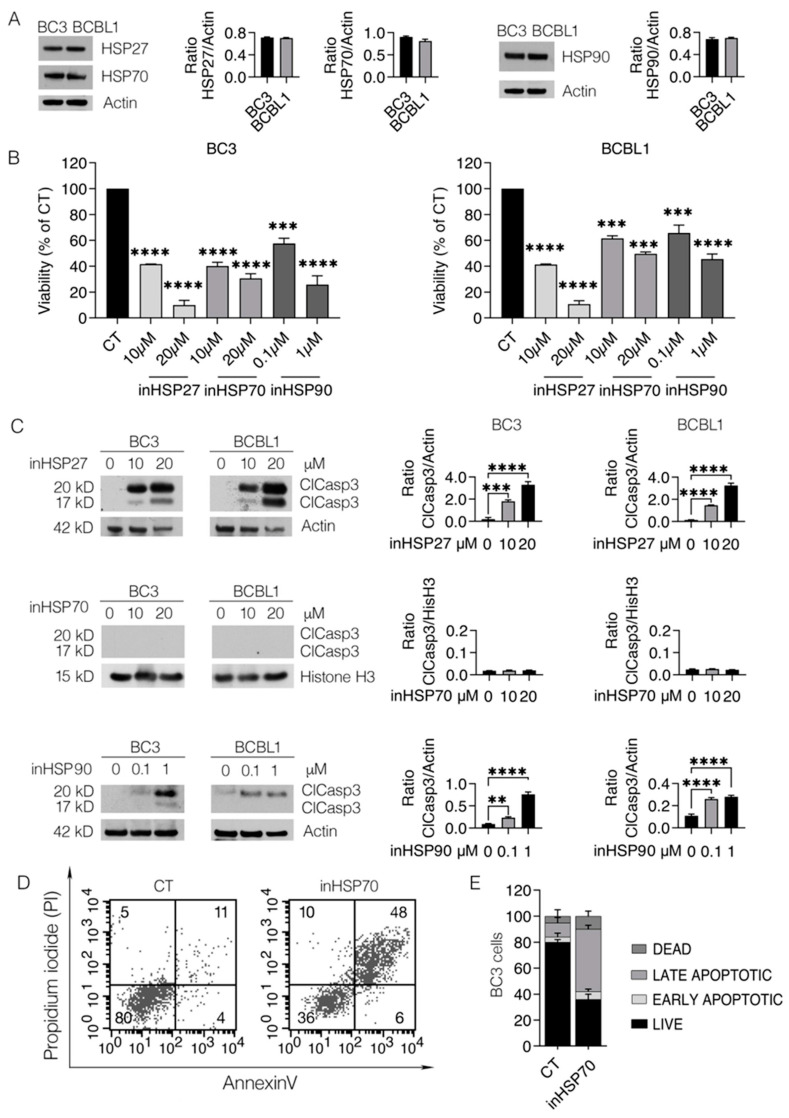
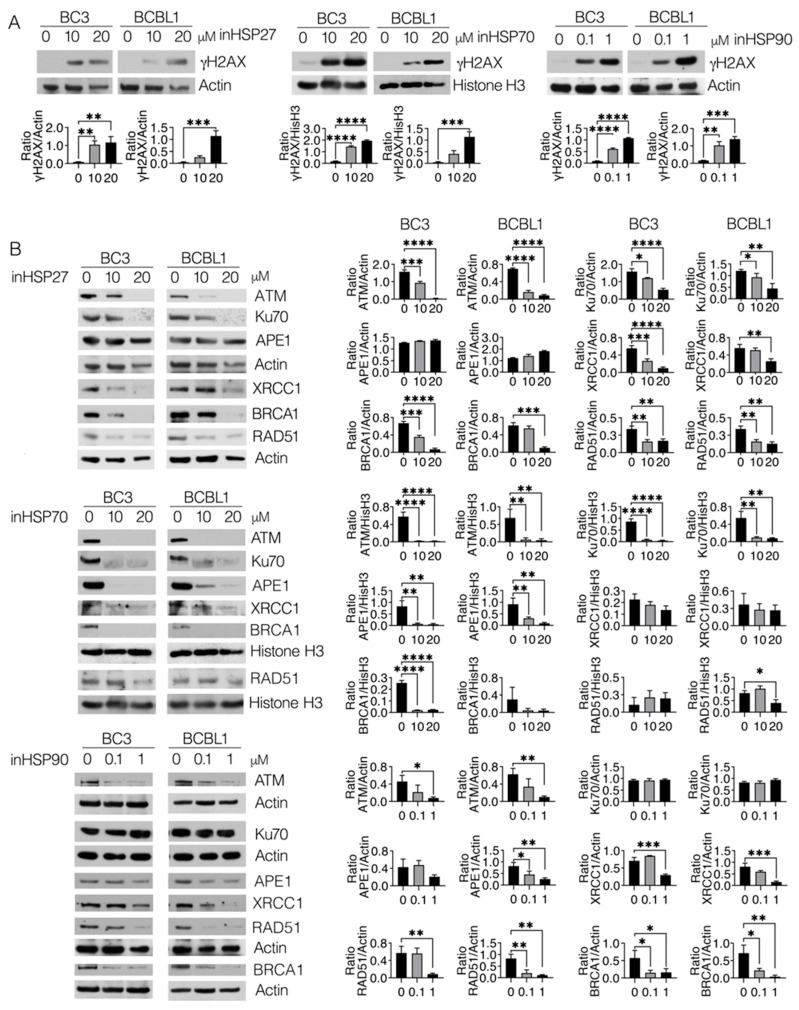
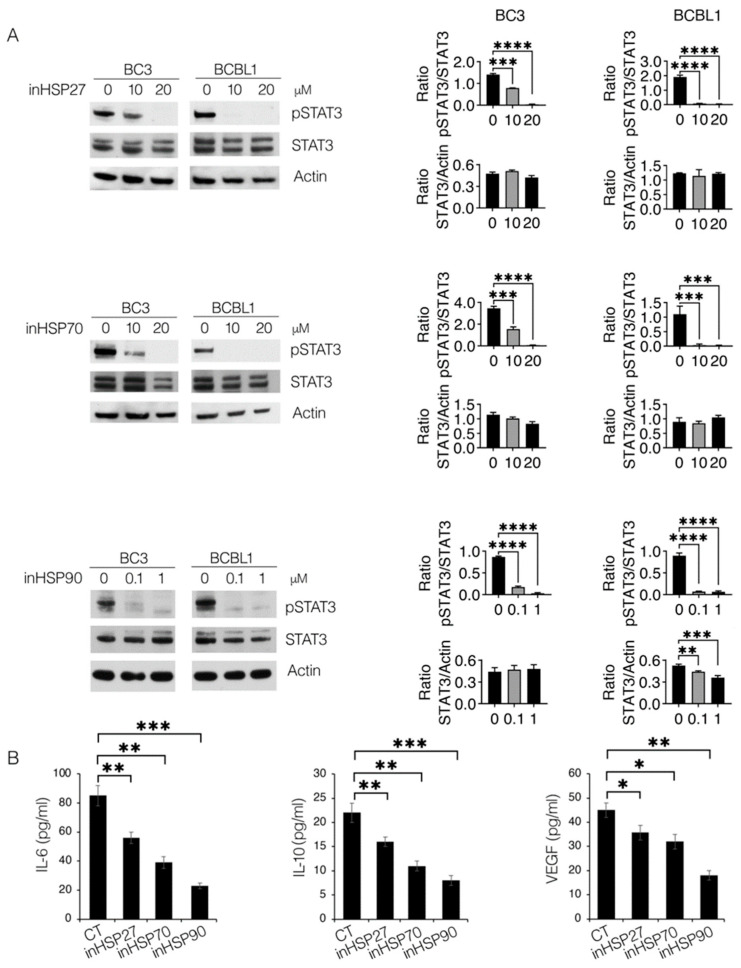
Primary effusion lymphoma (PEL) is a rare and aggressive B-cell lymphoma, against which current therapies usually fail. In the present study, we show that targeting HSPs, such as HSP27, HSP70 and HSP90, could be an efficient strategy to reduce PEL cell survival, as it induces strong DNA damage, which correlated with an impairment of DDR. Moreover, as HSP27, HSP70 and HSP90 cross talk with STAT3, their inhibition results in STAT3 de-phosphorylation and. On the other hand, the inhibition of STAT3 may downregulate these HSPs. These findings suggest that targeting HSPs has important implications in cancer therapy, as it can reduce the release of cytokines by PEL cells, which, besides affecting their own survival, could negatively influence anti-cancer immune response.
原发性渗出性淋巴瘤(PEL)是一种罕见且侵袭性的 B 细胞淋巴瘤,目前的治疗方法通常对此无效。在本研究中,我们表明,靶向 HSPs,如 HSP27、HSP70 和 HSP90,可能是降低 PEL 细胞存活的有效策略,因为它会诱导强烈的 DNA 损伤,这与 DDR 的损伤相关。此外,由于 HSP27、HSP70 和 HSP90 与 STAT3 相互作用,它们的抑制会导致 STAT3 去磷酸化和。另一方面,STAT3 的抑制可能会下调这些 HSPs。这些发现表明,靶向 HSPs 在癌症治疗中具有重要意义,因为它可以减少 PEL 细胞释放细胞因子,这不仅会影响自身的存活,还可能对抗肿瘤免疫反应产生负面影响。