Blood Cancer and Stem Cell Group, School of Medicine, Biodiscovery Institute, University of Nottingham, Nottingham NG7 2RD, UK.
Optics and Photonics Research Group, Faculty of Engineering, University of Nottingham, Nottingham NG7 2RD, UK.
Int J Mol Sci. 2023 Feb 20;24(4):4235. doi: 10.3390/ijms24044235.
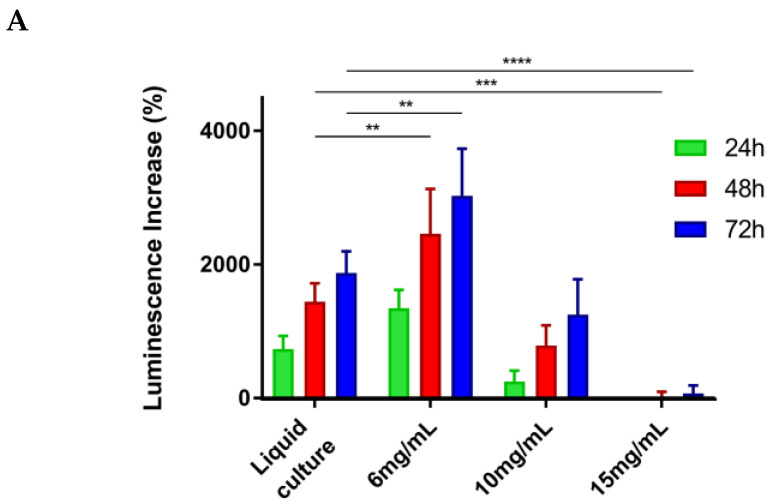
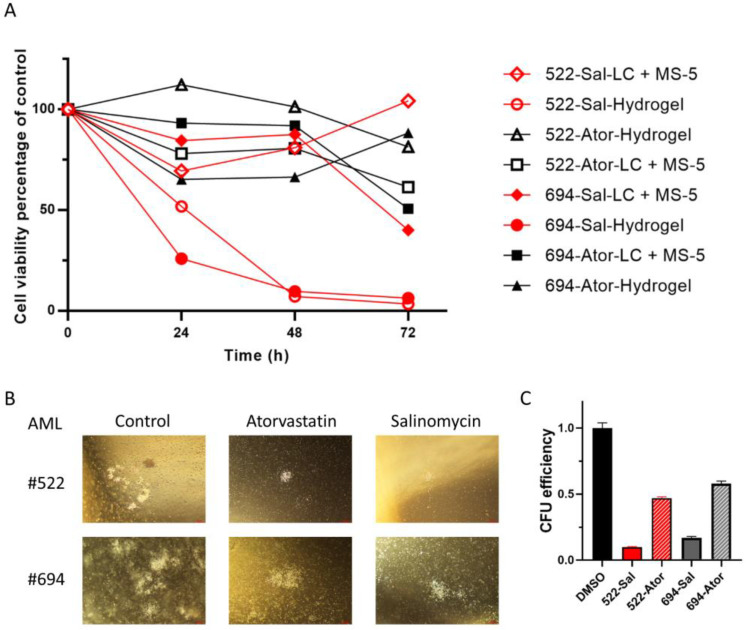
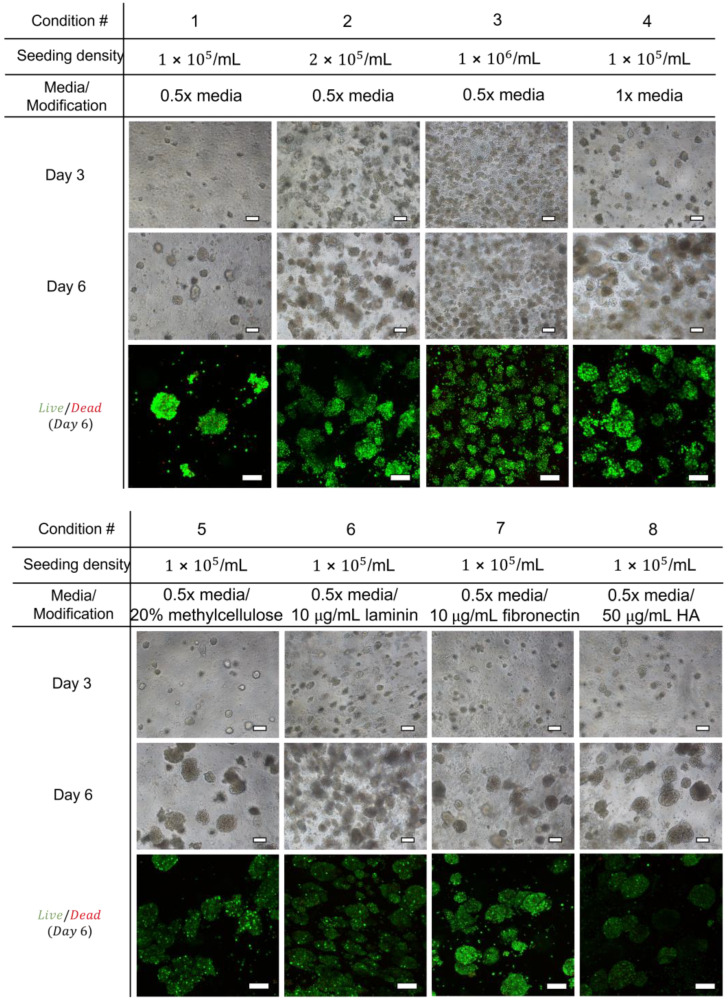
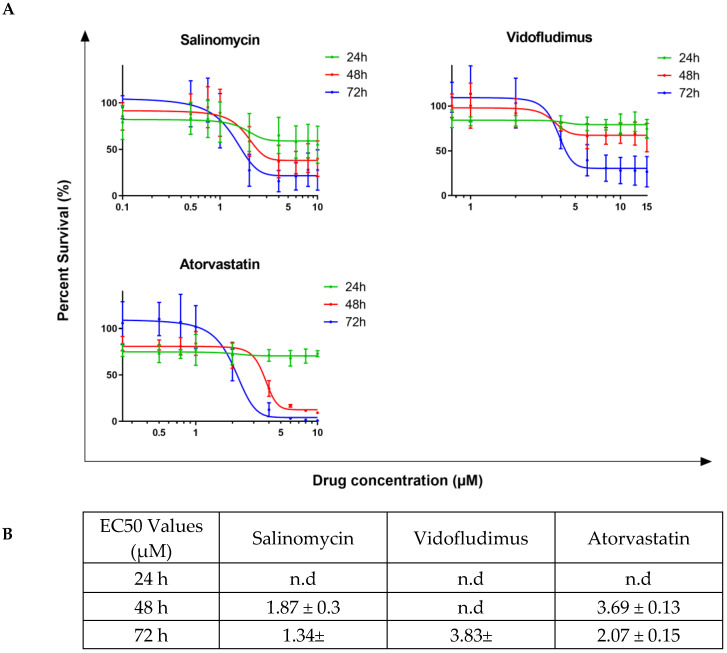
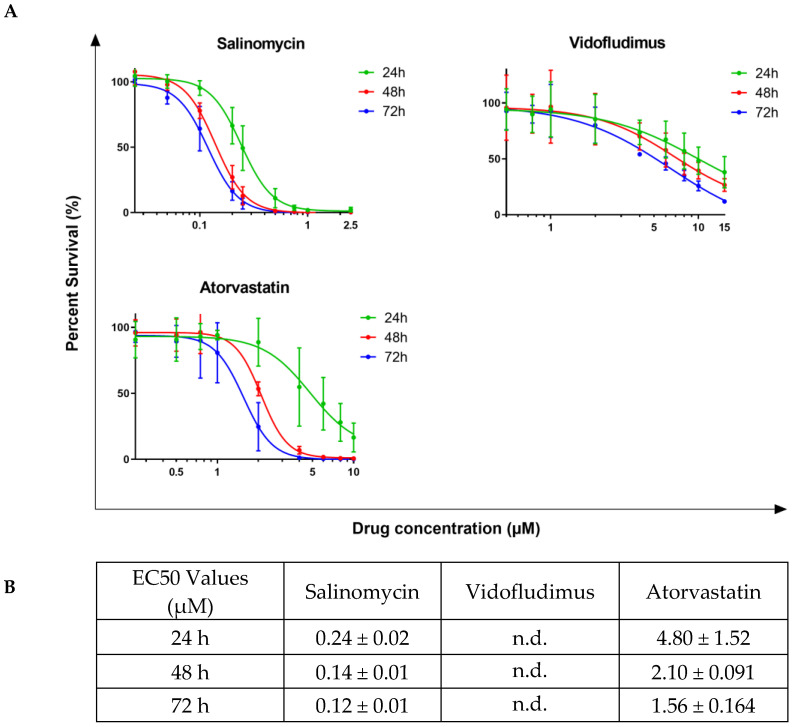
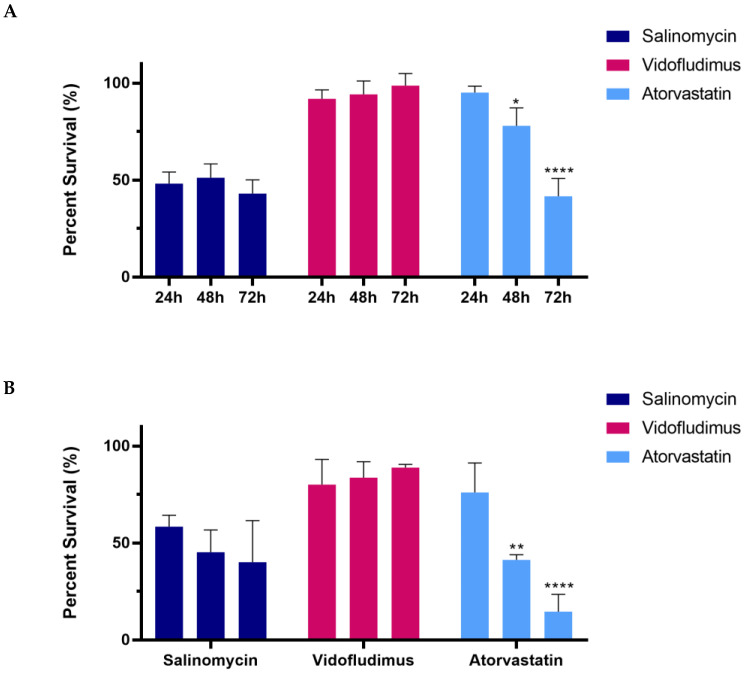
In vivo models of acute myeloid leukemia (AML) are low throughput, and standard liquid culture models fail to recapitulate the mechanical and biochemical properties of the extracellular matrix-rich protective bone marrow niche that contributes to drug resistance. Candidate drug discovery in AML requires advanced synthetic platforms to improve our understanding of the impact of mechanical cues on drug sensitivity in AML. By use of a synthetic, self-assembling peptide hydrogel (SAPH) of modifiable stiffness and composition, a 3D model of the bone marrow niche to screen repurposed FDA-approved drugs has been developed and utilized. AML cell proliferation was dependent on SAPH stiffness, which was optimized to facilitate colony growth. Three candidate FDA-approved drugs were initially screened against the THP-1 cell line and mAF9 primary cells in liquid culture, and EC50 values were used to inform drug sensitivity assays in the peptide hydrogel models. Salinomycin demonstrated efficacy in both an 'early-stage' model in which treatment was added shortly after initiation of AML cell encapsulation, and an 'established' model in which time-encapsulated cells had started to form colonies. Sensitivity to Vidofludimus treatment was not observed in the hydrogel models, and Atorvastatin demonstrated increased sensitivity in the 'established' compared to the 'early-stage' model. AML patient samples were equally sensitive to Salinomycin in the 3D hydrogels and partially sensitive to Atorvastatin. Together, this confirms that AML cell sensitivity is drug- and context-specific and that advanced synthetic platforms for higher throughput are valuable tools for pre-clinical evaluation of candidate anti-AML drugs.
在体急性髓系白血病 (AML) 模型的通量较低,而标准的液体培养模型无法再现富含细胞外基质的保护性骨髓龛的力学和生化特性,而这种特性有助于药物耐药性的产生。AML 的候选药物发现需要先进的合成平台,以提高我们对机械线索对 AML 药物敏感性影响的理解。通过使用可修饰刚度和组成的合成自组装肽水凝胶 (SAPH),已经开发并利用了一种骨髓龛的 3D 模型来筛选重新利用的 FDA 批准药物。AML 细胞的增殖依赖于 SAPH 的刚度,优化 SAPH 的刚度以促进集落生长。最初在液体培养中筛选了三种候选的 FDA 批准药物,针对 THP-1 细胞系和 mAF9 原代细胞进行了筛选,并使用 EC50 值来告知肽水凝胶模型中的药物敏感性测定。在 AML 细胞包封开始后不久即添加治疗的“早期阶段”模型中,以及在已经开始形成集落的“已建立”模型中,均证明了萨利霉素的疗效。在水凝胶模型中未观察到 Vidofludimus 治疗的敏感性,而阿托伐他汀在“已建立”模型中比“早期阶段”模型中表现出更高的敏感性。AML 患者样本在 3D 水凝胶中对萨利霉素的敏感性相同,对阿托伐他汀的敏感性部分相同。总的来说,这证实了 AML 细胞的敏感性是药物和环境特异性的,并且高通量的先进合成平台是临床前评估候选抗 AML 药物的有价值的工具。