Williams Laura Dawn, Zis Panagiotis
Medical School, University of Sheffield, Sheffield S10 2RX, UK.
Medical School, University of Cyprus, Nicosia 2029, Cyprus.
J Clin Med. 2023 Feb 20;12(4):1672. doi: 10.3390/jcm12041672.
SARS-CoV-2, responsible for the coronavirus disease (COVID-19) pandemic, may impact other systems apart from the respiratory system, including the nervous system. In this systematic review, we aimed to establish the prevalence and determinants of neuropathic pain amongst COVID-19-infected individuals.
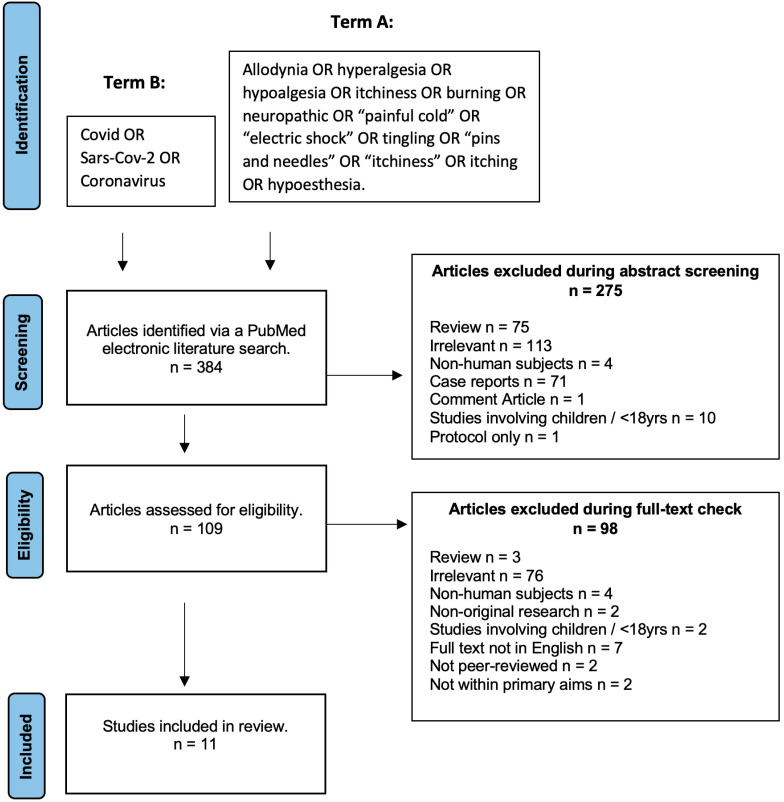
A literature search in the PubMed database was performed and 11 papers were eligible for inclusion in this systematic review and meta-analysis.
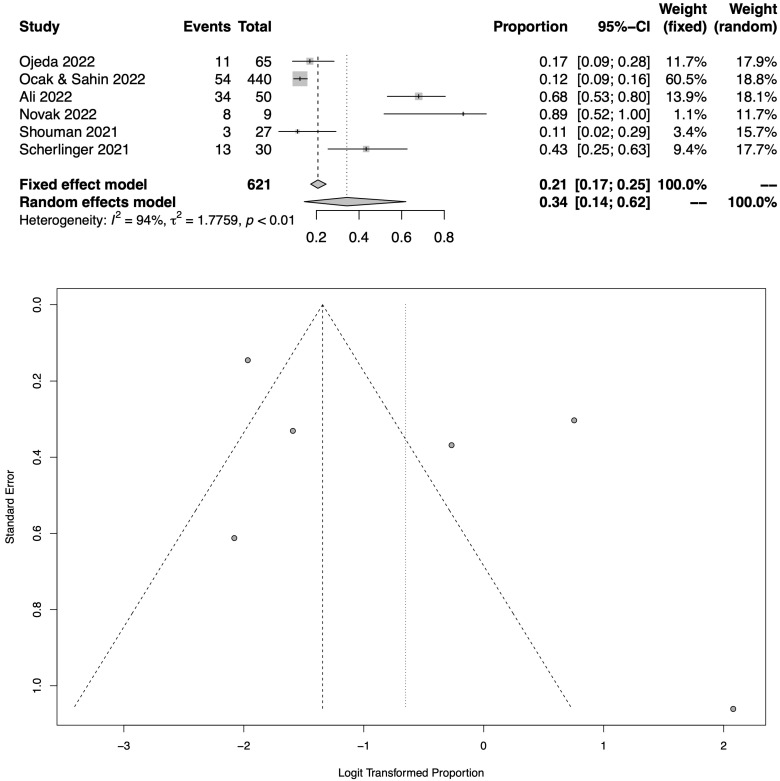
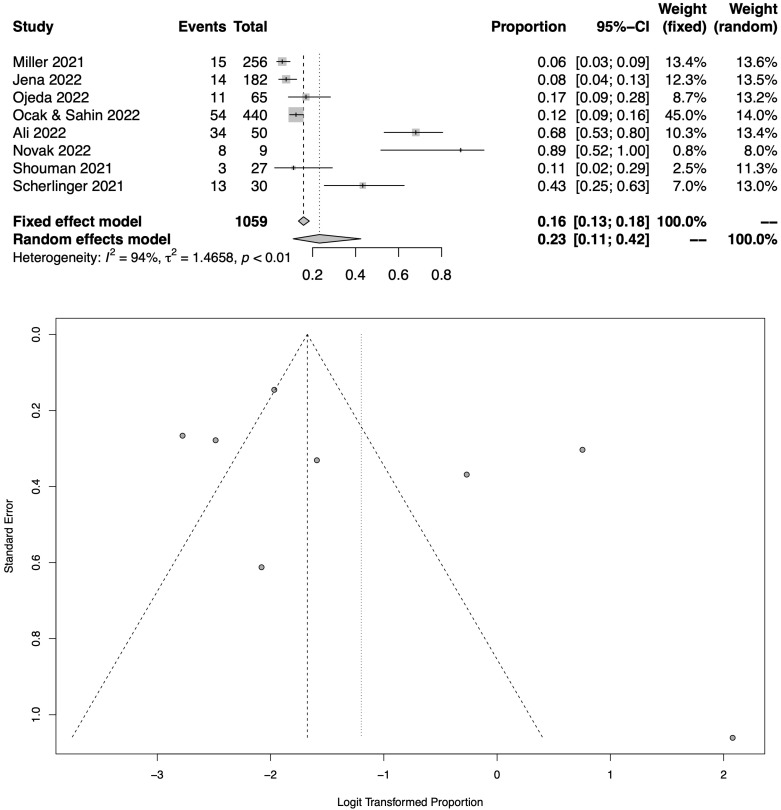
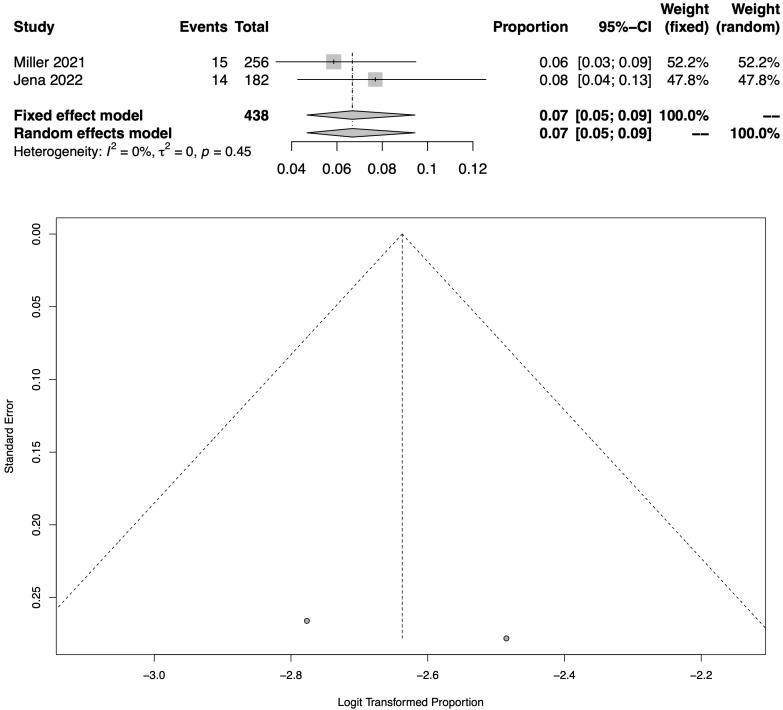
The pooled prevalence of COVID-19-related neuropathic pain was 6.7% (95% CI: 4.7-9.5%) for hospitalised patients during the acute phase and 34.3% (95% CI: 14.3-62%) for long COVID patients. The identified risk factors for COVID-19-related neuropathic pain development included depression, COVID-19 severity and azithromycin use.
Neuropathic pain is a very common symptom in long COVID, indicating the urgency for further research in this direction.
导致冠状病毒病(COVID-19)大流行的严重急性呼吸综合征冠状病毒2(SARS-CoV-2)可能会影响呼吸系统以外的其他系统,包括神经系统。在这项系统评价中,我们旨在确定COVID-19感染者中神经性疼痛的患病率及其决定因素。
在PubMed数据库中进行文献检索,有11篇论文符合纳入本系统评价和荟萃分析的条件。
急性期住院患者中与COVID-19相关的神经性疼痛合并患病率为6.7%(95%置信区间:4.7-9.5%),长期COVID患者为34.3%(95%置信区间:14.3-62%)。已确定的与COVID-19相关神经性疼痛发生的风险因素包括抑郁、COVID-19严重程度和使用阿奇霉素。
神经性疼痛是长期COVID中非常常见的症状,这表明在这个方向上进一步研究的紧迫性。