Wang Zexu, Wei Lingyun, Yin Cheng, Li Wang, Wan Bing
Department of Respiratory and Critical Care Medicine, The Affiliated Jiangning Hospital of Nanjing Medical University, Nanjing 210002, China.
Department of Cardiothoracic Surgery, School of Medicine, Nanjing University/Jinling Hospital, Nanjing 210002, China.
J Pers Med. 2023 Jan 29;13(2):243. doi: 10.3390/jpm13020243.
There have been disputes in the association between angiotensin receptor blockers (ARB) and the incidence of lung cancer. Our meta-analysis reevaluated this problem from the perspectives of race, age, drug type, comparison objects and smoking.
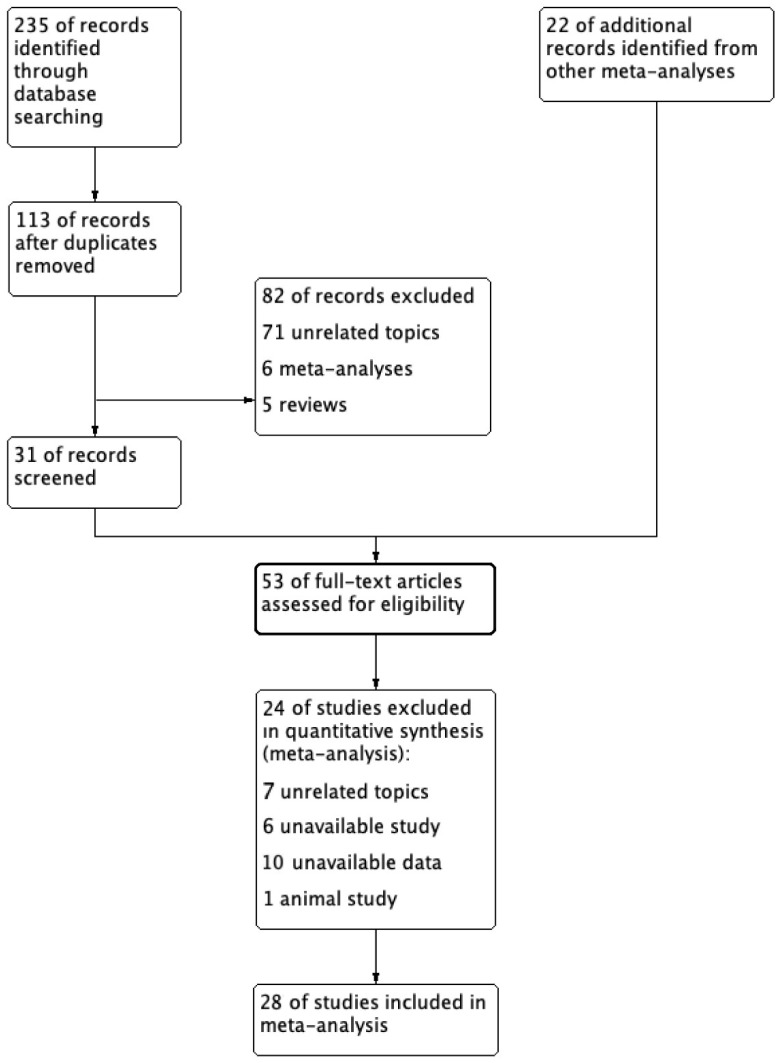
We used the following databases to carry out our literature search: Pubmed, Medline, Cochrane Library, and Ovid (From 1 January 2020 to 28 November 2021). The correlation between ARBs and the incidence rate of lung cancer was calculated by risk ratios (RRs). Confidence intervals were selected with 95% confidence intervals.
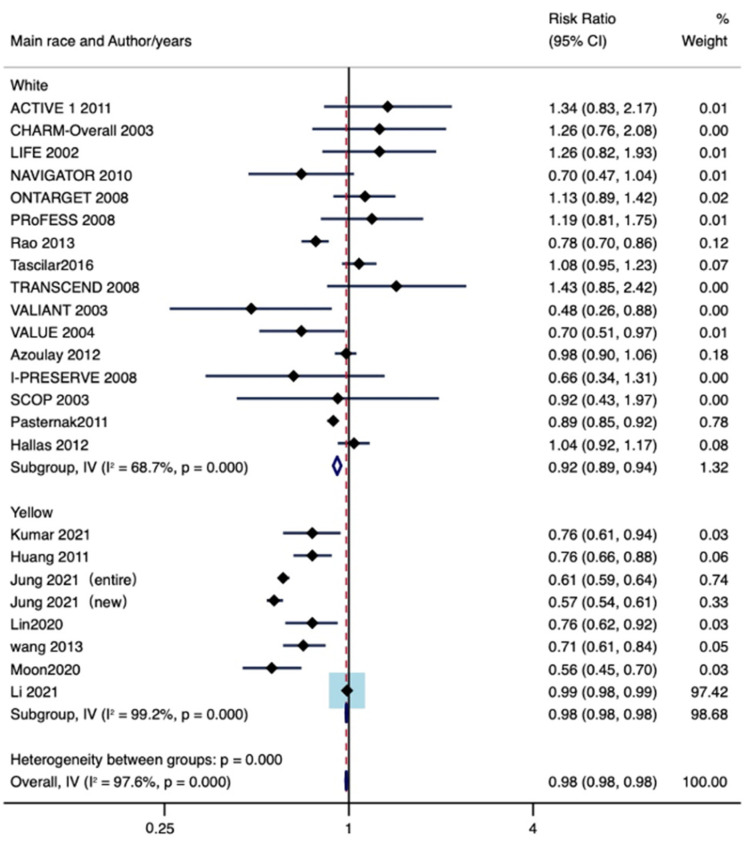
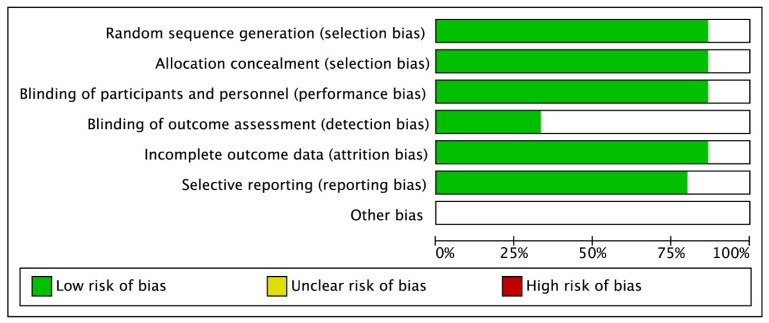
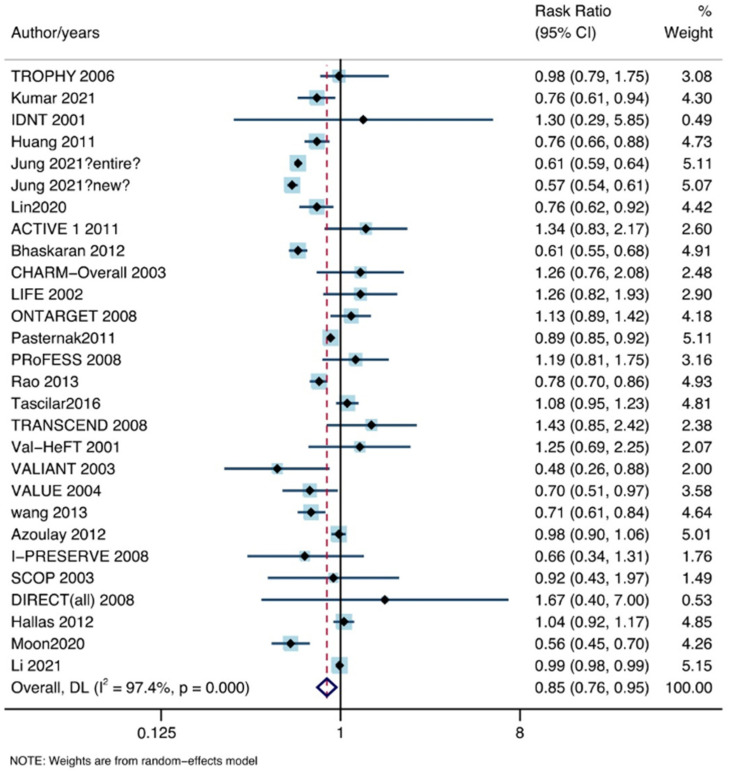
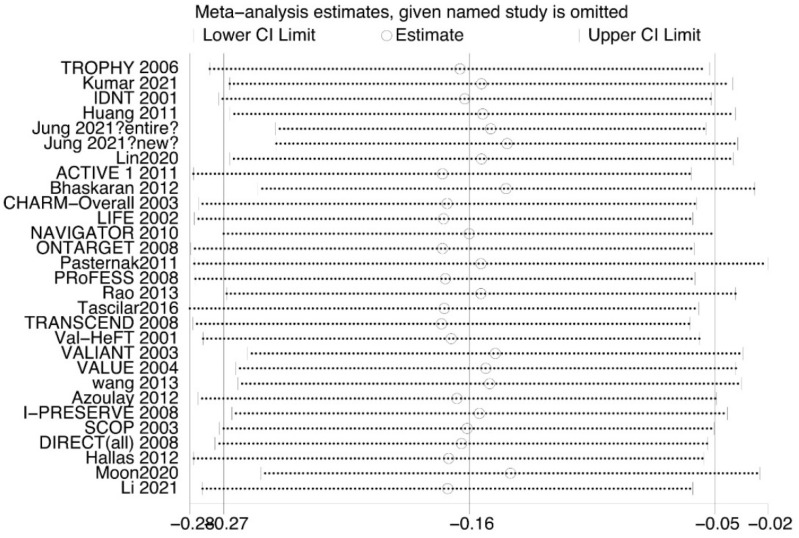
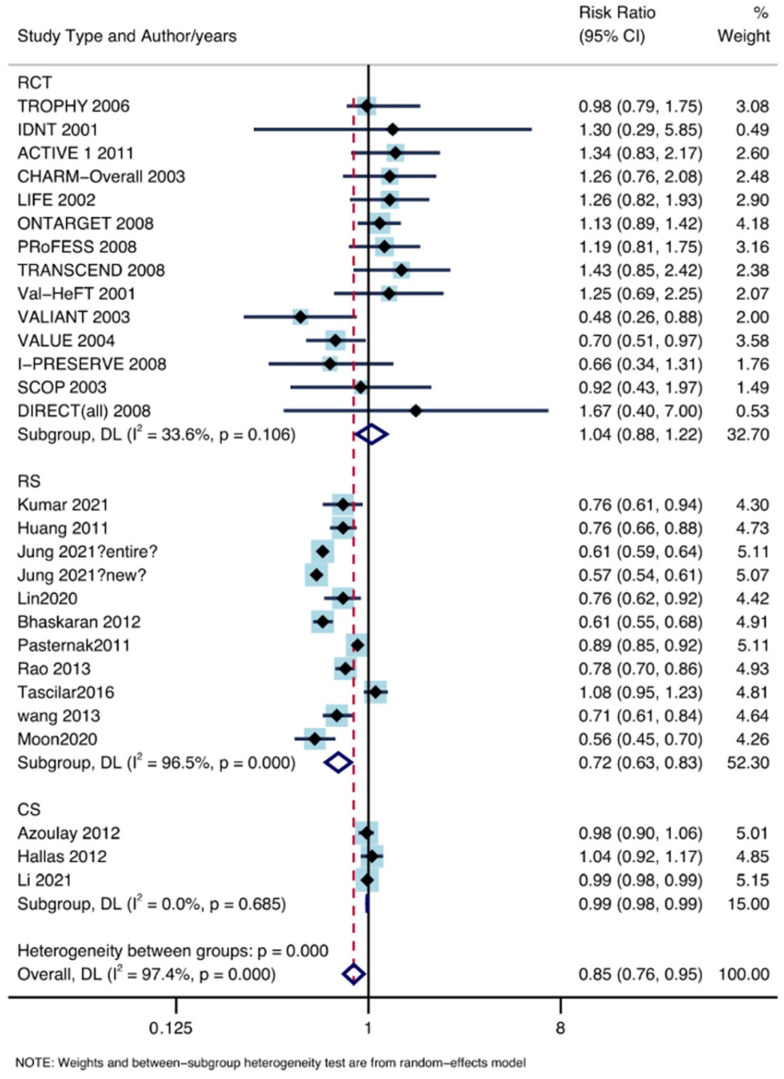
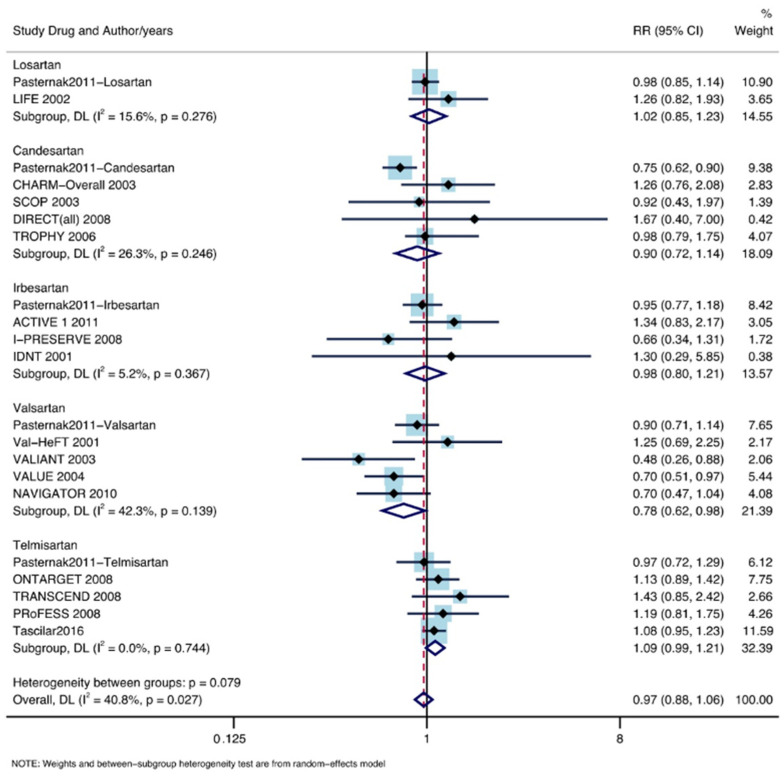
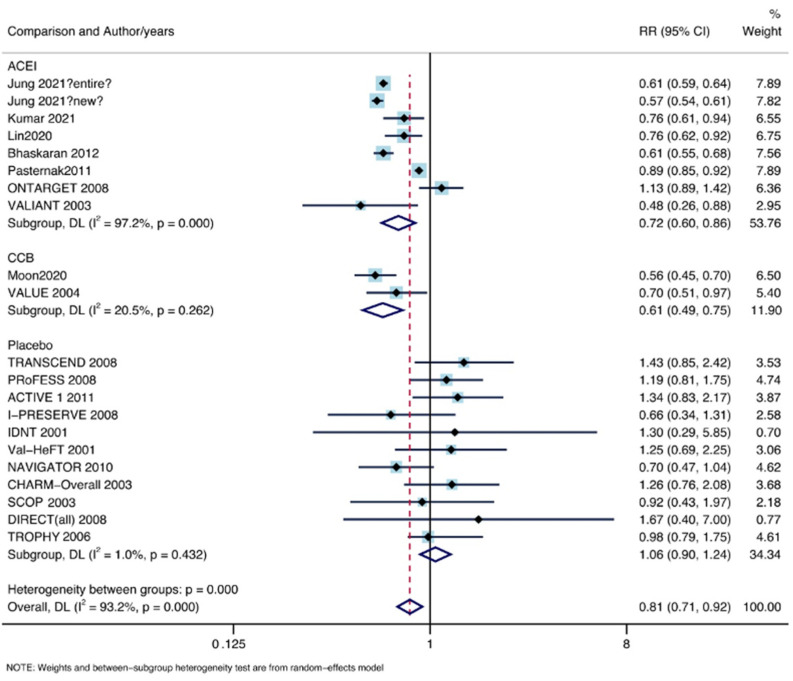
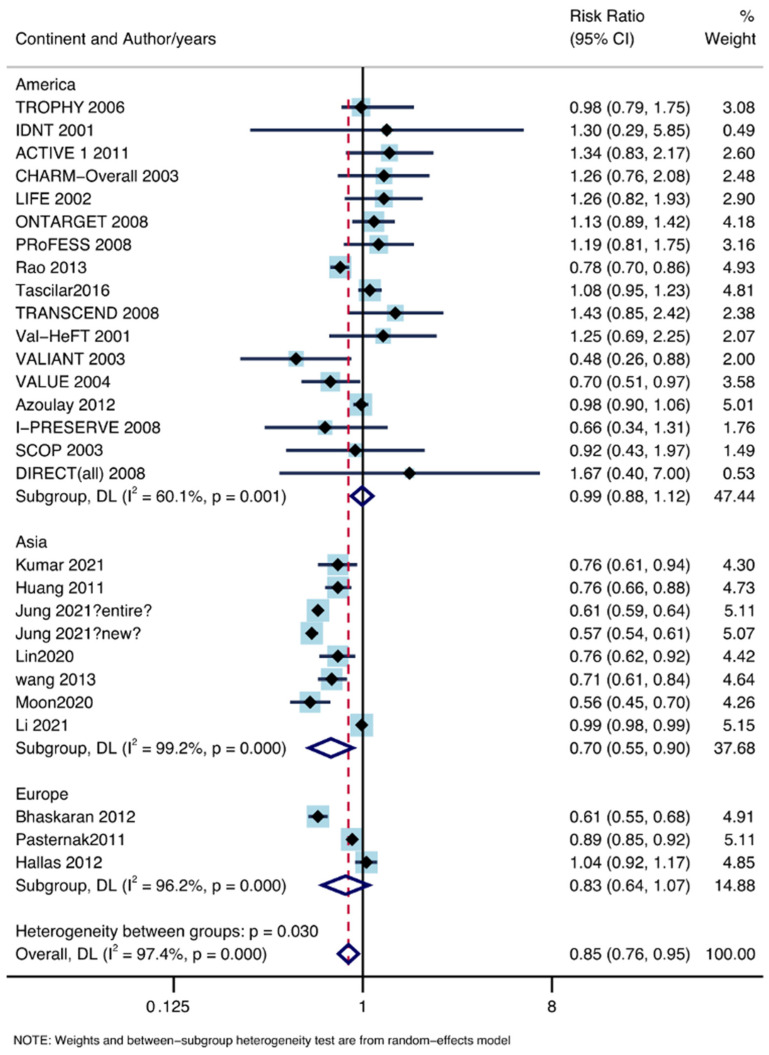
A total of 10 randomized controlled trials (RCTs), 18 retrospective studies and 3 case-control studies were found to satisfy the inclusion criteria. The use of ARB drugs reduced the incidence of lung cancer. The pooled results of 10 retrospective studies revealed a decreased lung cancer incidence in patients treated with ARBs, especially in patients using Valsartan. A significantly lower lung cancer incidence was found in the ARB drugs than in calcium channel blockers (CCBs) and angiotensin-converting enzyme inhibitors (ACEIs). Lung cancer occurrence was lower in Asian-based studies, especially in Mongolian-dominated and Caucasian-dominated patient populations. No significant decrease in lung cancer occurrence was found in RCTs or in patients receiving telmisartan, losartan, candesartan, irbesartan, or other placebo or in American and European-dominated patient populations.
Compared with ACEIs and CCBs, ARBs significantly reduce the risk of lung cancer, especially in Asian and Mongolian populations. Valsartan has the best effect in reducing the risk of lung cancer in ARB drugs.
血管紧张素受体阻滞剂(ARB)与肺癌发病率之间的关联一直存在争议。我们的荟萃分析从种族、年龄、药物类型、对照对象和吸烟等角度重新评估了这一问题。
我们使用以下数据库进行文献检索:Pubmed、Medline、Cochrane图书馆和Ovid(从2020年1月1日至2021年11月28日)。通过风险比(RRs)计算ARB与肺癌发病率之间的相关性。选择95%置信区间的置信区间。
共发现10项随机对照试验(RCT)、18项回顾性研究和3项病例对照研究符合纳入标准。使用ARB药物可降低肺癌发病率。10项回顾性研究的汇总结果显示,接受ARB治疗的患者肺癌发病率降低,尤其是使用缬沙坦的患者。ARB药物组的肺癌发病率显著低于钙通道阻滞剂(CCB)和血管紧张素转换酶抑制剂(ACEI)。在以亚洲人群为主的研究中,肺癌发生率较低,尤其是在以蒙古族和白种人为主的患者群体中。在RCT中,或接受替米沙坦、氯沙坦、坎地沙坦、厄贝沙坦或其他安慰剂治疗的患者中,以及以美国和欧洲人群为主的患者群体中,未发现肺癌发生率有显著下降。
与ACEI和CCB相比,ARB可显著降低肺癌风险,尤其是在亚洲和蒙古族人群中。在ARB药物中,缬沙坦在降低肺癌风险方面效果最佳。