Brüning Anne K E, Schiefer Jennifer L, Fuchs Paul C, Petzsch Patrick, Köhrer Karl, Suschek Christoph V, Stürmer Ewa K, Opländer Christian
Clinic for Thoracic and Cardiovascular Surgery, Heart and Diabetes Center North Rhine-Westphalia, University Hospital, Ruhr-University Bochum, 32545 Bad Oeynhausen, Germany.
Plastic Surgery, Hand Surgery, Burn Center, Cologne-Merheim Hospital, Witten/Herdecke University, 51109 Cologne, Germany.
Life (Basel). 2023 Jan 25;13(2):331. doi: 10.3390/life13020331.
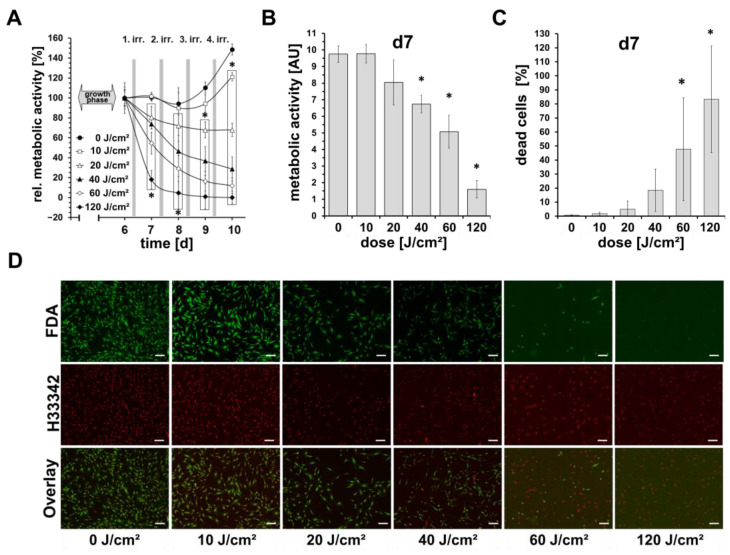
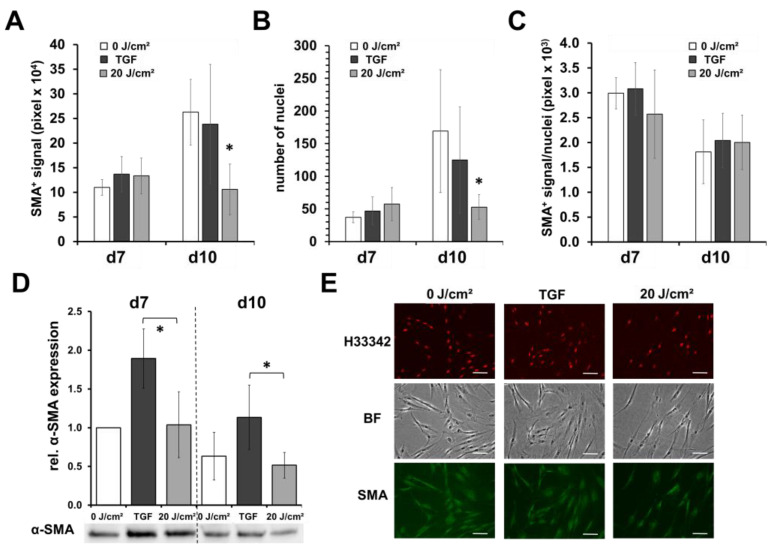
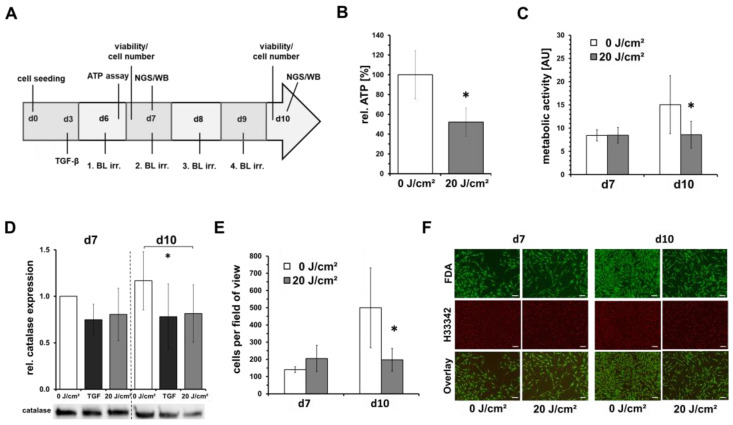
Hypertrophic scarring in burn wounds is caused by overactive fibroblasts and myofibroblasts. Blue light reveals wavelength- and dose-dependent antibacterial and antiproliferative effects and may serve as a therapeutic option against wound infection and fibrotic conditions. Therefore, we evaluated in this study the effects of single and multiple irradiations with blue light at 420 nm (BL) on the intracellular ATP concentration, and on the viability and proliferation of the human skin fibroblast (HDFs). In addition, possible BL-induced effects on the catalase expression and differentiation were assessed by immunocytochemical staining and western blot analyses. Furthermore, we used RNA-seq analyses to identify BL-affected genes. We found that BL induced toxicity in HDFs (up to 83%; 180 J/cm). A low dose of 20 J/cm reduced the ATP concentration by ~50%. Multiple irradiations (4 × 20 J/cm) inhibited proliferation without visible toxicity and reduced catalase protein expression by ~37% without affecting differentiation. The expression of about 300 genes was significantly altered. Many downregulated genes have functions in cell division/mitosis. BL can strongly influence the fibroblast physiology and has potential in wound therapy. However, it is important to consider the possible toxic and antiproliferative effects, which could potentially lead to impaired wound healing and reduced scar breaking strength.
烧伤创面的肥厚性瘢痕形成是由过度活跃的成纤维细胞和肌成纤维细胞引起的。蓝光具有波长和剂量依赖性的抗菌和抗增殖作用,可作为治疗伤口感染和纤维化病症的一种治疗选择。因此,在本研究中,我们评估了420nm蓝光(BL)单次和多次照射对人皮肤成纤维细胞(HDFs)细胞内ATP浓度、活力和增殖的影响。此外,通过免疫细胞化学染色和蛋白质印迹分析评估了蓝光可能对过氧化氢酶表达和分化的影响。此外,我们使用RNA测序分析来鉴定受蓝光影响的基因。我们发现蓝光可诱导HDFs产生毒性(高达83%;180J/cm²)。20J/cm²的低剂量可使ATP浓度降低约50%。多次照射(4×20J/cm²)可抑制增殖而无明显毒性,并使过氧化氢酶蛋白表达降低约37%,而不影响分化。约300个基因的表达发生了显著改变。许多下调基因在细胞分裂/有丝分裂中发挥作用。蓝光可强烈影响成纤维细胞生理学,在伤口治疗中具有潜力。然而,重要的是要考虑可能的毒性和抗增殖作用,这可能会导致伤口愈合受损和瘢痕抗张强度降低。