Alnefaie Rasha M, El-Sayed Sahar A, Ramadan Amany A, Elmezien Ahmed I, El-Taher Ahmed M, Randhir Timothy O, Bondok Ahmed
Biology Department, College of Science, Albaha University, Al Bahah 65779, Saudi Arabia.
Institute of Plant Pathology, Agricultural Research Center, Giza P.O. Box 12613, Egypt.
Life (Basel). 2023 Jan 31;13(2):392. doi: 10.3390/life13020392.
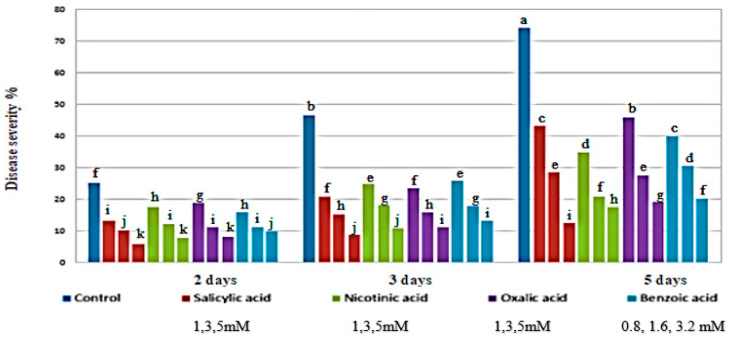
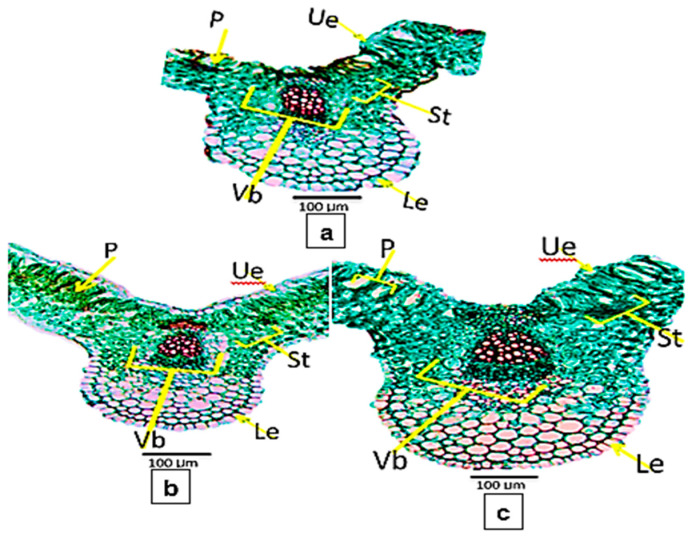
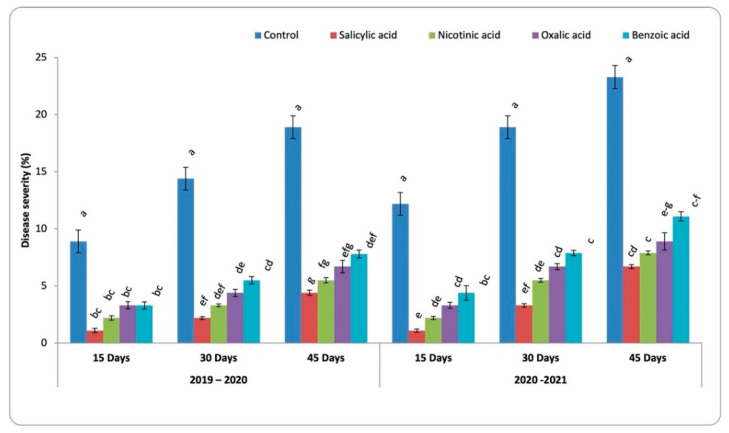
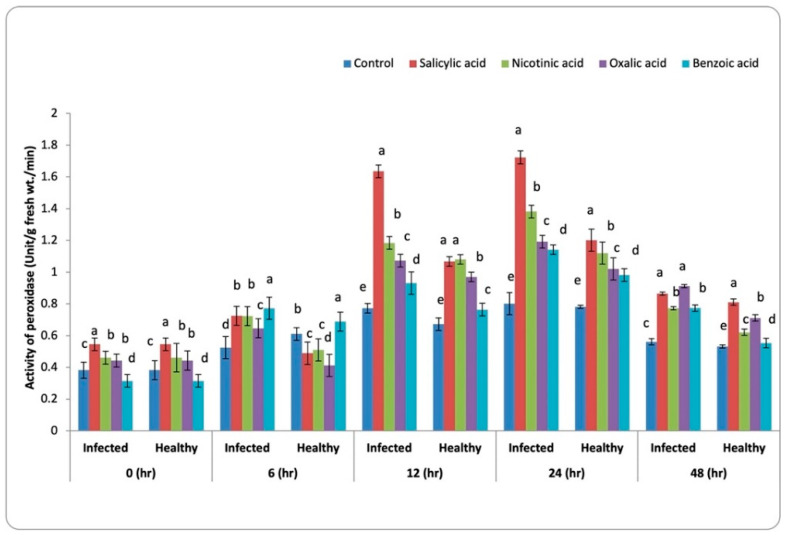
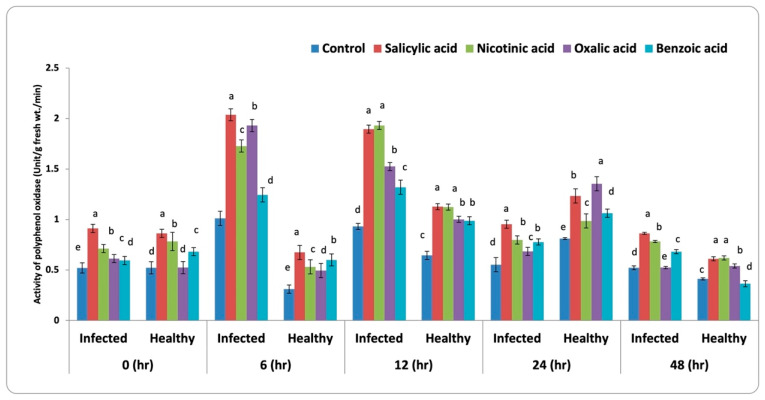
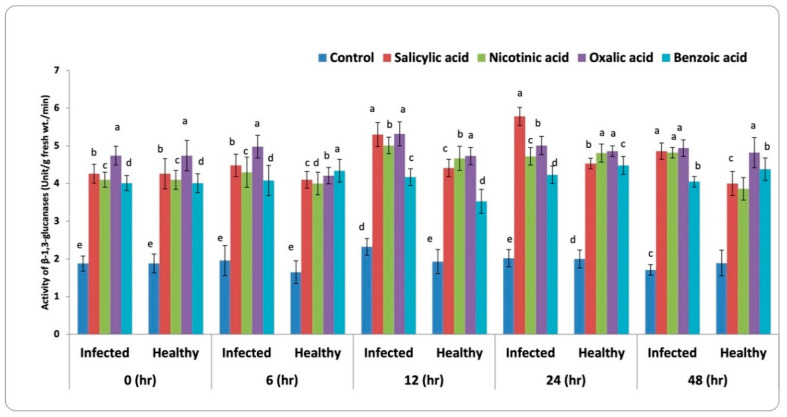
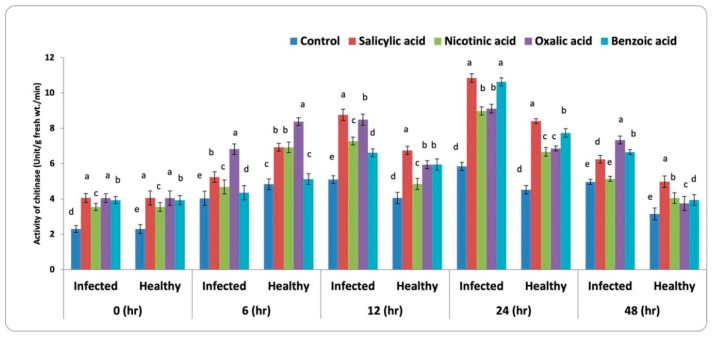
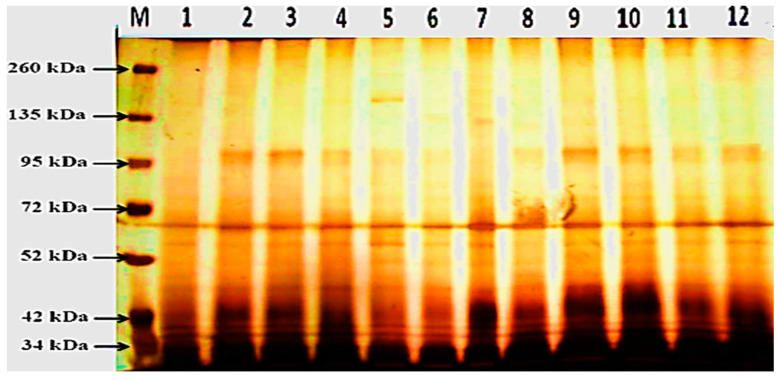
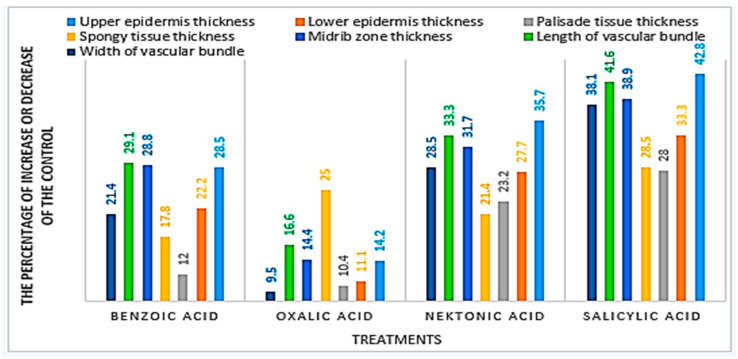
Plant diseases are biotic stresses that restrict crop plants' ability to develop and produce. Numerous foliar diseases, such as chocolate spots, can cause significant production losses in plants. Certain chemical inducers, including salicylic acid (SA), oxalic acid (OA), nicotinic acid (NA), and benzoic acid (BA), were used in this study to assess efficacy in controlling these diseases. A foliar spray of these phenolic acids was used to manage the impacts of the biotic stress resulting from disease incidence. All tested chemical inducers resulted in a significant decrease in disease severity. They also enhanced the defense system of treated plants through increasing antioxidant enzyme activity (Peroxidase, polyphenol oxidase, β-1, 3-glucanase, and chitinase) compared to the corresponding control. Healthy leaves of faba plants recorded the lowest ( < 0.05) values of all antioxidant activities compared to those plants infected by . Moreover, the separation of proteins using SDS-PAGE showed slight differences among treatments. Furthermore, foliar spray with natural organic acids reduced the adverse effects of fungal infection by expediting recovery. The SA (5 mM) treatment produced a pronounced increase in the upper, lower epidermis, palisade thickness, spongy tissues, midrib zone, length, and width of vascular bundle. The foliar application with other treatments resulted in a slight increase in the thickness of the examined layers, especially by benzoic acid. In general, all tested chemical inducers could alleviate the adverse effects of the biotic stress on faba bean plants infected by .
植物病害是限制作物生长和产量的生物胁迫。许多叶部病害,如巧克力斑点病,会导致植物产量大幅损失。本研究使用了某些化学诱导剂,包括水杨酸(SA)、草酸(OA)、烟酸(NA)和苯甲酸(BA),来评估其对这些病害的防治效果。通过对这些酚酸进行叶面喷施,来应对病害发生所导致的生物胁迫影响。所有测试的化学诱导剂均使病害严重程度显著降低。与相应对照相比,它们还通过提高抗氧化酶活性(过氧化物酶、多酚氧化酶、β-1,3-葡聚糖酶和几丁质酶)增强了处理植株的防御系统。与感染病害的植株相比,蚕豆健康叶片的所有抗氧化活性值最低(<0.05)。此外,使用SDS-PAGE分离蛋白质显示各处理之间存在细微差异。此外,叶面喷施天然有机酸通过加速恢复减轻了真菌感染的不利影响。SA(5 mM)处理使上表皮、下表皮、栅栏组织厚度、海绵组织、中脉区域、维管束长度和宽度显著增加。其他处理的叶面喷施使所检查层的厚度略有增加,尤其是苯甲酸处理。总体而言,所有测试的化学诱导剂都可以减轻生物胁迫对感染病害的蚕豆植株的不利影响。