Yuan Zixuan, Hansen Scott B
Department of Molecular Medicine, Department of Neuroscience, UF Scripps, Jupiter, FL 33458, USA.
Department of Neuroscience UF Scripps, Jupiter, FL 33458, USA.
Membranes (Basel). 2023 Feb 20;13(2):250. doi: 10.3390/membranes13020250.
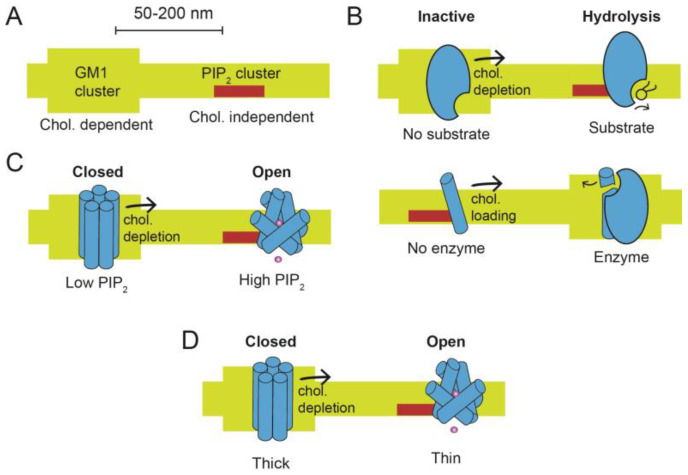
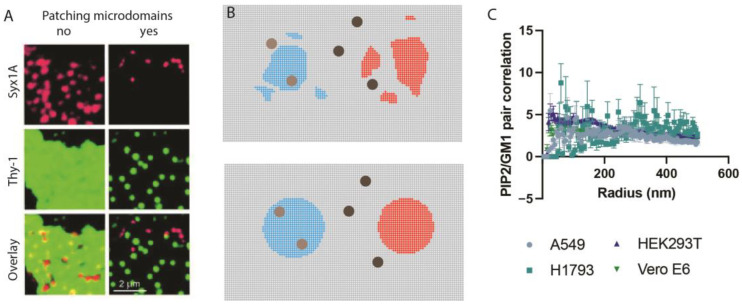
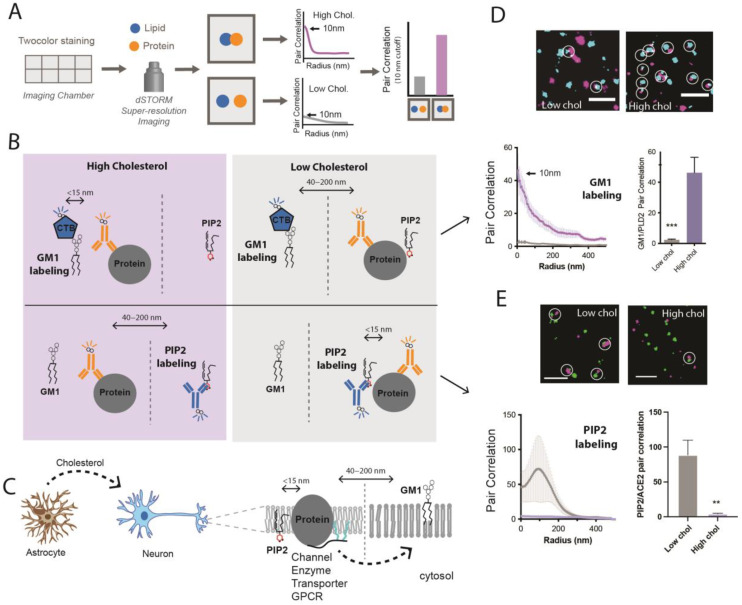
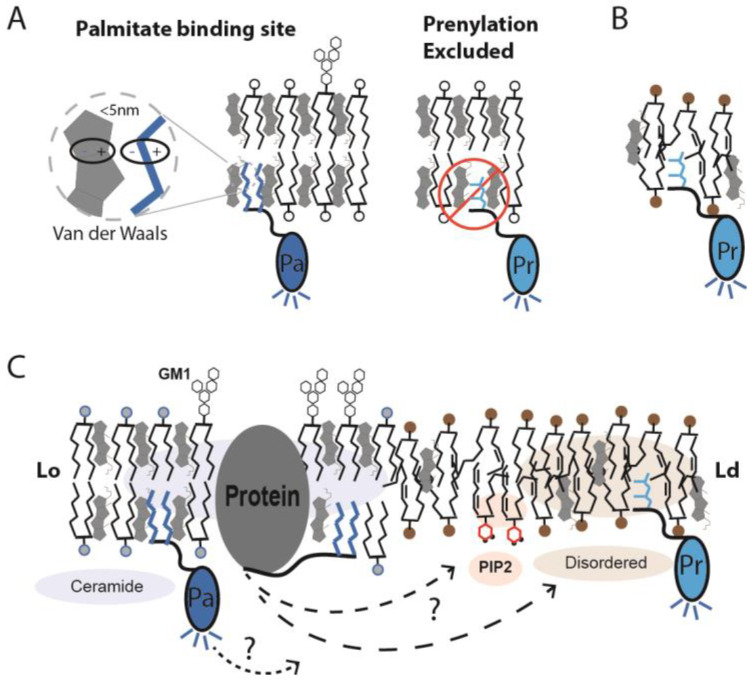
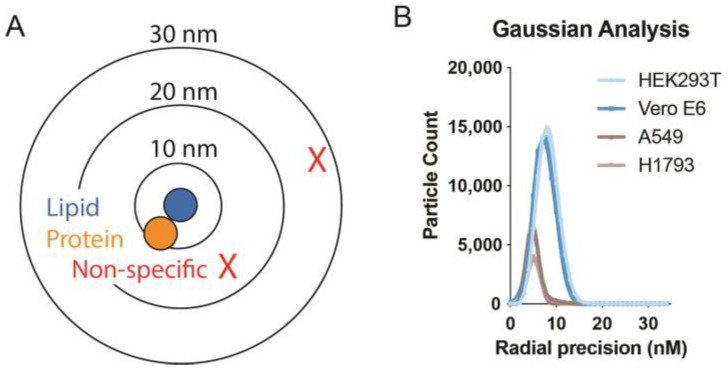
Cholesterol and phosphatidyl inositol 4,5-bisphosphate (PIP) are hydrophobic molecules that regulate protein function in the plasma membrane of all cells. In this review, we discuss how changes in cholesterol concentration cause nanoscopic (<200 nm) movements of membrane proteins to regulate their function. Cholesterol is known to cluster many membrane proteins (often palmitoylated proteins) with long-chain saturated lipids. Although PIP is better known for gating ion channels, in this review, we will discuss a second independent function as a regulator of nanoscopic protein movement that opposes cholesterol clustering. The understanding of the movement of proteins between nanoscopic lipid domains emerged largely through the recent advent of super-resolution imaging and the establishment of two-color techniques to label lipids separate from proteins. We discuss the labeling techniques for imaging, their strengths and weakness, and how they are used to reveal novel mechanisms for an ion channel, transporter, and enzyme function. Among the mechanisms, we describe substrate and ligand presentation and their ability to activate enzymes, gate channels, and transporters rapidly and potently. Finally, we define cholesterol-regulated proteins (CRP) and discuss the role of PIP in opposing the regulation of cholesterol, as seen through super-resolution imaging.
胆固醇和磷脂酰肌醇 -4,5 - 二磷酸(PIP)是疏水分子,可调节所有细胞质膜中的蛋白质功能。在本综述中,我们讨论了胆固醇浓度的变化如何引起膜蛋白的纳米级(<200纳米)运动以调节其功能。已知胆固醇会将许多膜蛋白(通常是棕榈酰化蛋白)与长链饱和脂质聚集在一起。虽然PIP以门控离子通道而闻名,但在本综述中,我们将讨论其作为纳米级蛋白质运动调节剂的第二个独立功能,该功能与胆固醇聚集作用相反。对蛋白质在纳米级脂质结构域之间运动的理解在很大程度上源于最近超分辨率成像技术的出现以及用于将脂质与蛋白质分开标记的双色技术的建立。我们讨论了用于成像的标记技术、它们的优缺点,以及它们如何用于揭示离子通道、转运蛋白和酶功能的新机制。在这些机制中,我们描述了底物和配体的呈现及其快速有效地激活酶、门控通道和转运蛋白的能力。最后,我们定义了胆固醇调节蛋白(CRP),并通过超分辨率成像讨论了PIP在对抗胆固醇调节中的作用。