Fabrizi Fabrizio, Donato Maria Francesca, Tripodi Federica, Regalia Anna, Lampertico Pietro, Castellano Giuseppe
Division of Nephrology, Dialysis, and Kidney Transplant, Foundation IRCCS Cà Granda Ospedale Maggiore Policlinico, 20122 Milano, Italy.
Division of Gastroenterology and Hepatology, Foundation IRCCS Cà Granda Ospedale Maggiore Policlinico, 20122 Milano, Italy.
Pathogens. 2023 Feb 17;12(2):340. doi: 10.3390/pathogens12020340.
The current frequency of hepatitis B virus infection in patients with advanced chronic kidney disease (CKD) (including patients on maintenance dialysis and kidney transplant recipients) is low but not negligible worldwide. HBV has a deleterious effect on survival after a kidney transplant; antiviral treatments improved the short-term outcomes of kidney transplant recipients, but their long-term impact remains uncertain.
The aim of this review is to assess the role of antiviral therapy for HBV in improving survival after a kidney transplant. The recent publication of large surveys has prompted us to update the available evidence on the impact of HBV on patient and graft survival after a kidney transplant.
We have conducted an extensive review of the medical literature, and various research engines have been used.
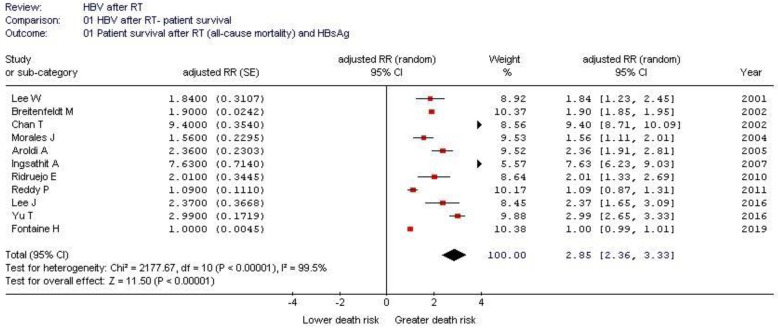
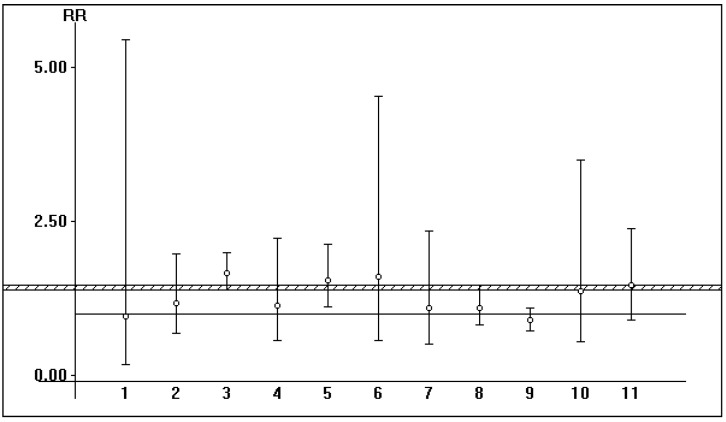
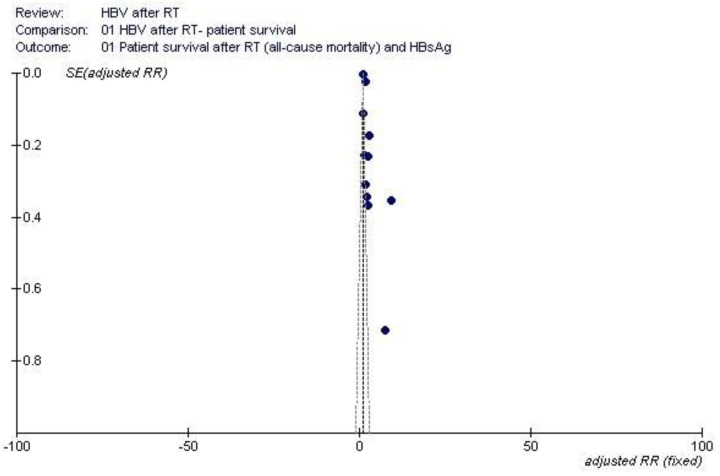
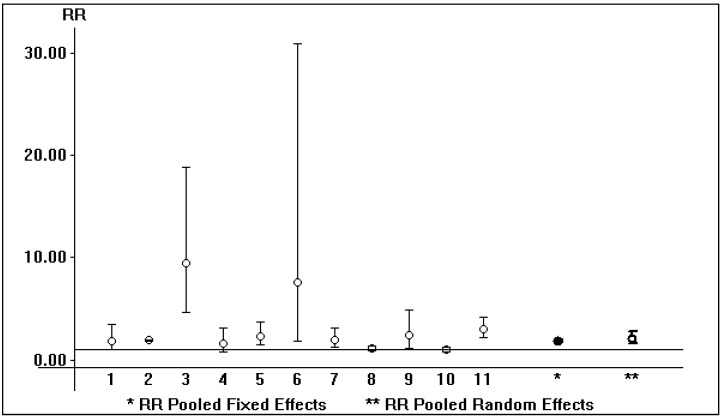
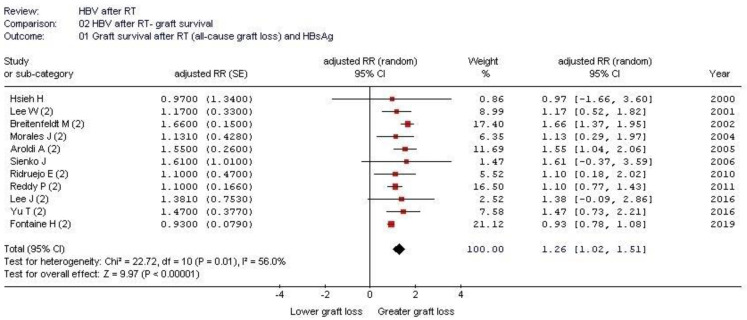
We retrieved several studies ( = 11; = 121,436 unique patients) and found an association between positive serologic HBsAg status and diminished patient and graft survival after a kidney transplant; the adjusted relative risk (aRR) of all-cause mortality and graft loss was 2.85 (95% CI, 2.36; 3.33, < 0.0001) and 1.26 (95% CI, 1.02; 1.51, < 0.0001), respectively. To our knowledge, at least six studies reported improved patient and graft survival after the adoption of antiviral therapies for HBV (this result was reported with both survival curves and multivariable regression). According to novel clinical guidelines, entecavir has been suggested as a 'first line' antiviral agent for the treatment of HBV after a kidney transplant.
The recent availability of safe and effective antiviral drugs for the treatment of HBV has meant that the survival curves of HBsAg-positive patients on antiviral therapy and HBsAg-negative patients after a kidney transplant can be comparable. Antiviral therapy should be systematically proposed to HBV-positive kidney transplant recipients and candidates to avoid the deleterious hepatic and extra-hepatic effects of chronic HBV replication.
在全球范围内,晚期慢性肾脏病(CKD)患者(包括维持性透析患者和肾移植受者)中乙肝病毒(HBV)感染的当前频率较低,但并非可以忽略不计。HBV对肾移植后的生存有有害影响;抗病毒治疗改善了肾移植受者的短期结局,但其长期影响仍不确定。
本综述的目的是评估HBV抗病毒治疗在改善肾移植后生存方面的作用。近期大型调查的发表促使我们更新关于HBV对肾移植后患者和移植物生存影响的现有证据。
我们对医学文献进行了广泛综述,并使用了各种研究引擎。
我们检索到了几项研究(n = 11;N = 121436例独特患者),发现肾移植后血清学HBsAg状态阳性与患者和移植物生存减少之间存在关联;全因死亡率和移植物丢失的调整相对风险(aRR)分别为2.85(95%CI,2.36;3.33,P < 0.0001)和1.26(95%CI,1.02;1.51,P < 0.0001)。据我们所知,至少六项研究报告了采用HBV抗病毒治疗后患者和移植物生存得到改善(该结果通过生存曲线和多变量回归均有报告)。根据新的临床指南,恩替卡韦被建议作为肾移植后治疗HBV的“一线”抗病毒药物。
近期有安全有效的抗HBV治疗药物可供使用,这意味着接受抗病毒治疗的HBsAg阳性患者与肾移植后的HBsAg阴性患者的生存曲线可以具有可比性。应系统地向HBV阳性的肾移植受者和候选者提出抗病毒治疗,以避免慢性HBV复制的有害肝脏和肝外影响。