Wlodarczyk Marek T, Dragulska Sylwia A, Chen Ying, Poursharifi Mina, Acosta Santiago Maxier, Martignetti John A, Mieszawska Aneta J
Department of Chemistry, Brooklyn College, The City University of New York, 2900 Bedford Avenue, Brooklyn, NY 11210, USA.
Ph.D. Program in Chemistry, The Graduate Center of the City University of New York, New York, NY 10016, USA.
Pharmaceutics. 2023 Feb 10;15(2):607. doi: 10.3390/pharmaceutics15020607.
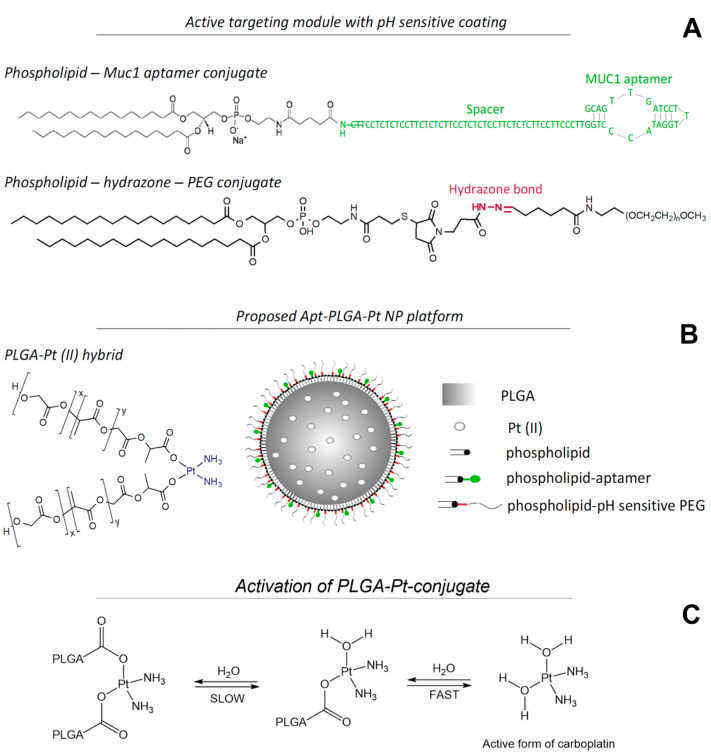
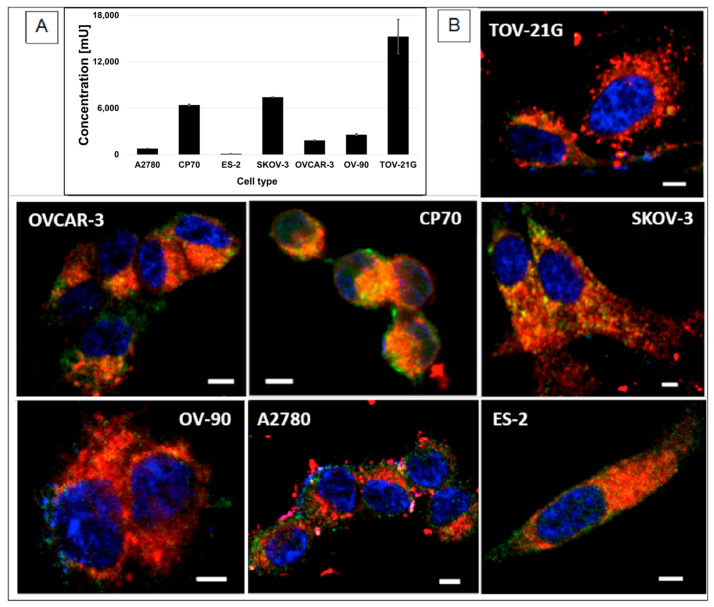
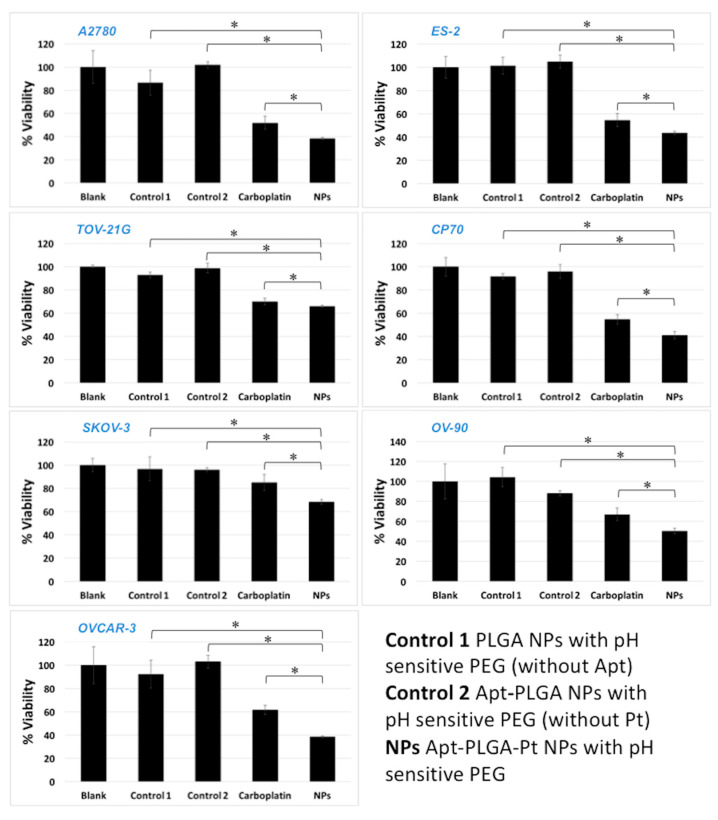
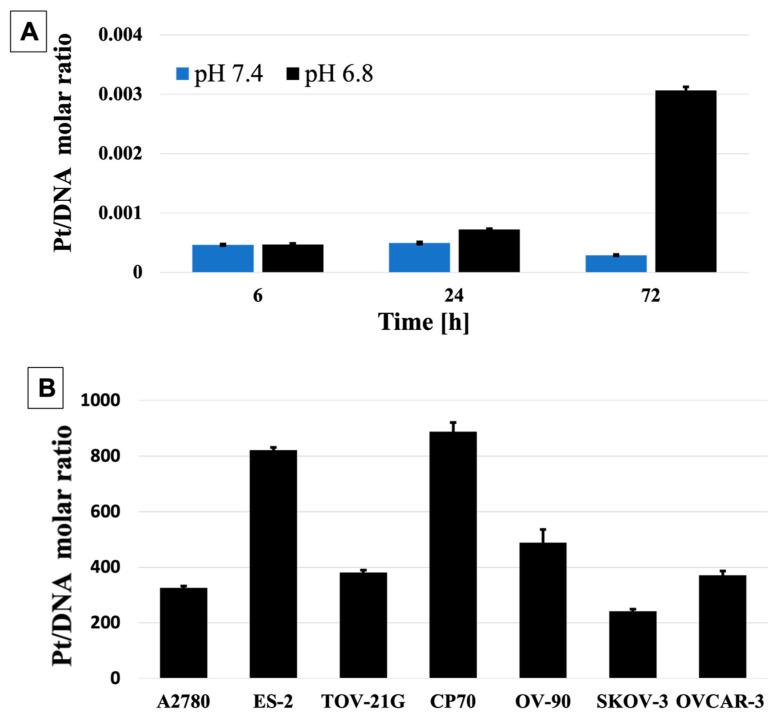
Platinum-based agents are the main treatment option in ovarian cancer (OC). Herein, we report a poly(lactic-co-glycolic acid) (PLGA) nanoparticle (NP) encapsulating platinum (II), which is targeted to a cell-spanning protein overexpressed in above 90% of late-stage OC, mucin 1 (MUC1). The NP is coated with phospholipid-DNA aptamers against MUC1 and a pH-sensitive PEG derivative containing an acid-labile hydrazone linkage. The pH-sensitive PEG serves as an off-on switch that provides shielding effects at the physiological pH and is shed at lower pH, thus exposing the MUC1 ligands. The pH-MUC1-Pt NPs are stable in the serum and display pH-dependent PEG cleavage and drug release. Moreover, the NPs effectively internalize in OC cells with higher accumulation at lower pH. The Pt (II) loading into the NP was accomplished via PLGA-Pt (II) coordination chemistry and was found to be 1.62 wt.%. In vitro screening using a panel of OC cell lines revealed that pH-MUC1-Pt NP has a greater effect in reducing cellular viability than carboplatin, a clinically relevant drug analogue. Biodistribution studies have demonstrated NP accumulation at tumor sites with effective Pt (II) delivery. Together, these results demonstrate a potential for pH-MUC1-Pt NP for the enhanced Pt (II) therapy of OC and other solid tumors currently treated with platinum agents.
铂类药物是卵巢癌(OC)的主要治疗选择。在此,我们报道了一种包裹铂(II)的聚乳酸-乙醇酸共聚物(PLGA)纳米颗粒(NP),其靶向一种在90%以上晚期OC中过表达的跨细胞蛋白,粘蛋白1(MUC1)。该NP用针对MUC1的磷脂-DNA适配体和含有酸不稳定腙键的pH敏感PEG衍生物进行包被。pH敏感PEG作为一个开关,在生理pH值下提供屏蔽作用,并在较低pH值下脱落,从而暴露MUC1配体。pH-MUC1-Pt NPs在血清中稳定,并显示出pH依赖性的PEG裂解和药物释放。此外,这些NP能有效地内化于OC细胞中,在较低pH值下积累更多。通过PLGA-Pt(II)配位化学将Pt(II)负载到NP中,负载量为1.62 wt.%。使用一组OC细胞系进行的体外筛选显示,pH-MUC1-Pt NP在降低细胞活力方面比临床相关药物类似物卡铂有更大的效果。生物分布研究表明NP在肿瘤部位积累,并有效地递送了Pt(II)。总之,这些结果表明pH-MUC1-Pt NP在增强铂(II)治疗OC和目前用铂类药物治疗的其他实体瘤方面具有潜力。