Busch Loris, Hanuschik Anna Maria, Avlasevich Yuri, Darm Katrin, Hochheiser Elisa F, Kohler Christian, Idelevich Evgeny A, Becker Karsten, Rotsch Peter, Landfester Katharina, Darvin Maxim E, Meinke Martina C, Keck Cornelia M, Kramer Axel, Zwicker Paula
Center of Experimental and Applied Cutaneous Physiology, Department of Dermatology, Venereology and Allergology, Charité-Universitätsmedizin Berlin, Corporate Member of Freie Universität Berlin and Humboldt-Universität zu Berlin, Charitéplatz 1, 10117 Berlin, Germany.
Department of Pharmaceutics and Biopharmaceutics, Philipps University Marburg, Robert-Koch-Str. 4, 35037 Marburg, Germany.
Pharmaceutics. 2023 Feb 11;15(2):609. doi: 10.3390/pharmaceutics15020609.
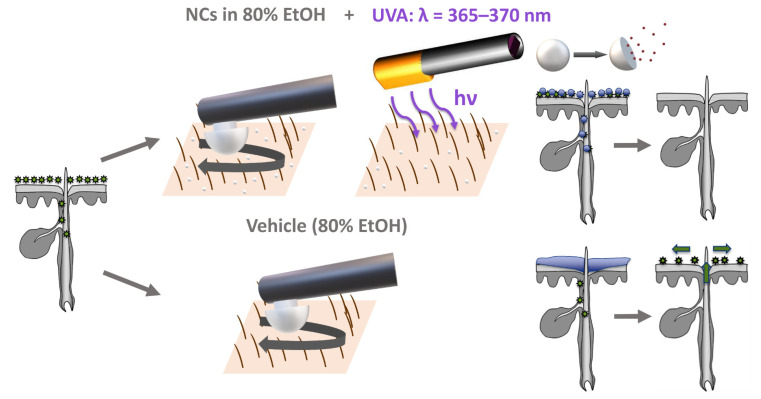
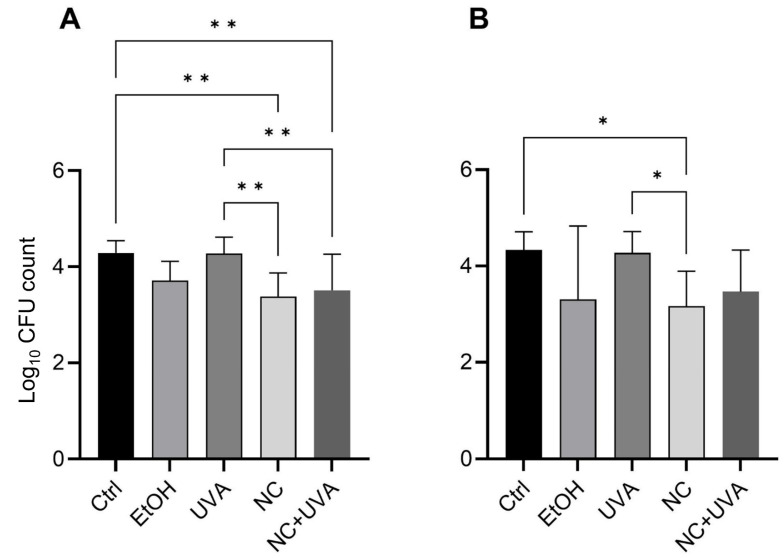
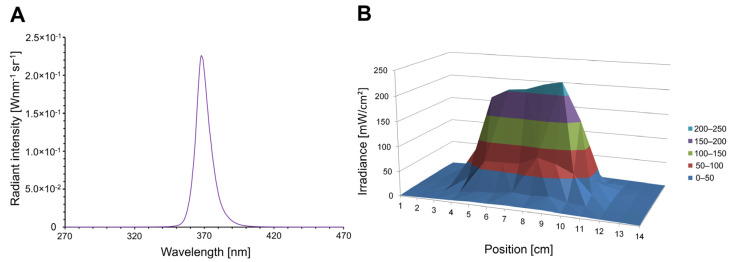
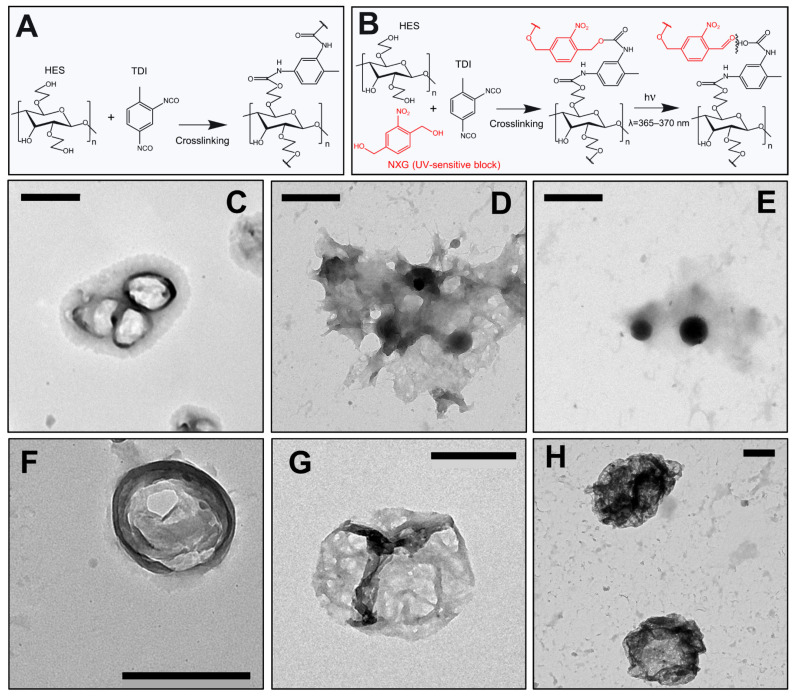
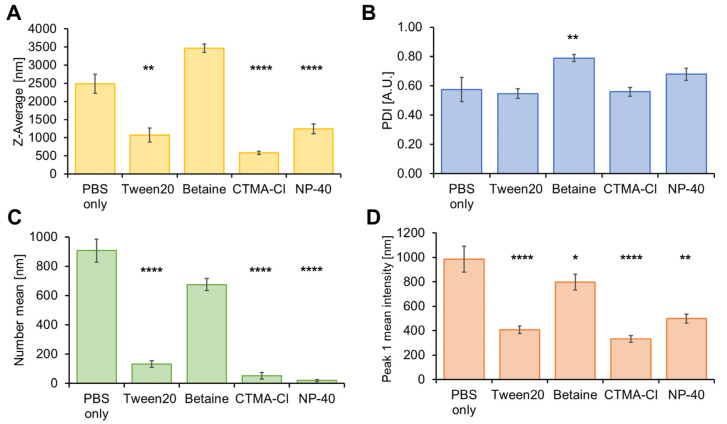
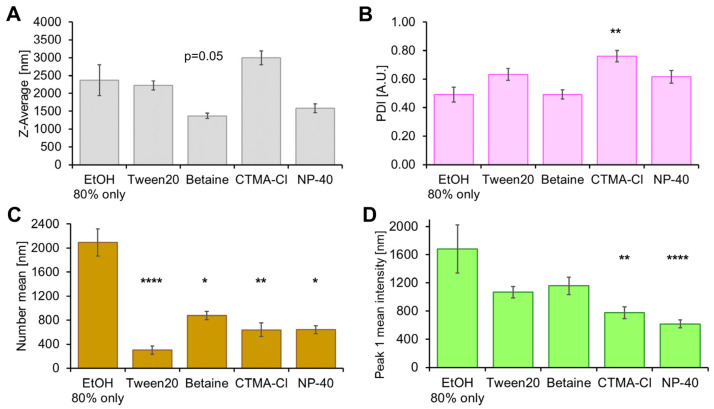
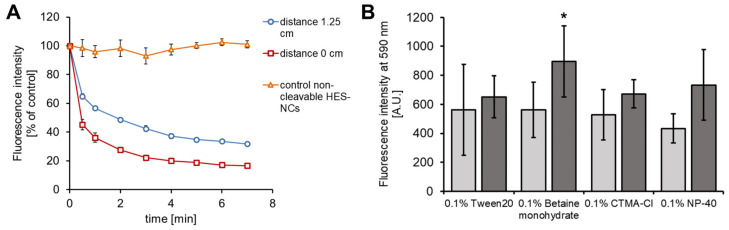
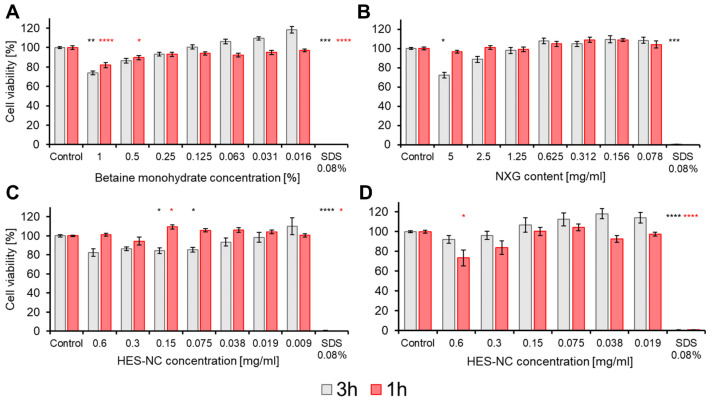
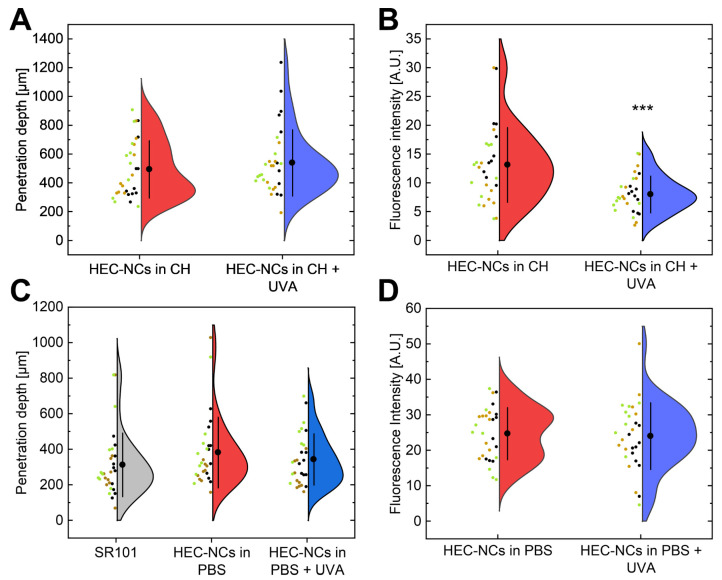
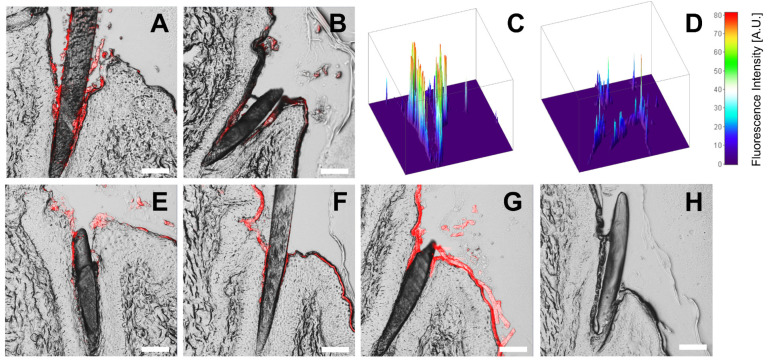
Hair follicles constitute important drug delivery targets for skin antisepsis since they contain ≈25% of the skin microbiome. Nanoparticles are known to penetrate deeply into hair follicles. By massaging the skin, the follicular penetration process is enhanced based on a ratchet effect. Subsequently, an intrafollicular drug release can be initiated by various trigger mechanisms. Here, we present novel ultraviolet A (UVA)-responsive nanocapsules (NCs) with a size between 400 and 600 nm containing hydroxyethyl starch (HES) functionalized by an -nitrobenzyl linker. A phase transfer into phosphate-buffered saline (PBS) and ethanol was carried out, during which an aggregation of the particles was observed by means of dynamic light scattering (DLS). The highest stabilization for the target medium ethanol as well as UVA-dependent release of ethanol from the HES-NCs was achieved by adding 0.1% betaine monohydrate. Furthermore, sufficient cytocompatibility of the HES-NCs was demonstrated. On ex vivo porcine ear skin, a strong UVA-induced release of the model drug sulforhodamine 101 (SR101) could be demonstrated after application of the NCs in cyclohexane using laser scanning microscopy. In a final experiment, a microbial reduction comparable to that of an ethanol control was demonstrated on ex vivo porcine ear skin using a novel UVA-LED lamp for triggering the release of ethanol from HES-NCs. Our study provides first indications that an advanced skin antisepsis based on the eradication of intrafollicular microorganisms could be achieved by the topical application of UVA-responsive NCs.
毛囊是皮肤抗菌的重要药物递送靶点,因为它们含有约25%的皮肤微生物群。已知纳米颗粒能深入毛囊。通过按摩皮肤,基于棘轮效应可增强毛囊渗透过程。随后,可通过各种触发机制启动毛囊内药物释放。在此,我们展示了新型的紫外线A(UVA)响应性纳米胶囊(NCs),其尺寸在400至600纳米之间,含有通过对硝基苄基连接子功能化的羟乙基淀粉(HES)。进行了向磷酸盐缓冲盐水(PBS)和乙醇的相转移,在此过程中通过动态光散射(DLS)观察到颗粒的聚集。通过添加0.1%的一水合甜菜碱,实现了目标介质乙醇的最高稳定性以及乙醇从HES-NCs的UVA依赖性释放。此外,还证明了HES-NCs具有足够的细胞相容性。在离体猪耳皮肤上,使用激光扫描显微镜在环己烷中应用NCs后,可证明UVA强烈诱导模型药物磺罗丹明101(SR101)的释放。在最后一项实验中,使用新型UVA-LED灯触发乙醇从HES-NCs的释放,在离体猪耳皮肤上证明了与乙醇对照相当的微生物减少效果。我们的研究首次表明,通过局部应用UVA响应性NCs,基于根除毛囊内微生物的先进皮肤抗菌方法是可以实现的。