Ali Hassan, Abdelhamid Bassant Mohamed, Hasanin Ahmed M, Amer Aya Abou, Rady Ashraf
Cairo university, Giza, Egypt.
Rom J Anaesth Intensive Care. 2022 Dec 29;28(2):98-104. doi: 10.2478/rjaic-2021-0017. eCollection 2021 Dec.
The aim of this work is to compared ketamine-based versus fentanyl-based regimens for endotracheal intubation in patients with septic shock undergoing emergency surgery.
This was a randomised double-blinded controlled trial.
Patients with septic shock on norepinephrine infusion scheduled for emergency surgery.
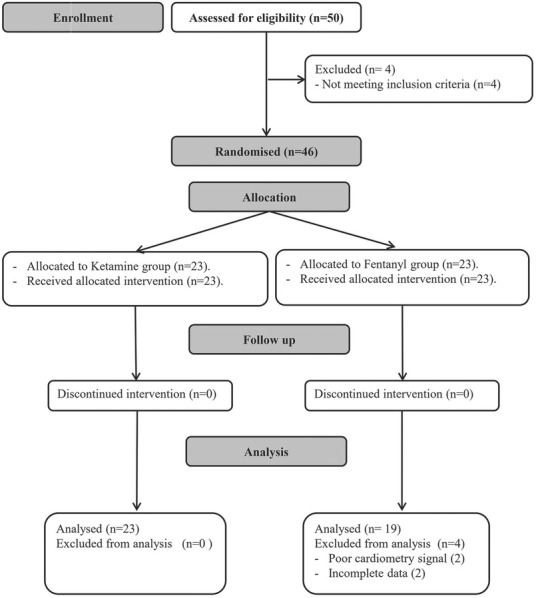
At induction of anaesthesia, patients were allocated into ketamine group (n=23) in which the participants received ketamine 1 mg/kg, and fentanyl group (n=19) in which the participants received fentanyl 2.5 mcg/ kg. Both groups received midazolam (0.05 mg/kg) and succinyl choline (1 mg/kg).
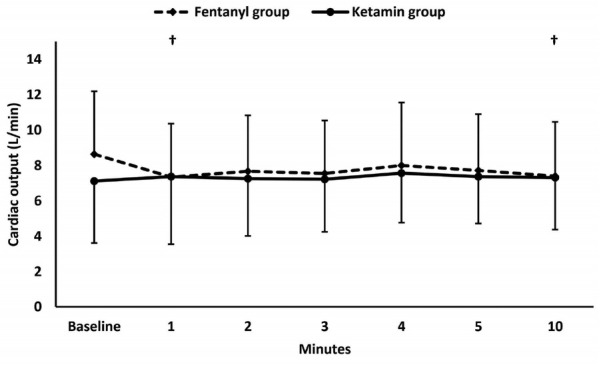
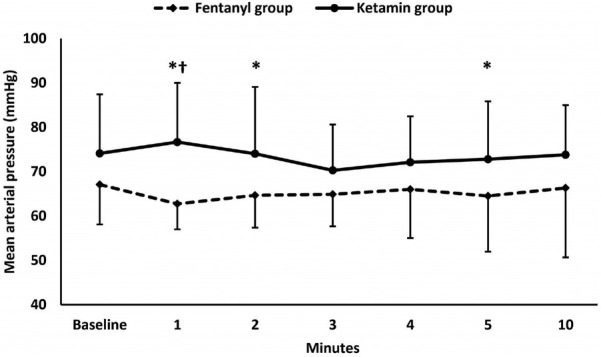
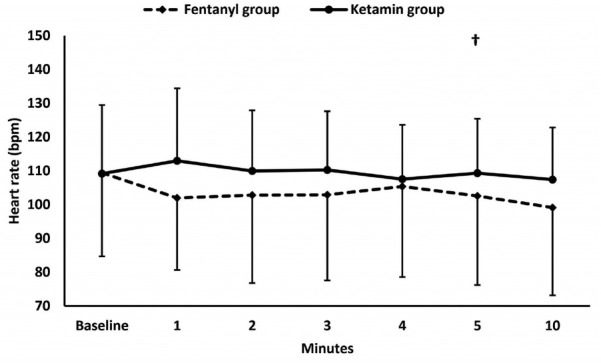
The primary outcome was mean arterial blood pressure. The secondary outcomes included: heart rate, cardiac output, and incidence of postintubation hypotension defined as mean arterial pressure ≤80% of baseline value.
Forty-two patients were available for final analysis. The mean blood pressure was higher in the ketamine group than in the fentanyl group at 1, 2 and 5 minutes after the induction of anaesthesia. Furthermore, the incidence of postinduction hypotension was lower in the ketamine group than in the fentanyl group (11 [47.8%] versus 16 [84.2%], P-value= 0.014). Other hypodynamic parameters, namely the heart rate and cardiac output, were comparable between both groups; and were generally maintained in relation to the baseline reading in each group.
The ketamine-based regimen provided better hemodynamic profile compared to fentanyl-based regimen for rapid-sequence intubation in patients with septic shock undergoing emergency surgery.
本研究旨在比较氯胺酮方案与芬太尼方案用于脓毒性休克患者急诊手术气管插管的效果。
这是一项随机双盲对照试验。
正在接受去甲肾上腺素输注的脓毒性休克患者,计划进行急诊手术。
麻醉诱导时,患者被分为氯胺酮组(n = 23),参与者接受氯胺酮1mg/kg;芬太尼组(n = 19),参与者接受芬太尼2.5μg/kg。两组均接受咪达唑仑(0.05mg/kg)和琥珀酰胆碱(1mg/kg)。
主要结局指标为平均动脉血压。次要结局指标包括:心率、心输出量以及插管后低血压的发生率,定义为平均动脉压≤基线值的80%。
42例患者可进行最终分析。麻醉诱导后1、2和5分钟时,氯胺酮组的平均血压高于芬太尼组。此外,氯胺酮组诱导后低血压的发生率低于芬太尼组(11例[47.8%]对16例[84.2%],P值 = 0.014)。其他低动力参数,即心率和心输出量,两组之间相当;并且与每组的基线读数相比总体保持稳定。
对于接受急诊手术的脓毒性休克患者,在快速顺序插管中,基于氯胺酮的方案比基于芬太尼的方案提供了更好的血流动力学表现。