Gao Kewa, Li Jie, Song Hengyue, Han Hesong, Wang Yongheng, Yin Boyan, Farmer Diana L, Murthy Niren, Wang Aijun
Department of Surgery, School of Medicine, University of California, Davis, Sacramento, CA, 95817, United States.
Institute for Pediatric Regenerative Medicine, Shriners Hospitals for Children, Sacramento, CA, 95817, United States.
Bioact Mater. 2023 Feb 17;25:387-398. doi: 10.1016/j.bioactmat.2023.02.011. eCollection 2023 Jul.
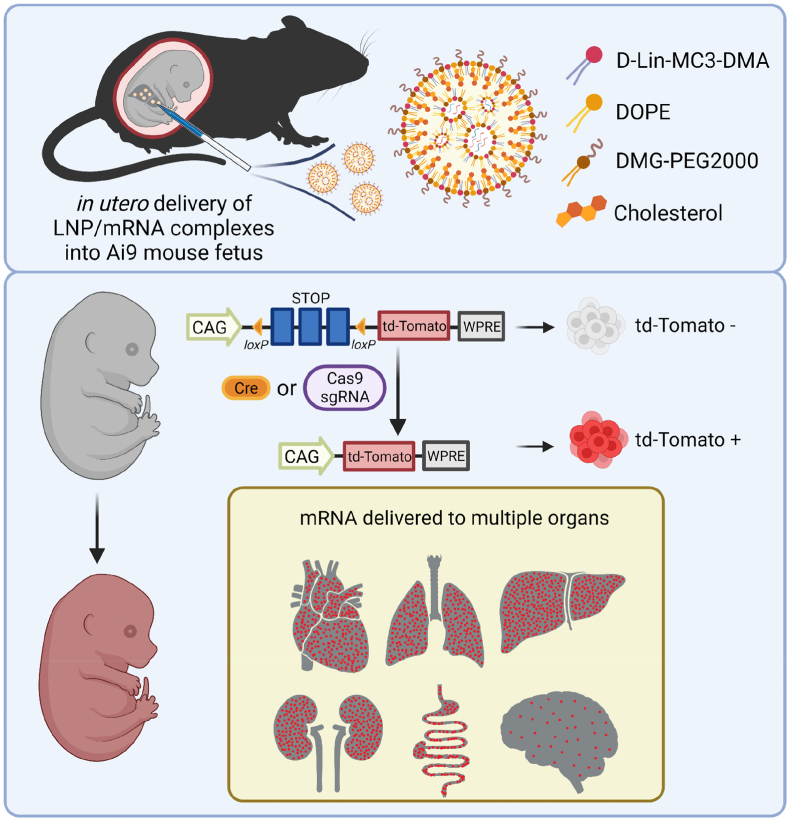
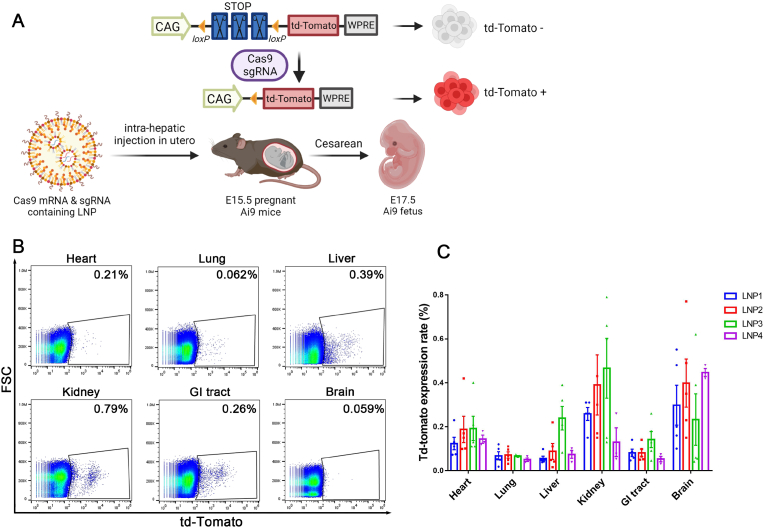
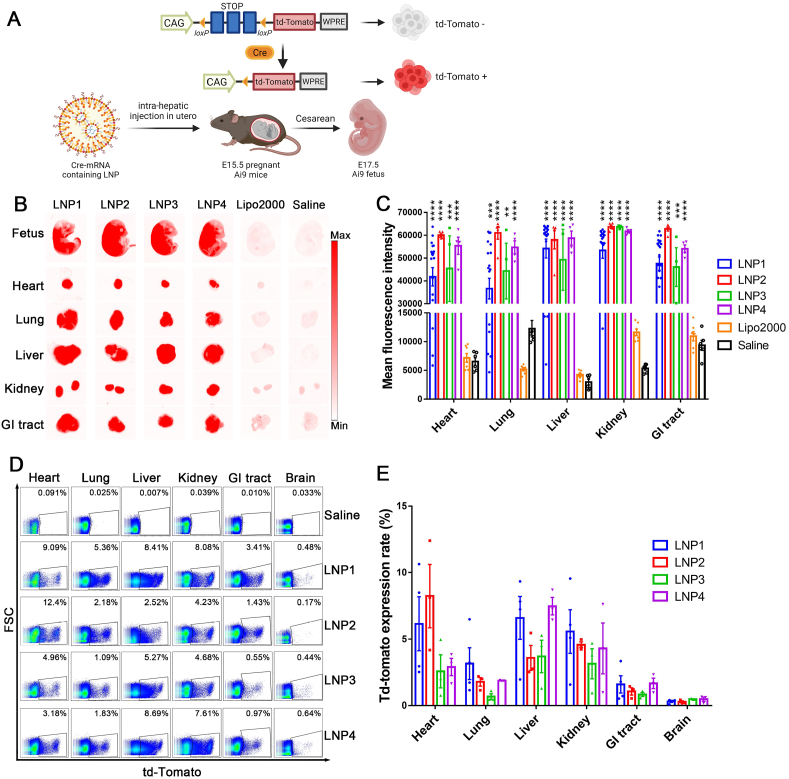
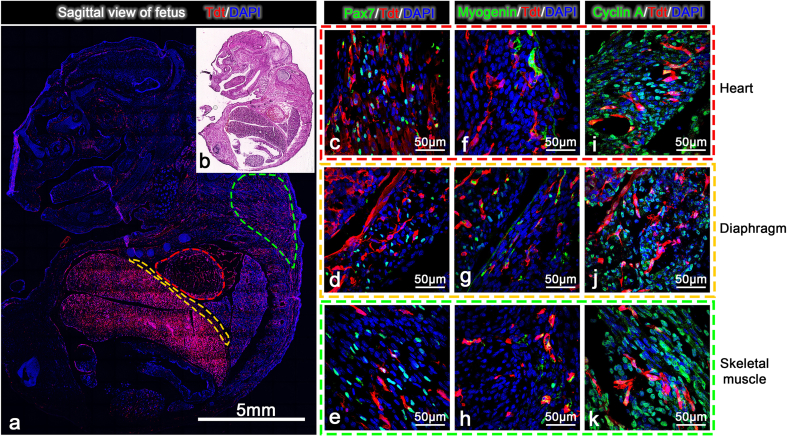
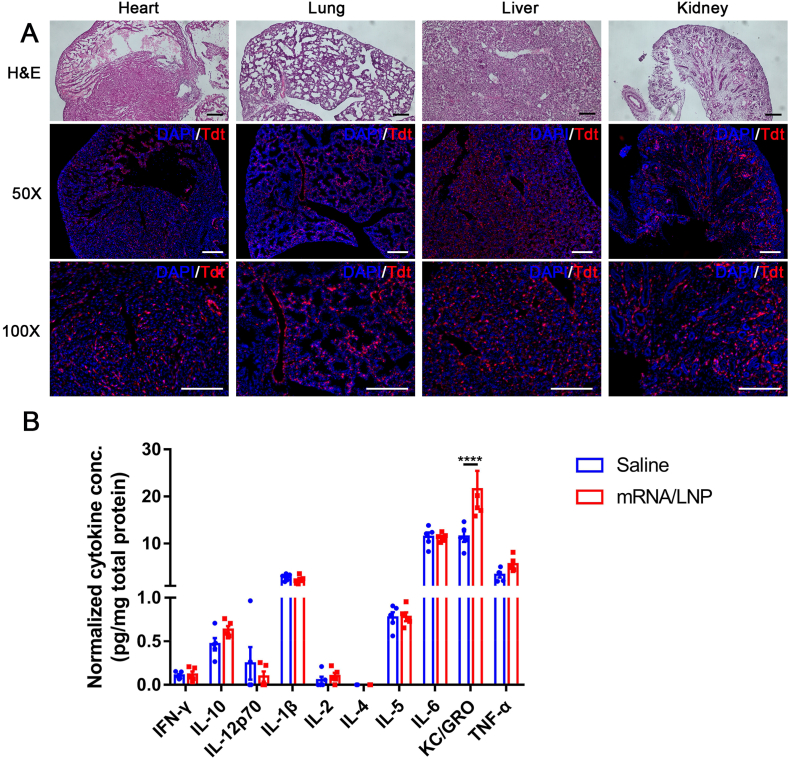
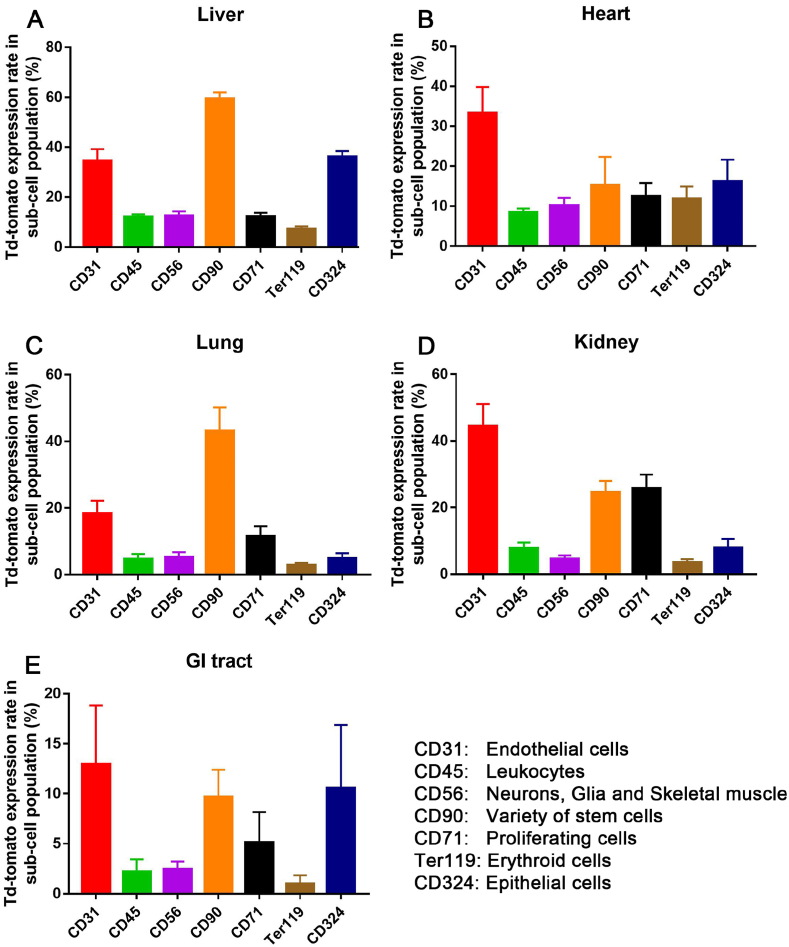
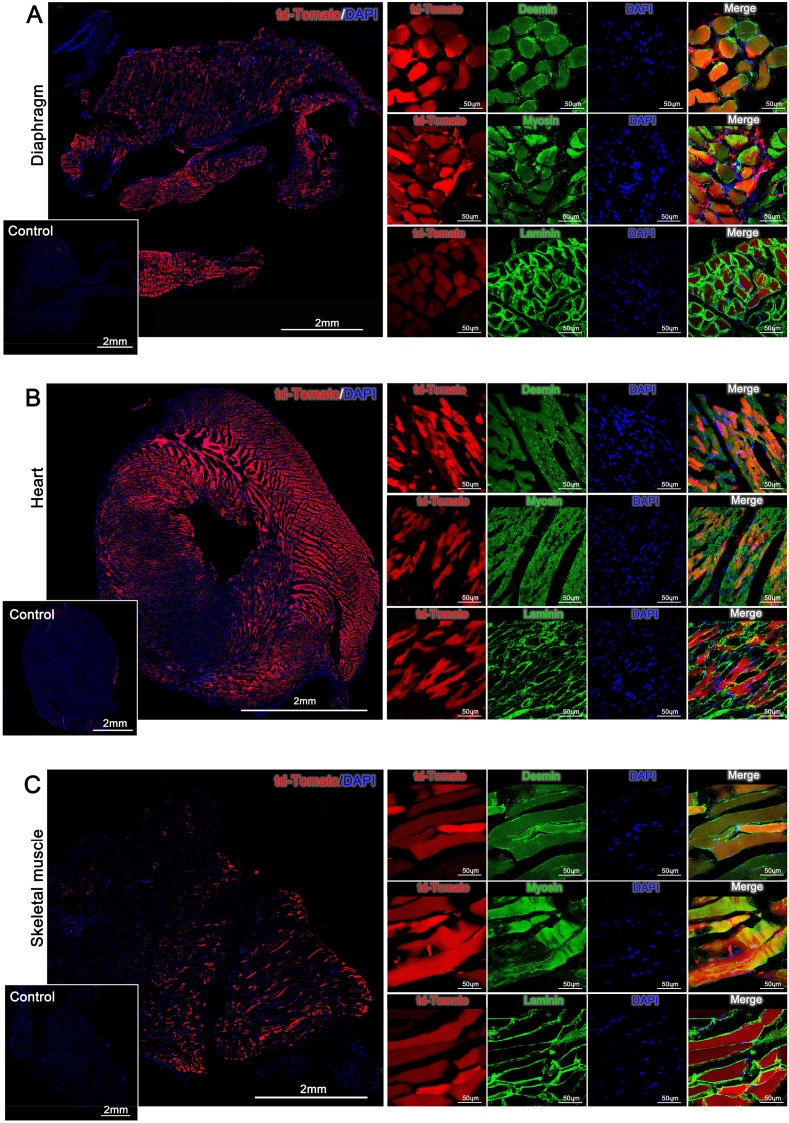
Nanoparticle-based drug delivery systems have the potential to revolutionize medicine, but their low vascular permeability and rapid clearance by phagocytic cells have limited their medical impact. Nanoparticles delivered at the stage can overcome these key limitations due to the high rate of angiogenesis and cell division in fetal tissue and the under-developed immune system. However, very little is known about nanoparticle drug delivery at the fetal stage of development. In this report, using Ai9 CRE reporter mice, we demonstrate that lipid nanoparticle (LNP) mRNA complexes can deliver mRNA , and can access and transfect major organs, such as the heart, the liver, kidneys, lungs and the gastrointestinal tract with remarkable efficiency and low toxicity. In addition, at 4 weeks after birth, we demonstrate that 50.99 ± 5.05%, 36.62 ± 3.42% and 23.7 ± 3.21% of myofiber in the diaphragm, heart and skeletal muscle, respectively, were transfected. Finally, we show here that Cas9 mRNA and sgRNA complexed to LNPs were able to edit the fetal organs . These experiments demonstrate the possibility of non-viral delivery of mRNA to organs outside of the liver , which provides a promising strategy for treating a wide variety of devastating diseases before birth.
基于纳米颗粒的药物递送系统有潜力彻底改变医学,但它们低血管通透性以及被吞噬细胞快速清除的特性限制了其医学影响。由于胎儿组织中血管生成和细胞分裂的高速度以及免疫系统发育不全,在胎儿阶段递送纳米颗粒可以克服这些关键限制。然而,关于纳米颗粒在胎儿发育阶段的药物递送,人们了解得非常少。在本报告中,我们使用Ai9 CRE报告基因小鼠,证明脂质纳米颗粒(LNP)mRNA复合物可以递送mRNA,并且能够高效且低毒地进入并转染主要器官,如心脏、肝脏、肾脏、肺和胃肠道。此外,在出生后4周,我们证明膈肌、心脏和骨骼肌中分别有50.99±5.05%、36.62±3.42%和23.7±3.21%的肌纤维被转染。最后,我们在此表明,与LNP复合的Cas9 mRNA和sgRNA能够编辑胎儿器官。这些实验证明了将mRNA非病毒递送至肝脏以外器官的可能性,这为在出生前治疗多种毁灭性疾病提供了一种有前景的策略。