T-CiRA Discovery, Takeda Pharmaceutical Company Limited, 26-1, Muraoka-Higashi 2-chome, Fujisawa, Kanagawa, 251-8555, Japan.
Takeda-CiRA Joint Program, Fujisawa, Kanagawa, Japan.
Nat Commun. 2021 Dec 8;12(1):7101. doi: 10.1038/s41467-021-26714-w.
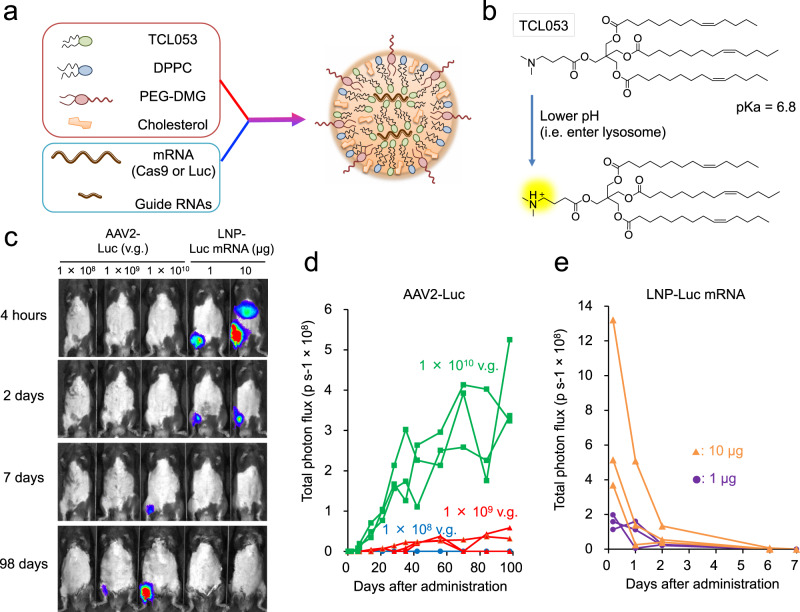
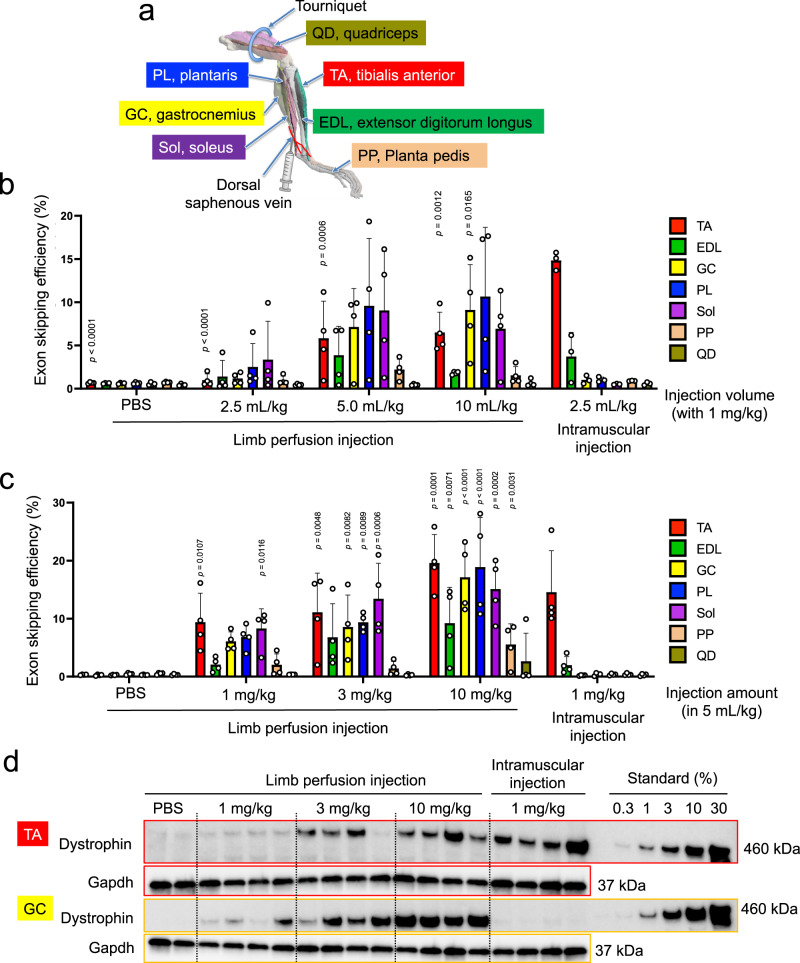
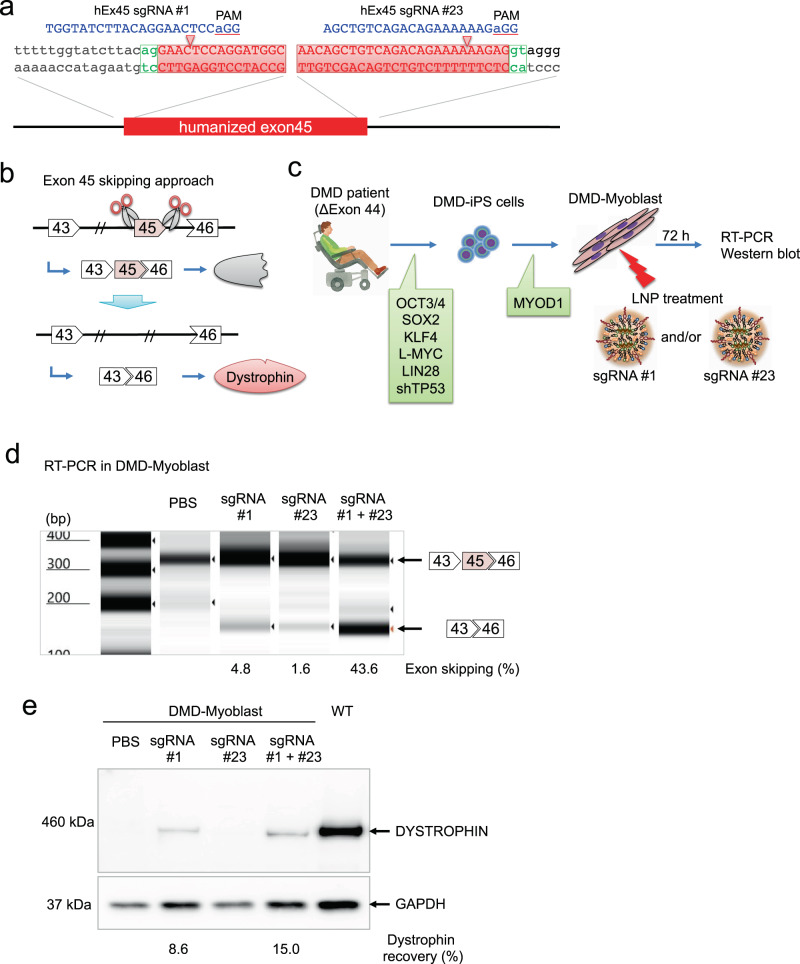
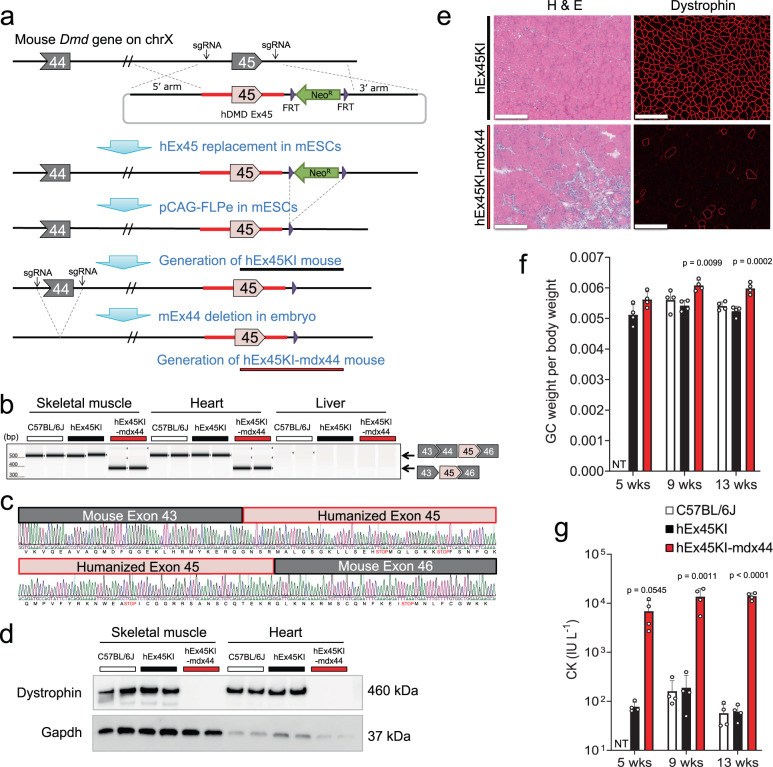
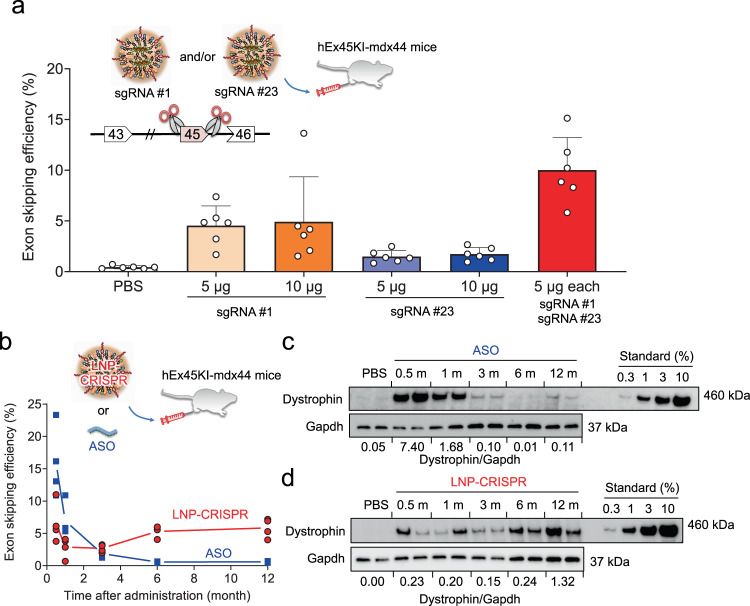
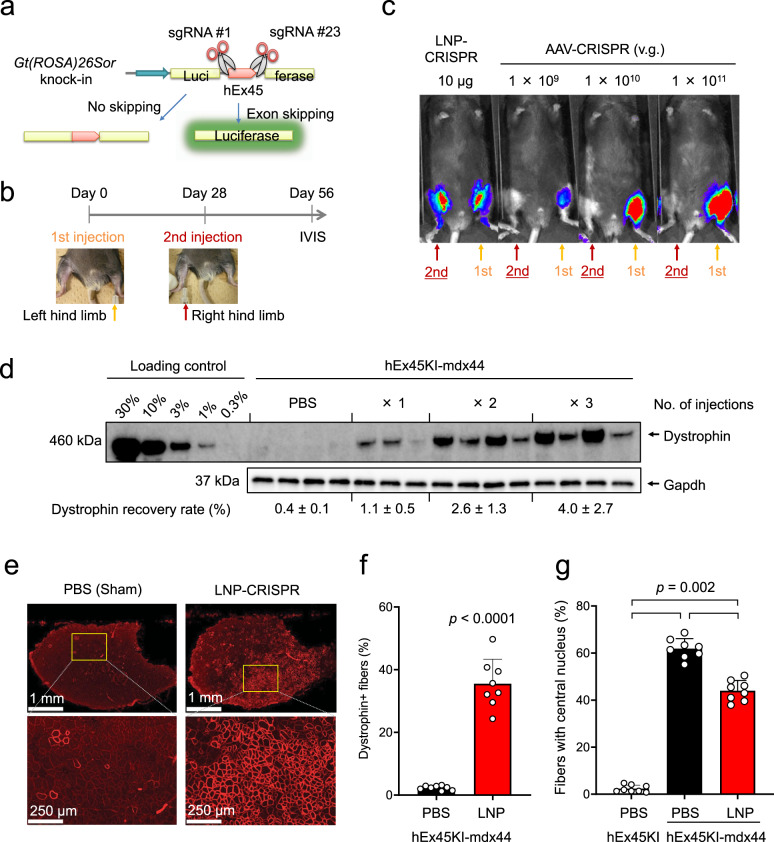
Genome editing therapy for Duchenne muscular dystrophy (DMD) holds great promise, however, one major obstacle is delivery of the CRISPR-Cas9/sgRNA system to skeletal muscle tissues. In general, AAV vectors are used for in vivo delivery, but AAV injections cannot be repeated because of neutralization antibodies. Here we report a chemically defined lipid nanoparticle (LNP) system which is able to deliver Cas9 mRNA and sgRNA into skeletal muscle by repeated intramuscular injections. Although the expressions of Cas9 protein and sgRNA were transient, our LNP system could induce stable genomic exon skipping and restore dystrophin protein in a DMD mouse model that harbors a humanized exon sequence. Furthermore, administration of our LNP via limb perfusion method enables to target multiple muscle groups. The repeated administration and low immunogenicity of our LNP system are promising features for a delivery vehicle of CRISPR-Cas9 to treat skeletal muscle disorders.
基因编辑疗法治疗杜氏肌营养不良症(DMD)前景广阔,但主要障碍之一是将 CRISPR-Cas9/sgRNA 系统递送到骨骼肌组织。通常,使用 AAV 载体进行体内递送,但由于中和抗体,AAV 注射不能重复。在这里,我们报告了一种化学定义的脂质纳米颗粒(LNP)系统,该系统能够通过重复肌肉内注射将 Cas9 mRNA 和 sgRNA 递送到骨骼肌。尽管 Cas9 蛋白和 sgRNA 的表达是短暂的,但我们的 LNP 系统可以在携带人源化外显子序列的 DMD 小鼠模型中诱导稳定的基因组外显子跳跃并恢复肌营养不良蛋白。此外,通过肢体灌注法施用我们的 LNP 能够靶向多个肌肉群。我们的 LNP 系统的重复给药和低免疫原性是将 CRISPR-Cas9 递送至治疗骨骼肌疾病的载体的有前途的特征。