Yang Simin, He Lihua, Li Ke, Yu Xiaoyu, Ni Lijun, Hu Liang, Guo Jian, Biskup Ewelina, Tang Lunxian, Wu Wenjuan
Department of Laboratory Medicine, Shanghai East Hospital, Tongji University School of Medicine, Shanghai, People's Republic of China.
Department of Hospital Infection Management, Shanghai East Hospital, Tongji University School of Medicine, Shanghai, People's Republic of China.
Infect Drug Resist. 2023 Feb 20;16:1039-1048. doi: 10.2147/IDR.S396331. eCollection 2023.
To investigate whether rapid active molecular screening and infection prevention and control (IPC) interventions can reduce colonization or infection with carbapenem-resistant (CRE) in a general emergency intensive care unit (EICU) without enough single-room isolation.
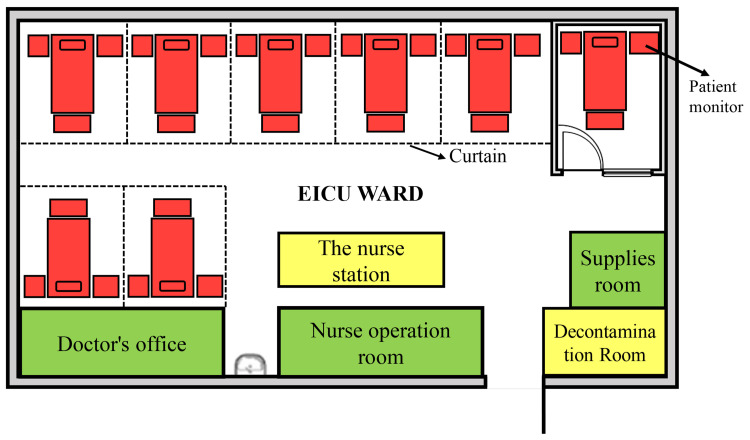
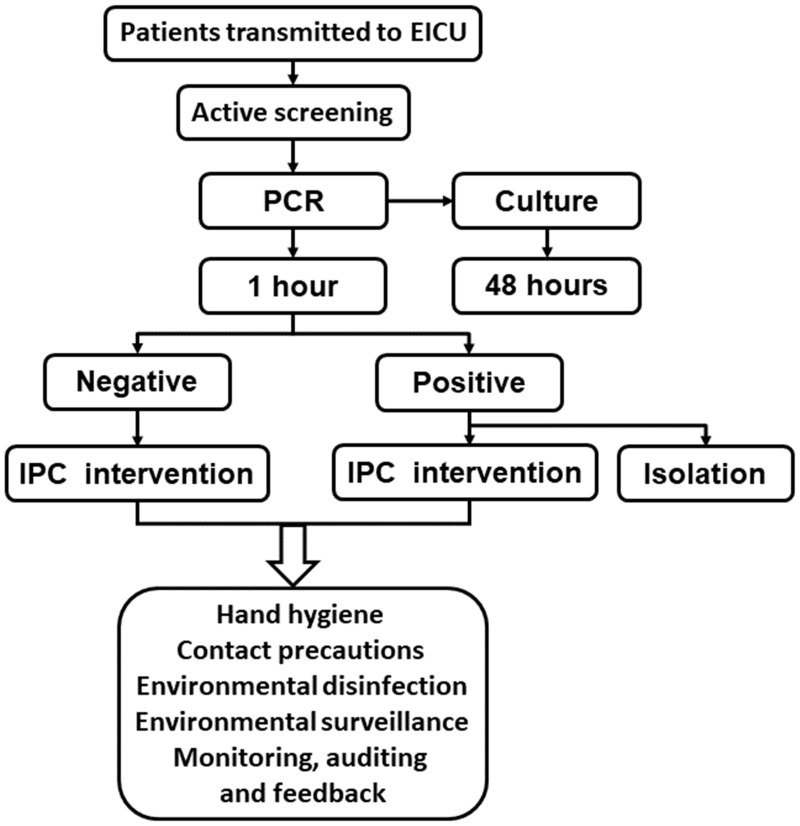
The study was designed as a before-and-after quasi-experiment. Before the experimental period, the ward was rescheduled and the staff were trained. From May 2018 to April 2021, active screening was performed by seminested real-time fluorescent polymerase chain reaction (PCR) detection with rectal swabs from all patients on admission to the EICU, and the results were reported in 1 hour. Other IPC interventions including hand hygiene, contact precautions, patient isolation, environmental disinfection, environment surveillance, monitoring, auditing and feedback were conducted under strict supervision. The patients' clinical characteristics were collected simultaneously.
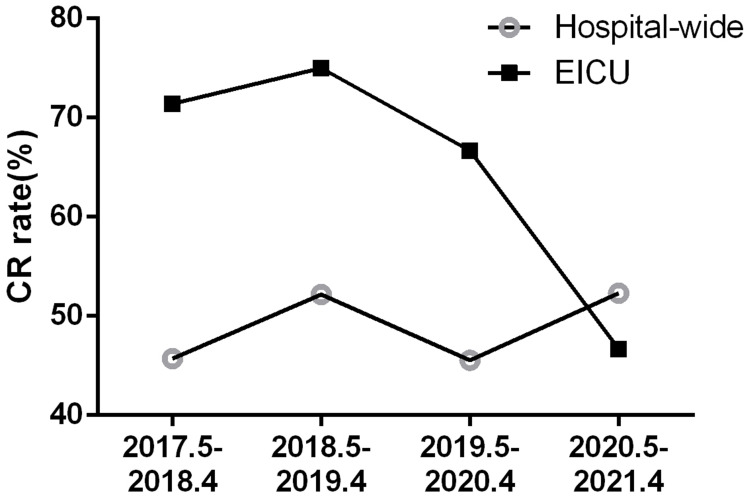
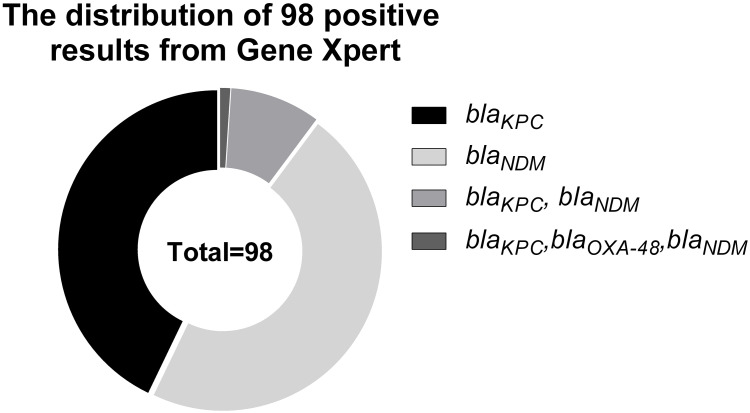
In this 3-year study, 630 patients were enrolled and 19.84% of the patients were initially colonized or infected with CRE as shown by active molecular screening. The average drug resistance ratio to carbapenem shown by clinical culture detection of (KPN) before the study was performed was 71.43% in EICU. The drug resistance ratio decreased significantly from 75%, 66.67% to 46.67% in the next 3 years (p<0.05) during which active screening and IPC interventions were strictly executed. While the ratio gaps between EICU and the whole hospital were narrowed from 22.81%, 21.11% to 4.64%. Patients with invasive devices, skin barrier damage, and the recent use of antibiotics on admission were found to have a higher risk of being colonized or infected with CRE (p<0.05).
Active rapid molecular screening and other IPC interventions may significantly reduce CRE nosocomial infections even in wards without enough single-room isolation. The key to reduce the spread of CRE in the EICU is the strict execution of IPC interventions by all medical staff and healthcare workers.
探讨在一间没有足够单人隔离病房的普通急诊重症监护病房(EICU)中,快速主动分子筛查和感染预防与控制(IPC)干预措施能否减少耐碳青霉烯类肠杆菌科细菌(CRE)的定植或感染。
本研究设计为准前后对照实验。在实验期前,对病房进行重新规划并对工作人员进行培训。2018年5月至2021年4月,采用半巢式实时荧光聚合酶链反应(PCR)检测对所有入住EICU的患者进行入院时直肠拭子主动筛查,并在1小时内报告结果。在严格监督下实施其他IPC干预措施,包括手卫生、接触预防、患者隔离、环境消毒、环境监测、监测、审核和反馈。同时收集患者的临床特征。
在这项为期3年的研究中,共纳入630例患者,主动分子筛查显示19.84%的患者最初被CRE定植或感染。在进行本研究前,EICU中临床培养检测显示的肺炎克雷伯菌(KPN)对碳青霉烯类的平均耐药率为71.43%。在严格执行主动筛查和IPC干预措施的接下来3年中,耐药率从75%、66.67%显著降至46.67%(p<0.05)。而EICU与全院之间的耐药率差距从22.81%、21.11%缩小至4.64%。发现入住时使用侵入性设备、皮肤屏障受损和近期使用抗生素的患者被CRE定植或感染的风险较高(p<0.05)。
即使在没有足够单人隔离病房的病房中,主动快速分子筛查和其他IPC干预措施也可能显著降低CRE医院感染。减少CRE在EICU传播的关键是所有医务人员和医护人员严格执行IPC干预措施。