TIP Immunology, EMD Serono, Billerica, MA, United States.
Protein Engineering and Antibody Technologies, Merck KGaA, Darmstadt, Germany.
Front Immunol. 2023 Feb 10;14:1106537. doi: 10.3389/fimmu.2023.1106537. eCollection 2023.
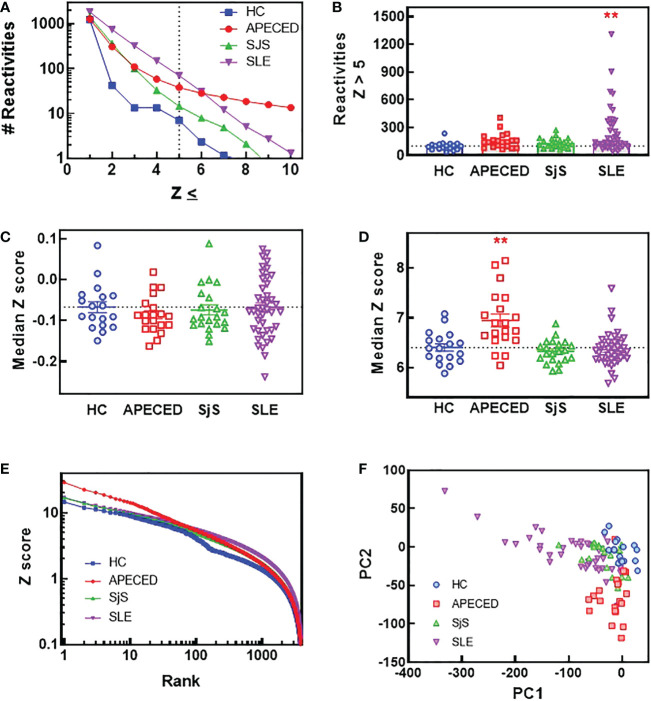
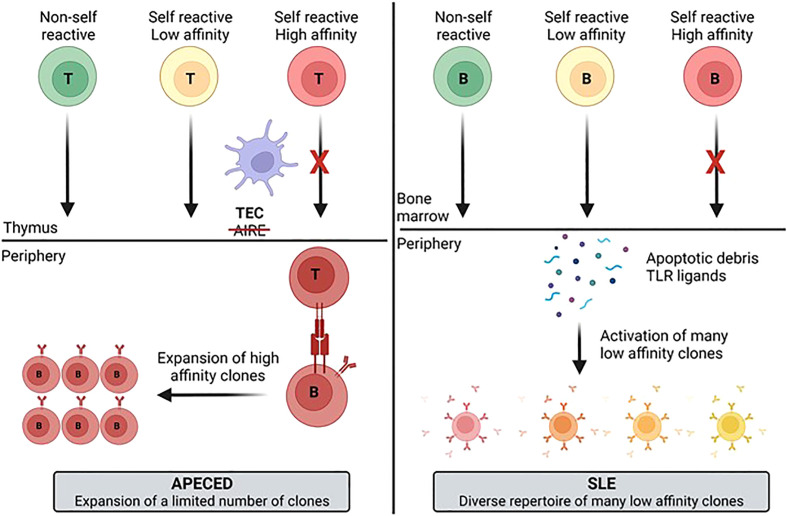
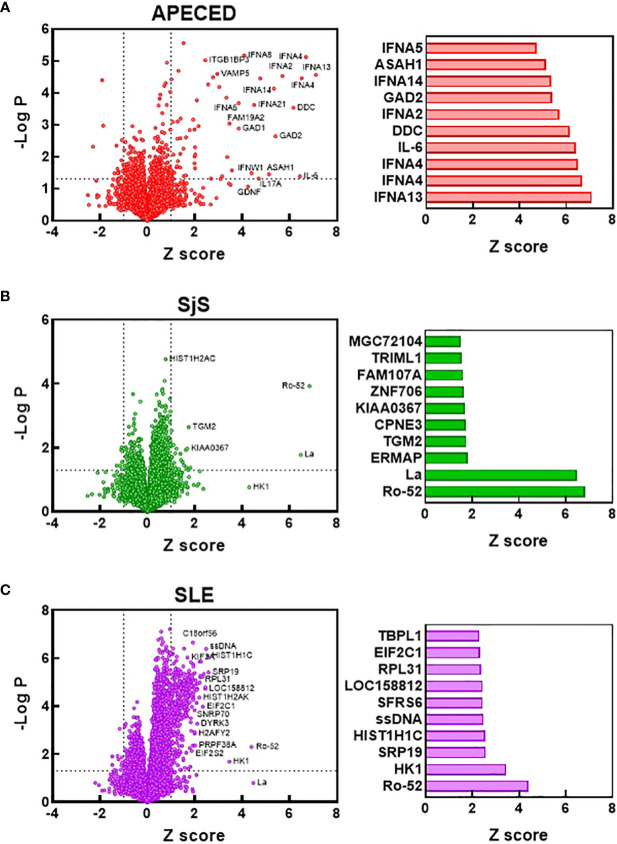
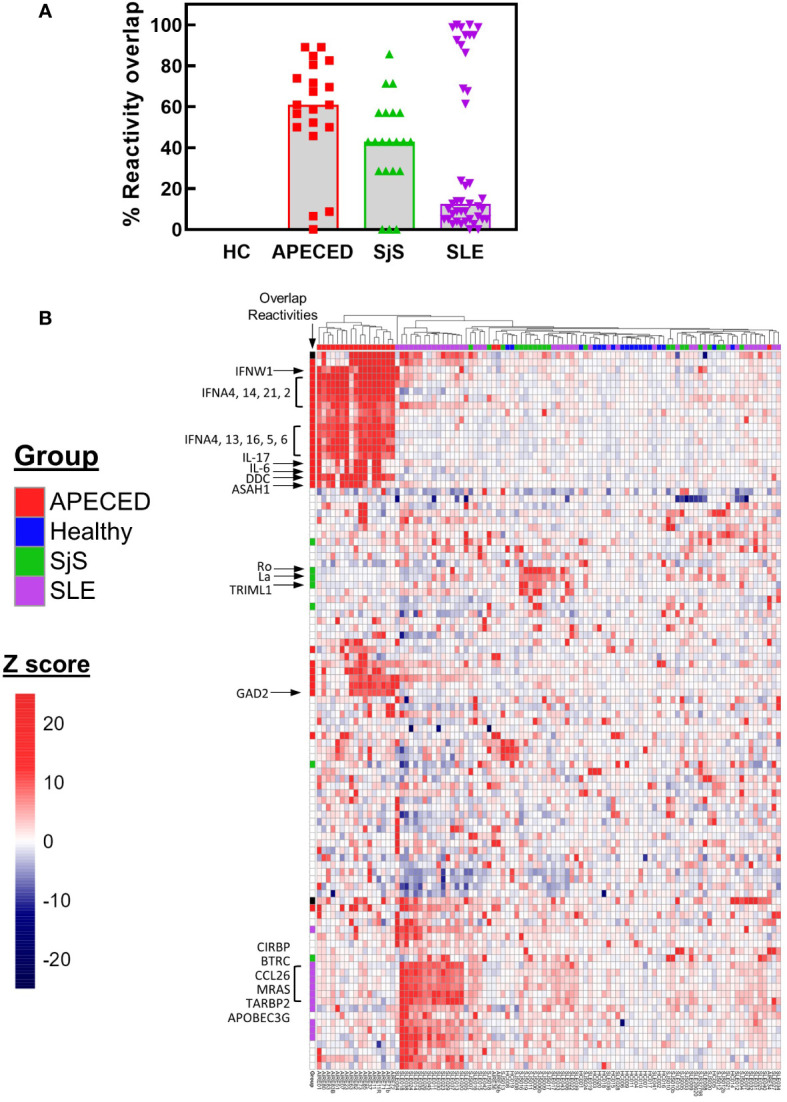
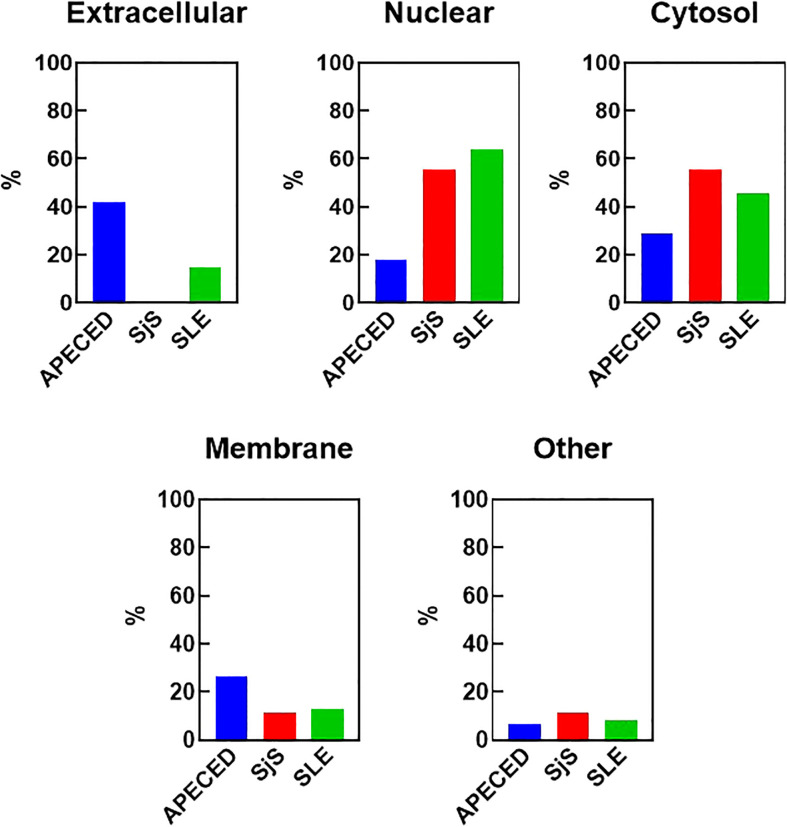
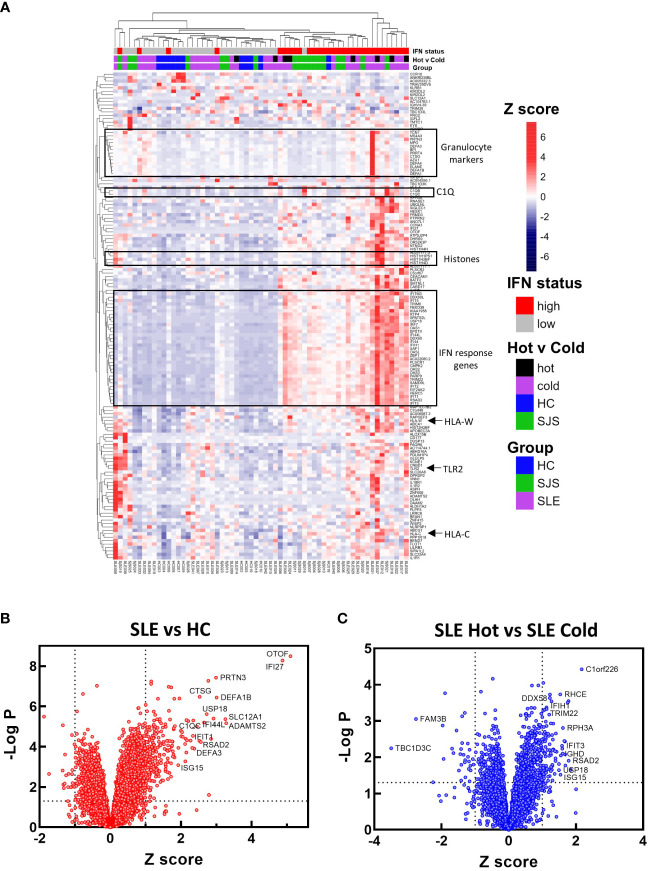
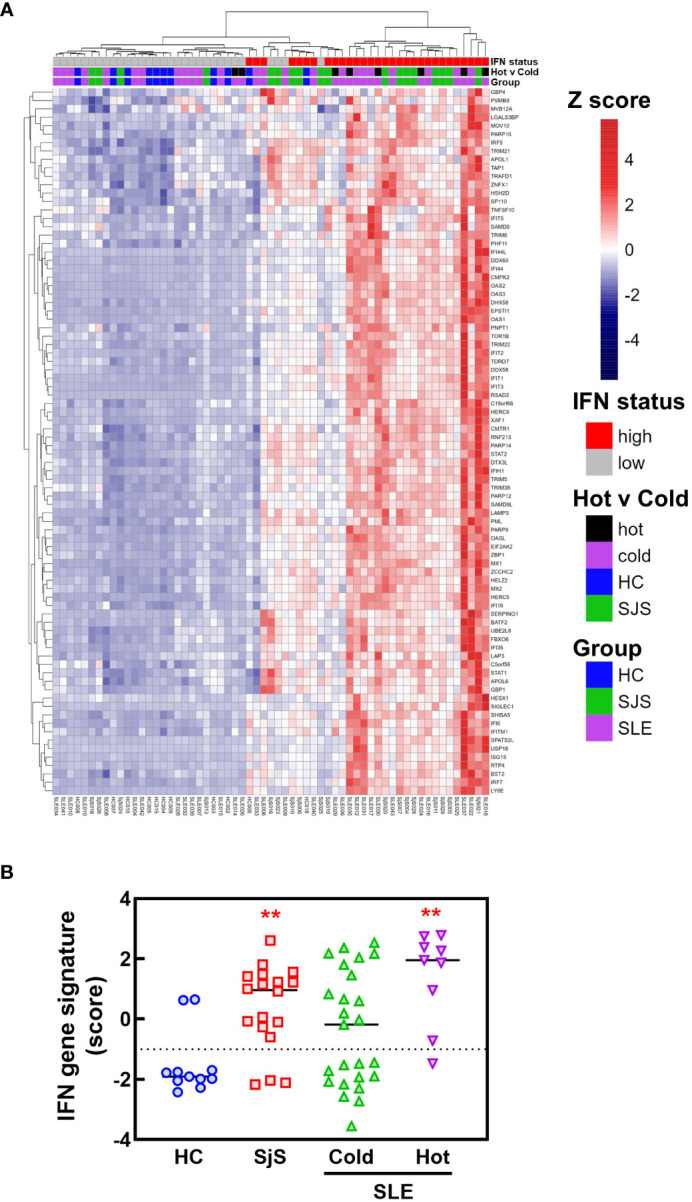
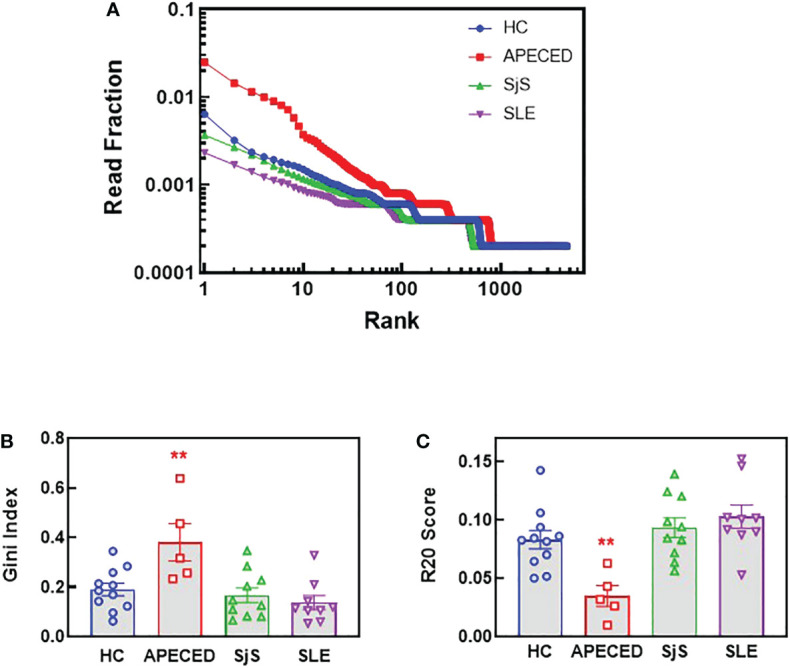
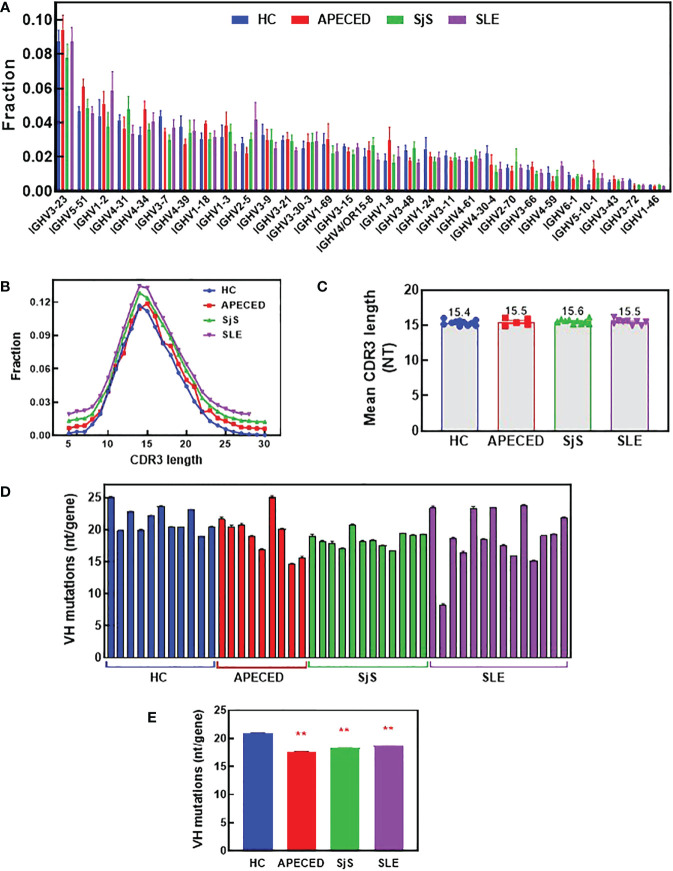
Autoimmune diseases vary in the magnitude and diversity of autoantibody profiles, and these differences may be a consequence of different types of breaks in tolerance. Here, we compared the disparate autoimmune diseases autoimmune polyendocrinopathy-candidiasis-ecto-dermal dystrophy (APECED), systemic lupus erythematosus (SLE), and Sjogren's syndrome (SjS) to gain insight into the etiology of breaks in tolerance triggering autoimmunity. APECED was chosen as a prototypical monogenic disease with organ-specific pathology while SjS and SLE represent polygenic autoimmunity with focal or systemic disease. Using protein microarrays for autoantibody profiling, we found that APECED patients develop a focused but highly reactive set of shared mostly anti-cytokine antibodies, while SLE patients develop broad and less expanded autoantibody repertoires against mostly intracellular autoantigens. SjS patients had few autoantibody specificities with the highest shared reactivities observed against Ro-52 and La. RNA-seq B-cell receptor analysis revealed that APECED samples have fewer, but highly expanded, clonotypes compared with SLE samples containing a diverse, but less clonally expanded, B-cell receptor repertoire. Based on these data, we propose a model whereby the presence of autoreactive T-cells in APECED allows T-dependent B-cell responses against autoantigens, while SLE is driven by breaks in peripheral B-cell tolerance and extrafollicular B-cell activation. These results highlight differences in the autoimmunity observed in several monogenic and polygenic disorders and may be generalizable to other autoimmune diseases.
自身免疫性疾病在自身抗体谱的幅度和多样性上存在差异,这些差异可能是由于不同类型的耐受破坏所致。在这里,我们比较了不同的自身免疫性疾病,包括自身免疫性多内分泌腺病-念珠菌病-外胚层营养不良(APECED)、系统性红斑狼疮(SLE)和干燥综合征(SjS),以深入了解触发自身免疫的耐受破坏的病因。选择 APECED 作为一种具有器官特异性病理的典型单基因疾病,而 SjS 和 SLE 则代表具有局灶性或系统性疾病的多基因自身免疫。我们使用蛋白质微阵列进行自身抗体谱分析,发现 APECED 患者产生了一组集中但高度反应性的共享自身抗体,主要针对细胞因子,而 SLE 患者则产生了针对大多数细胞内自身抗原的广泛而扩展程度较低的自身抗体库。SjS 患者的自身抗体特异性较少,与 Ro-52 和 La 反应的共享反应性最高。RNA-seq B 细胞受体分析显示,与 SLE 样本相比,APECED 样本的克隆型较少,但高度扩展,而 SLE 样本包含多样化但较少克隆扩展的 B 细胞受体库。基于这些数据,我们提出了一个模型,即 APECED 中存在自身反应性 T 细胞允许针对自身抗原的 T 依赖性 B 细胞反应,而 SLE 则是由外周 B 细胞耐受破坏和滤泡外 B 细胞激活驱动的。这些结果突出了几种单基因和多基因疾病中观察到的自身免疫的差异,并且可能可推广到其他自身免疫性疾病。