Department of Immunobiology, Yale School of Medicine, New Haven, CT 06510, USA.
These authors contributed equally.
Cell Rep Methods. 2022 Feb 28;2(2). doi: 10.1016/j.crmeth.2022.100172. Epub 2022 Feb 17.
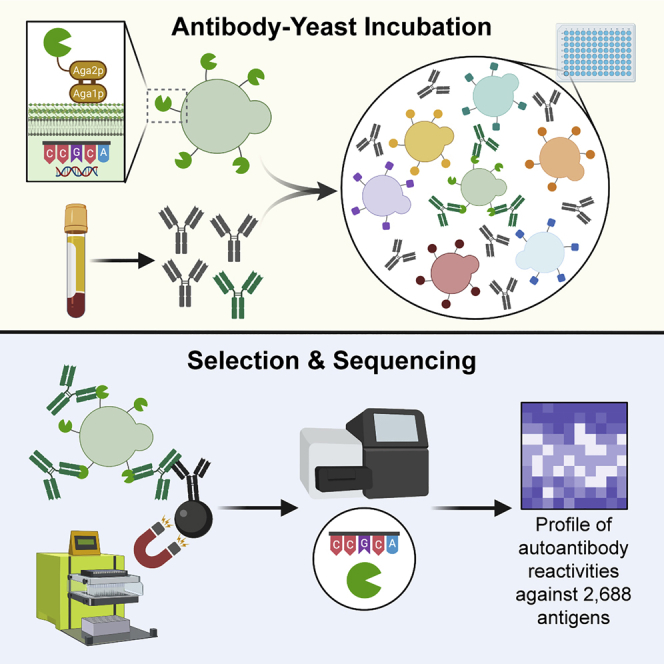
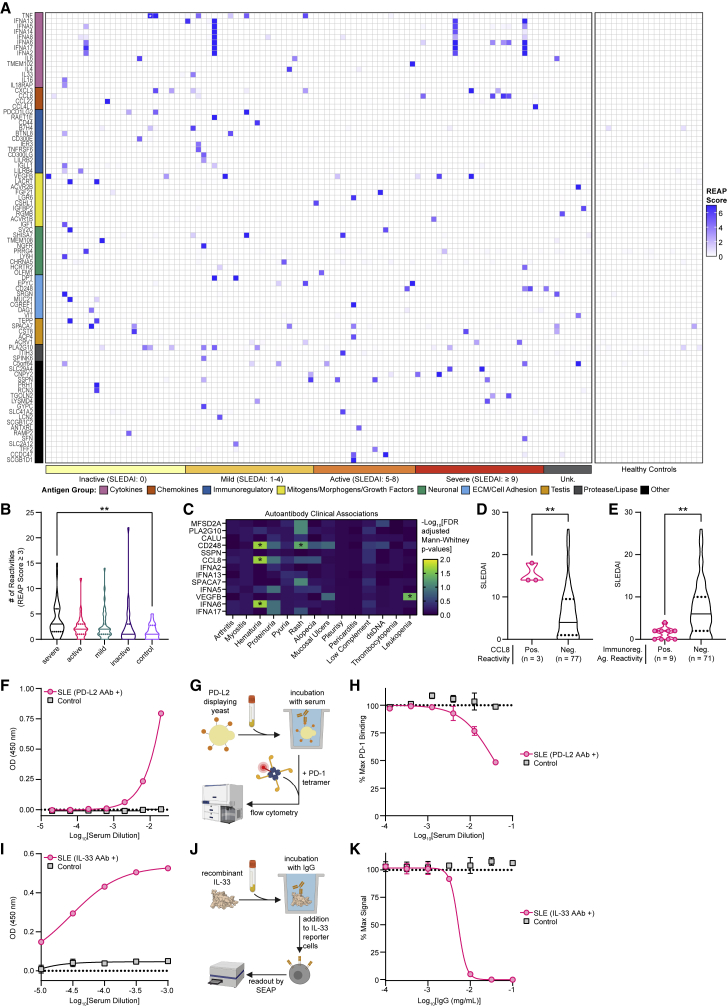
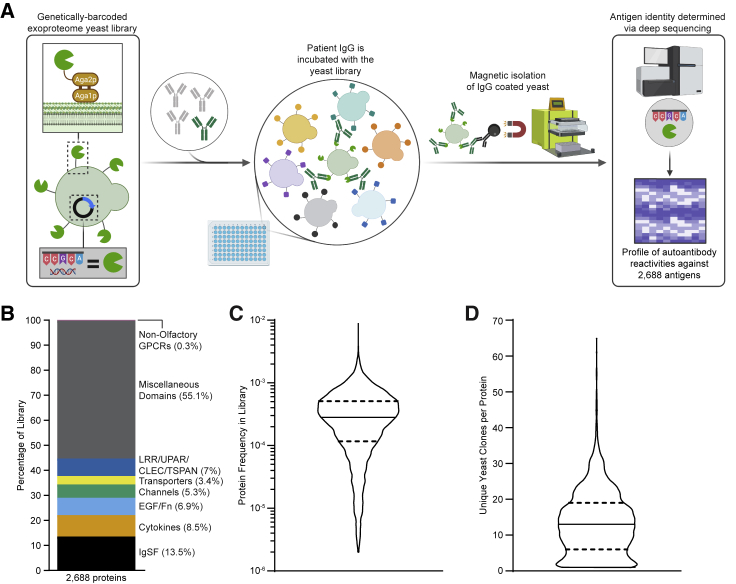
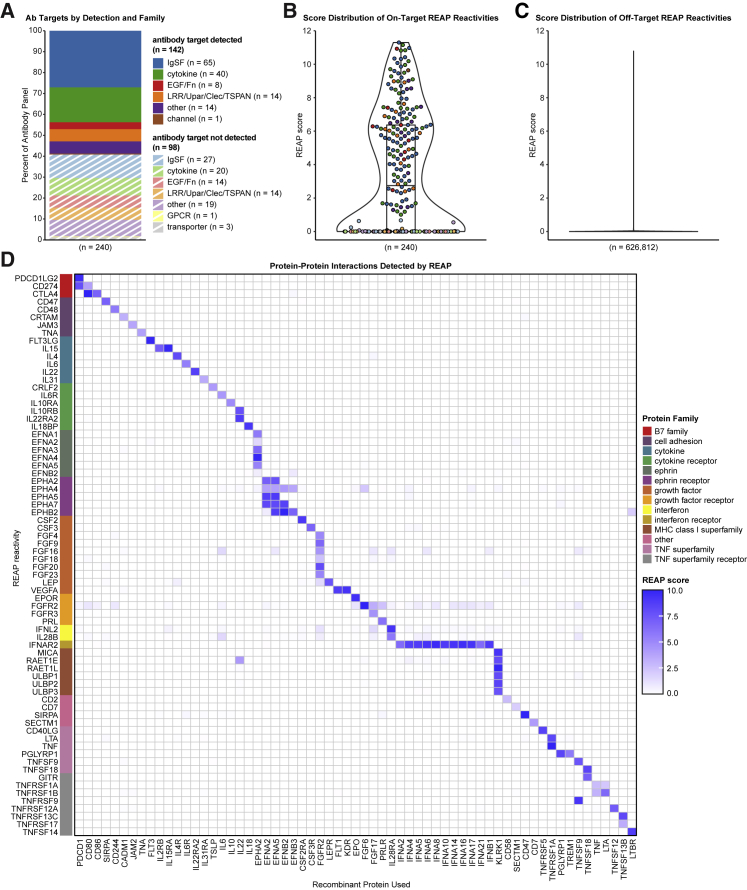
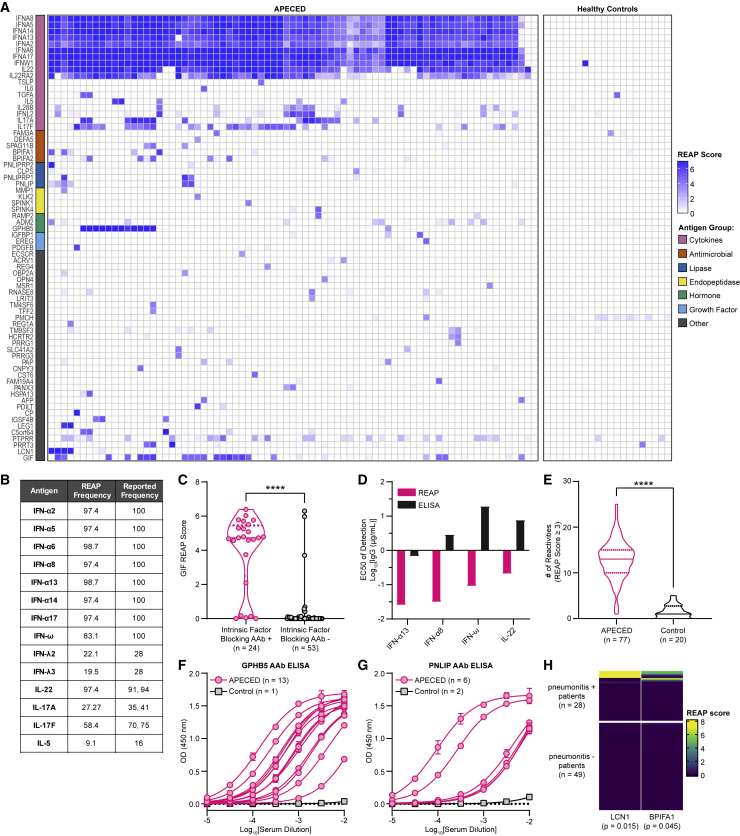
Autoantibodies that recognize extracellular proteins (the exoproteome) exert potent biological effects but are challenging to detect. Here, we developed rapid extracellular antigen profiling (REAP), a high-throughput technique for the comprehensive discovery of exoproteome-targeting autoantibodies. Patient samples are applied to a genetically barcoded yeast surface display library containing 2,688 human extracellular proteins. Antibody-coated yeast are isolated, and sequencing of barcodes is used to identify displayed antigens. To benchmark REAP's performance, we screened 77 patients with autoimmune polyglandular syndrome type 1 (APS-1). REAP sensitively and specifically detected both known and previously unidentified autoantibodies in APS-1. We further screened 106 patients with systemic lupus erythematosus (SLE) and identified numerous autoantibodies, several of which were associated with disease severity or specific clinical manifestations and exerted functional effects on cell signaling . These findings demonstrate the utility of REAP to atlas the expansive landscape of exoproteome-targeting autoantibodies and their impacts on patient health outcomes.
识别细胞外蛋白(细胞外蛋白质组)的自身抗体具有强大的生物学效应,但难以检测。在这里,我们开发了快速细胞外抗原分析(REAP),这是一种高通量技术,可全面发现针对细胞外蛋白质组的自身抗体。将患者样本应用于包含 2688 个人类细胞外蛋白质的基因编码酵母表面展示文库。用抗体包被的酵母进行分离,并对条形码进行测序以鉴定所展示的抗原。为了对 REAP 的性能进行基准测试,我们筛选了 77 名自身免疫性多腺体综合征 1 型(APS-1)患者。REAP 灵敏且特异性地检测到 APS-1 中的已知和以前未识别的自身抗体。我们进一步筛选了 106 名系统性红斑狼疮(SLE)患者,并鉴定了许多自身抗体,其中一些与疾病严重程度或特定临床表现相关,并对细胞信号传导产生功能影响。这些发现证明了 REAP 用于绘制广泛的细胞外蛋白质组靶向自身抗体图谱及其对患者健康结果的影响的效用。