Adam Abdeljalil, Saffaj Nabil, Mamouni Rachid
Laboratory of Biotechnology, Materials, and Environment, Faculty of Sciences, University IBN ZOHR, 80000 Agadir, Morocco.
MethodsX. 2023 Feb 3;10:102055. doi: 10.1016/j.mex.2023.102055. eCollection 2023.
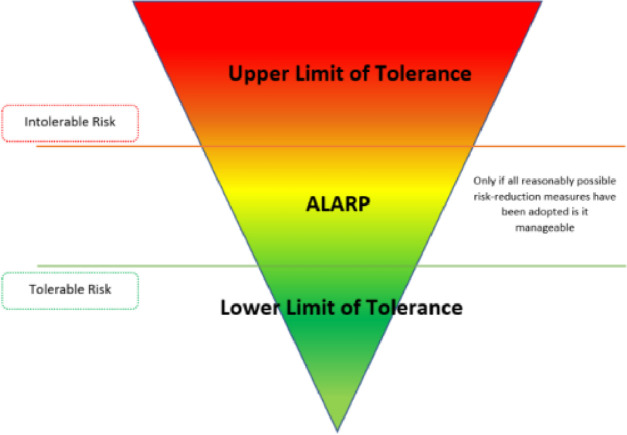
Recognizing and assessing environmental risk are key components of every industry management strategy. Projects need to make sure that a detailed environmental risk management strategy is applied by methodically recognizing and addressing threats from internal and external influences to comply with regulatory standards for environmental preservation and safeguarding. This study's goal is to use a novel technique to assess the impact of environmental risks related to the use of evaporation ponds as final basins for industrial effluents. It employs qualitative and statistical methodologies to identify areas where engineering and managerial safeguards' structure, functioning, and lines of defense have flaws that might result in an ecologically hazardous occurrence. Additionally, it will offer a risk evaluation based on the gravity of the impact and the likelihood that the environmental occurrence would happen by using evaporation ponds to store industrial effluents. While the environmental threat would be entirely removed, it must be capable of reducing it to ALARP. The environmental risk assessment matrix will serve as a key factor in determining whether the environmental risk level linked with an evaporation pond is acceptable, as determined by the likelihood and impacts. The result of this research allows industrial units to recognize and control potential environmental risks associated with effluents by practically implementing a new environmental risk matrix based on several environmental and ecological effects with probability factors.•This study aims to assist industrial operators, especially power plants, manage environmental risk by combining ALARP concepts with other factors to evaluate risk acceptance and tolerance levels.•The Physico-chemical characteristics of effluent collected in the evaporation pond reveal that evaporation has a deleterious impact on such industrial effluent, as evidenced by a large increase in various effluent properties, some of which exceed the limit values.•A risk evaluation found that effluent collected in the evaporation pond has a detrimental negative impact on industrial effluents. This was evidenced by a significant rise in associated activities. This could increase the expense of operating and managing evaporation ponds, which could harm the ecosystem.
识别和评估环境风险是每个行业管理策略的关键组成部分。项目需要确保通过系统地识别和应对来自内部和外部影响的威胁,应用详细的环境风险管理策略,以符合环境保护和保障的监管标准。本研究的目标是使用一种新颖的技术来评估与使用蒸发塘作为工业废水最终排放池相关的环境风险影响。它采用定性和统计方法来识别工程和管理保障措施的结构、功能和防线存在缺陷的领域,这些缺陷可能导致生态危害事件的发生。此外,它将根据影响的严重程度以及使用蒸发塘储存工业废水导致环境事件发生的可能性进行风险评估。虽然环境威胁无法完全消除,但必须能够将其降低到合理可行尽量低的水平(ALARP)。环境风险评估矩阵将作为确定与蒸发塘相关的环境风险水平是否可接受的关键因素,这取决于可能性和影响程度。本研究的结果使工业单位能够通过实际实施基于多种环境和生态影响以及概率因素的新环境风险矩阵,识别和控制与废水相关的潜在环境风险。•本研究旨在通过将ALARP概念与其他因素相结合,协助工业运营商,特别是发电厂,管理环境风险,以评估风险接受度和容忍水平。•在蒸发塘中收集的废水的物理化学特性表明,蒸发对这种工业废水有有害影响,各种废水特性大幅增加就是证明,其中一些超过了限值。•一项风险评估发现,在蒸发塘中收集的废水对工业废水有不利的负面影响。相关活动的显著增加证明了这一点。这可能会增加蒸发塘运营和管理的成本,进而可能损害生态系统。