Luo Songyuan, Liu Zhixu, Bian Qian, Wang Xudong
Department of Oral and Craniomaxillofacial Surgery, Shanghai Ninth People's Hospital, Shanghai Jiao Tong University School of Medicine, Shanghai, China.
National Center for Stomatology, National Clinical Research Center for Oral Diseases, Shanghai Key Laboratory of Stomatology, Shanghai, China.
Front Genet. 2023 Feb 8;14:1082911. doi: 10.3389/fgene.2023.1082911. eCollection 2023.
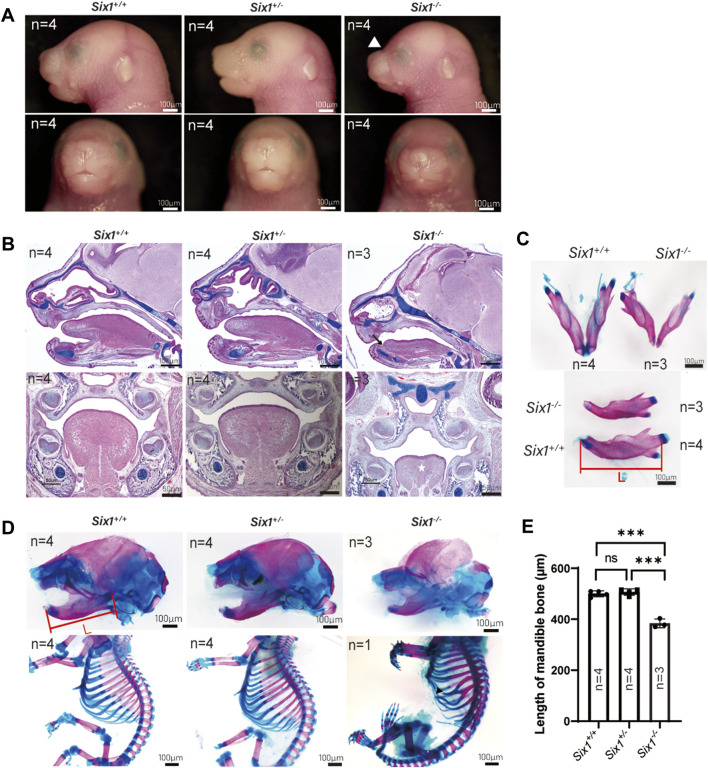
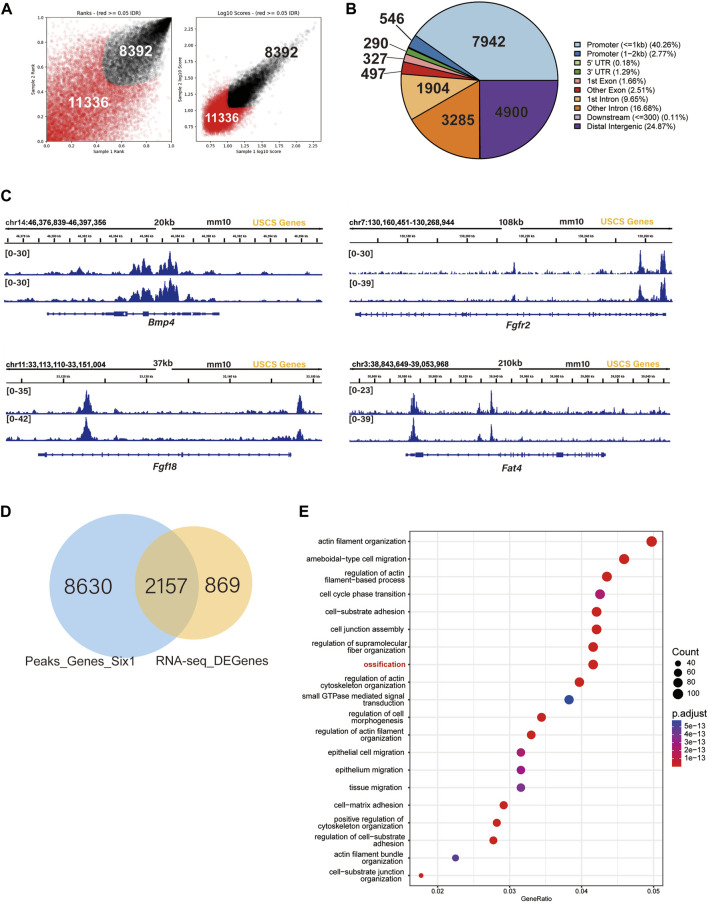
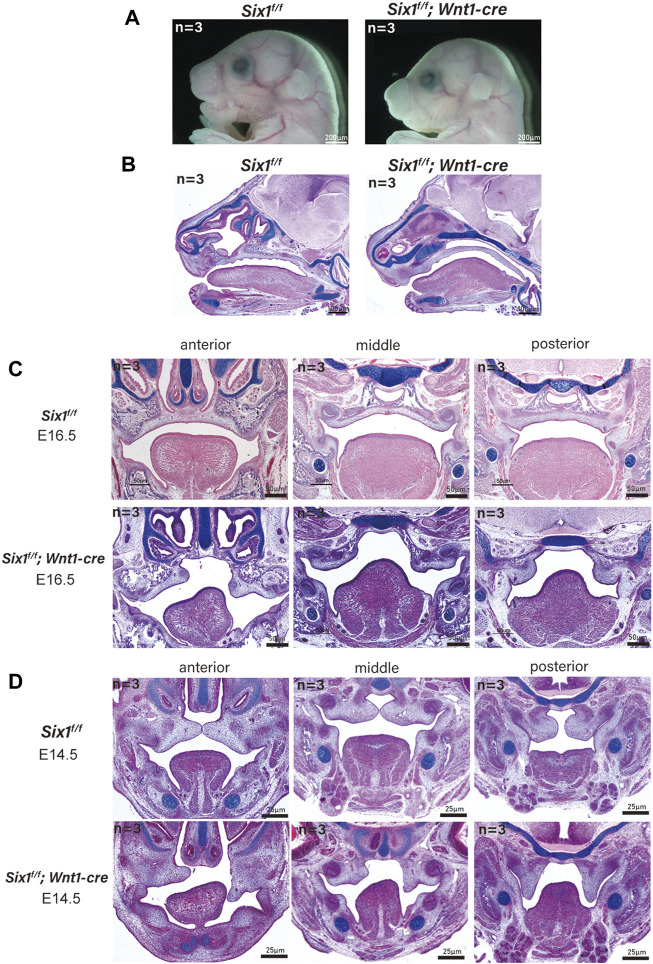
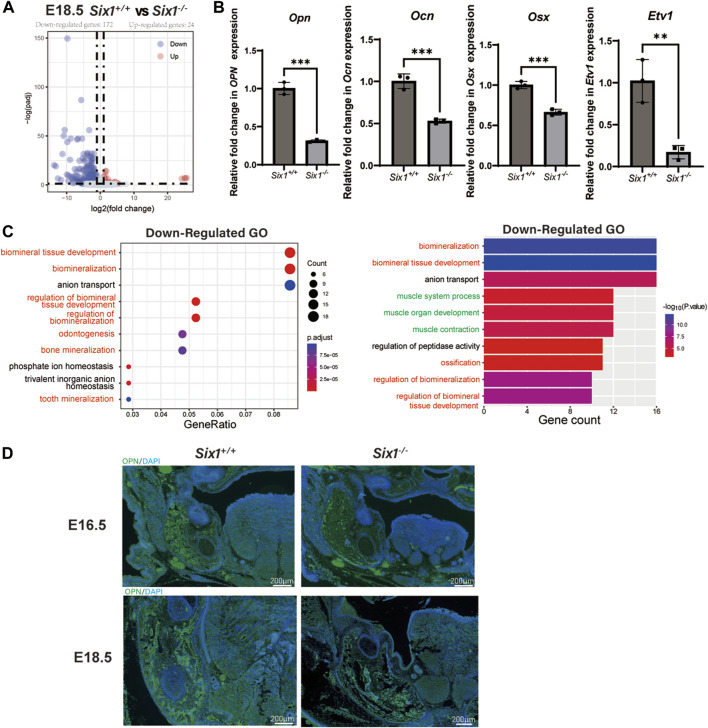
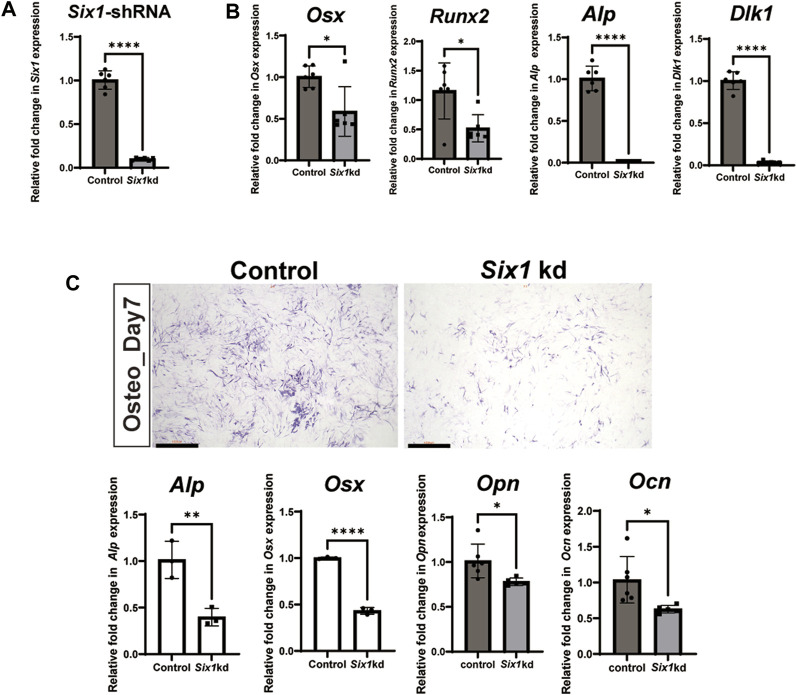
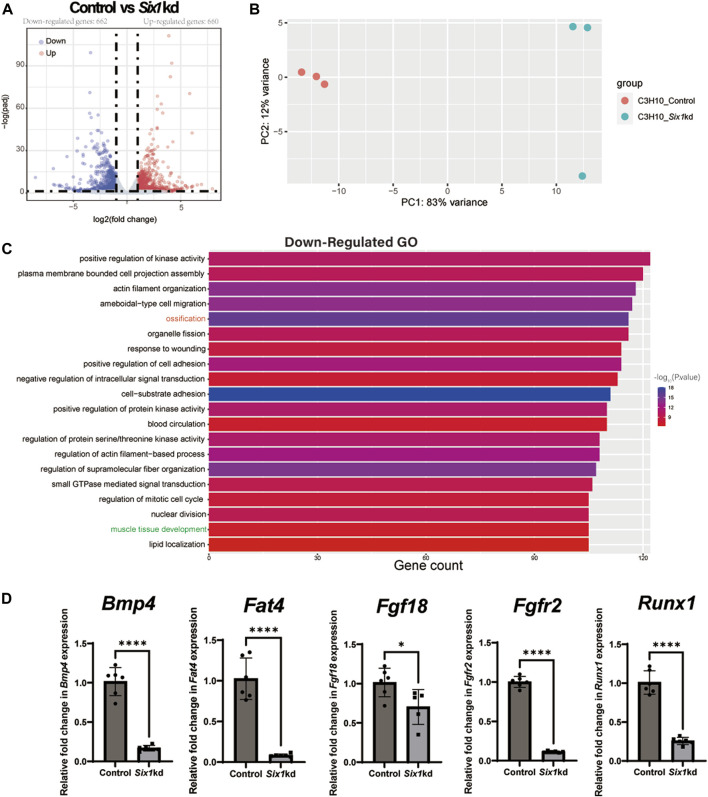
Craniofacial development requires intricate cooperation between multiple transcription factors and signaling pathways. Six1 is a critical transcription factor regulating craniofacial development. However, the exact function of Six1 during craniofacial development remains elusive. In this study, we investigated the role of Six1 in mandible development using a knockout mouse model ( ) and a cranial neural crest-specific, conditional knockout mouse model ( ). The mice exhibited multiple craniofacial deformities, including severe microsomia, high-arched palate, and uvula deformity. Notably, the mice recapitulate the microsomia phenotype of mice, thus demonstrating that the expression of in ectomesenchyme is critical for mandible development. We further showed that the knockout of led to abnormal expression of osteogenic genes within the mandible. Moreover, the knockdown of in C3H10 T1/2 cells reduced their osteogenic capacity . Using RNA-seq, we showed that both the loss of Six1 in the E18.5 mandible and Six1 knockdown in C3H10 T1/2 led to the dysregulation of genes involved in embryonic skeletal development. In particular, we showed that Six1 binds to the promoter of , , and , and promotes their transcription. Collectively, our results suggest that Six1 plays a critical role in regulating mandibular skeleton formation during mouse embryogenesis.
颅面发育需要多种转录因子和信号通路之间复杂的协同作用。Six1是一种调节颅面发育的关键转录因子。然而,Six1在颅面发育过程中的具体功能仍不清楚。在本研究中,我们使用基因敲除小鼠模型( )和颅神经嵴特异性条件性基因敲除小鼠模型( )研究了Six1在下颌骨发育中的作用。基因敲除小鼠表现出多种颅面畸形,包括严重的小颌畸形、高拱腭和悬雍垂畸形。值得注意的是,条件性基因敲除小鼠重现了基因敲除小鼠的小颌畸形表型,从而表明Six1在外胚间充质中的表达对下颌骨发育至关重要。我们进一步表明,Six1基因敲除导致下颌骨内成骨基因的异常表达。此外,在C3H10 T1/2细胞中敲低Six1会降低它们的成骨能力。使用RNA测序,我们表明在E18.5下颌骨中Six1的缺失以及在C3H10 T1/2细胞中Six1的敲低都会导致参与胚胎骨骼发育的基因失调。特别是,我们表明Six1与 、 、 和 的启动子结合,并促进它们的转录。总的来说,我们的结果表明Six1在小鼠胚胎发育过程中调节下颌骨骨骼形成方面起着关键作用。