Jin Guo-Qing, Wang Jing-Xiang, Lu Jianhua, Zhang Hang, Yao Yuhang, Ning Yingying, Lu Hua, Gao Song, Zhang Jun-Long
Beijing National Laboratory for Molecular Sciences, College of Chemistry and Molecular Engineering, Peking University Beijing 100871 P. R. China
Chemistry and Chemical Engineering Guangdong Laboratory Shantou 515031 P. R. China.
Chem Sci. 2023 Jan 17;14(8):2070-2081. doi: 10.1039/d2sc06209g. eCollection 2023 Feb 22.
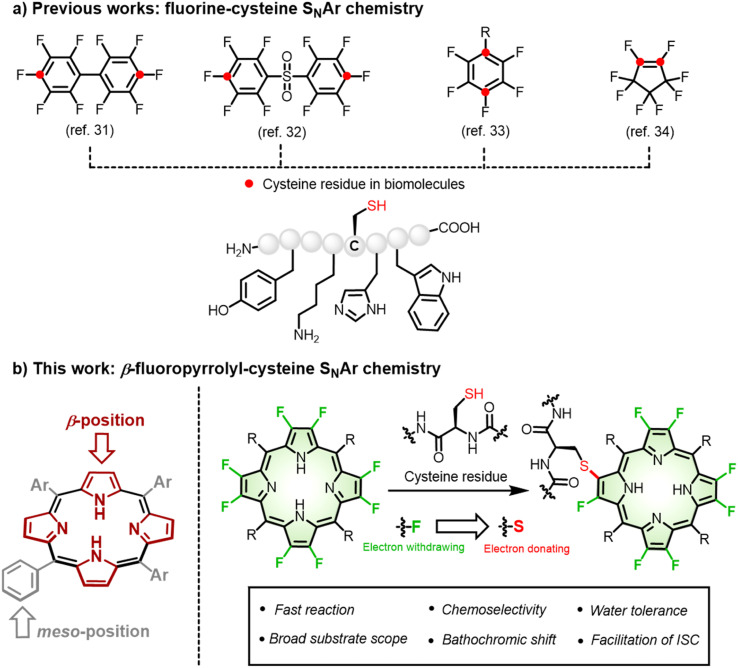
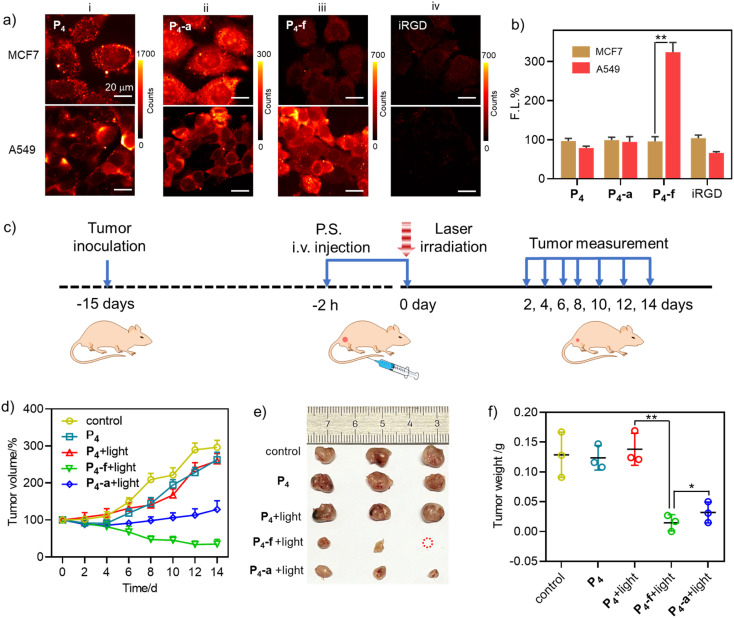
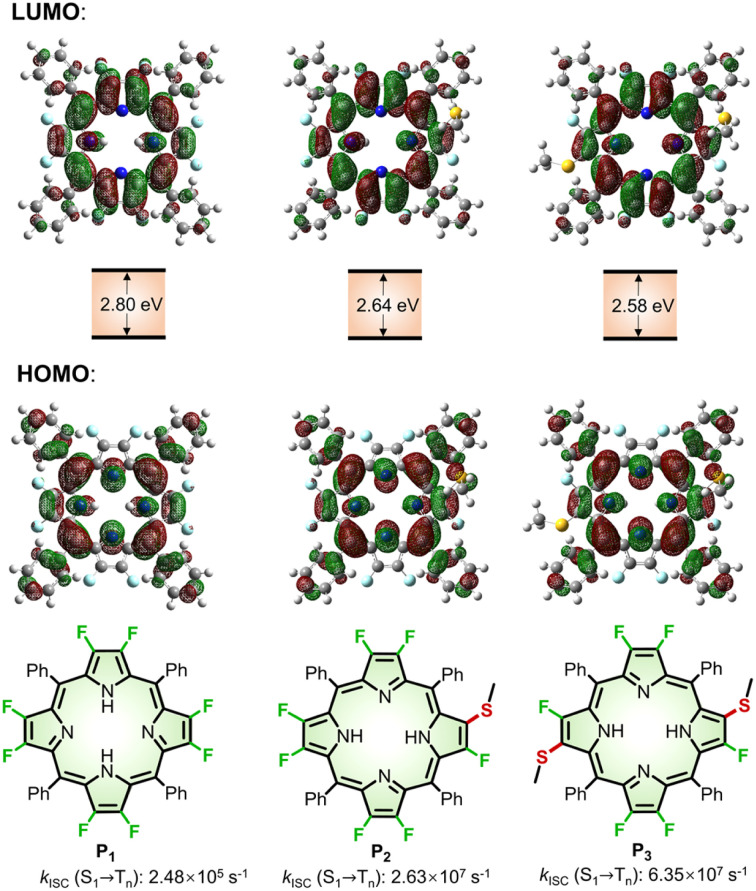
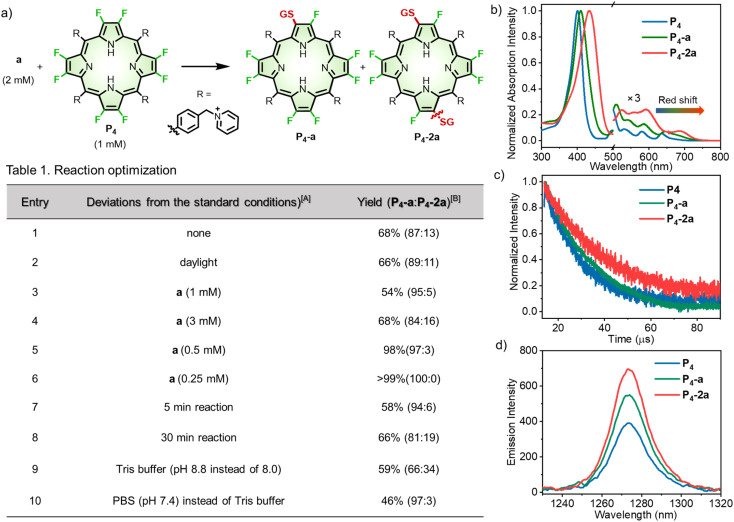
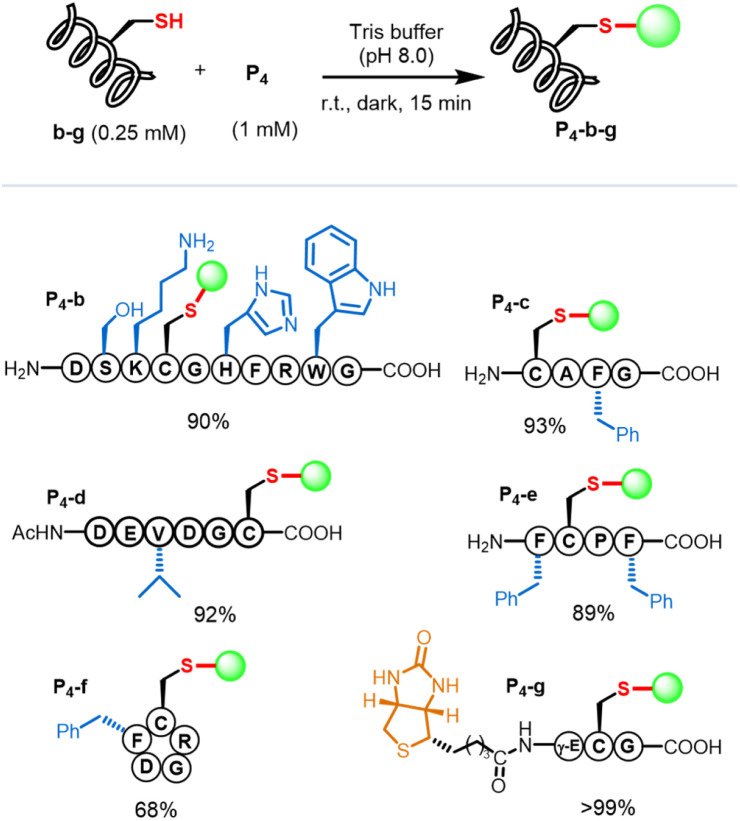
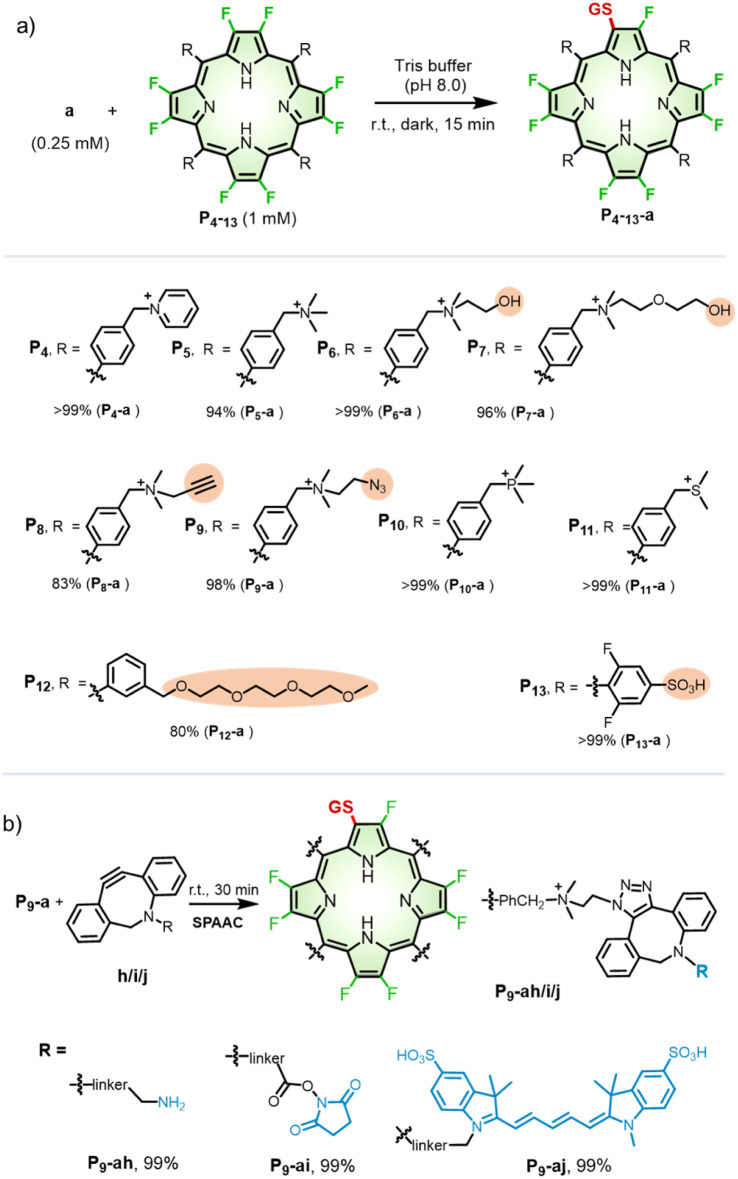
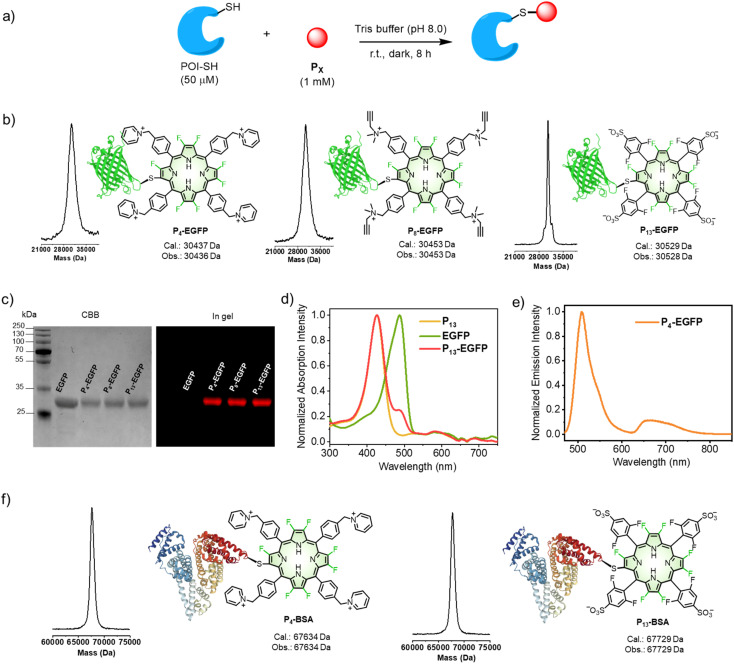
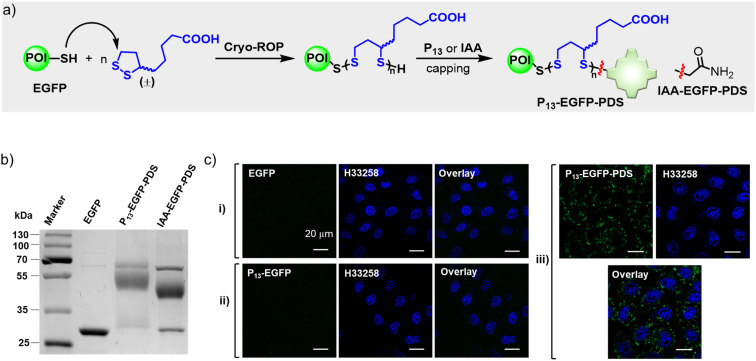
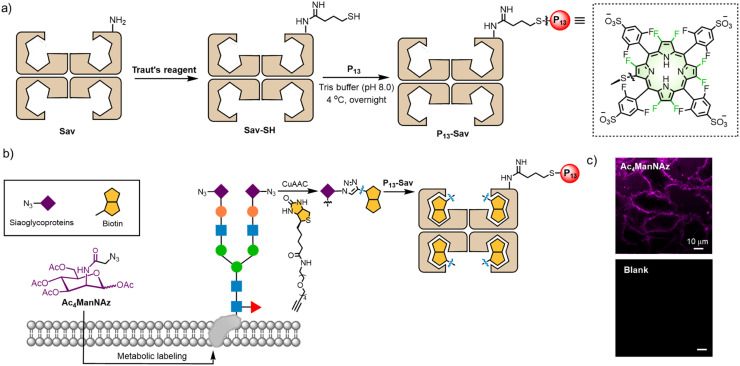
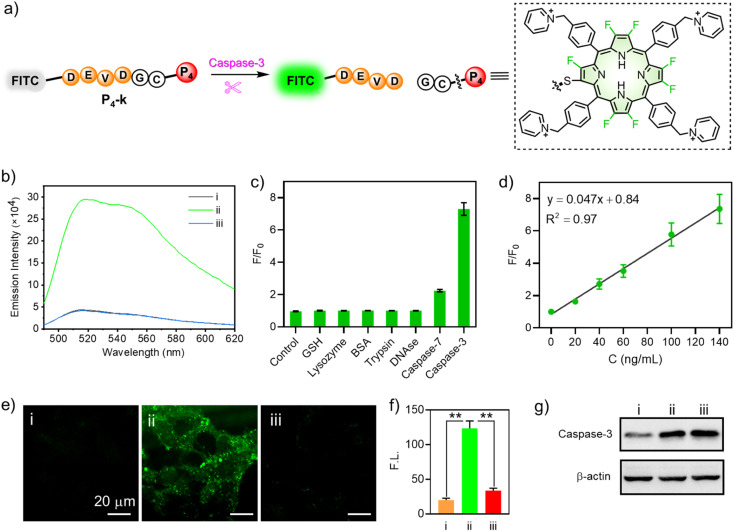
Bioconjugation, a synthetic tool that endows small molecules with biocompatibility and target specificity through covalent attachment of a biomolecule, holds promise for next-generation diagnosis or therapy. Besides the establishment of chemical bonding, such chemical modification concurrently allows alteration of the physicochemical properties of small molecules, but this has been paid less attention in designing novel bioconjugates. Here, we report a "two birds one stone" methodology for irreversible porphyrin bioconjugation based on β-fluoropyrrolyl-cysteine SAr chemistry, in which the β-fluorine of porphyrin is selectively replaced by a cysteine in either peptides or proteins to generate novel β-peptidyl/proteic porphyrins. Notably, due to the distinct electronic nature between fluorine and sulfur, such replacement makes the Q band red-shift to the near-infrared region (NIR, >700 nm). This facilitates intersystem crossing (ISC) to enhance the triplet population and thus singlet oxygen production. This new methodology features water tolerance, a fast reaction time (15 min), good chemo-selectivity, and broad substrate scope, including various peptides and proteins under mild conditions. To demonstrate its potential, we applied porphyrin β-bioconjugates in several scenarios, including (1) cytosolic delivery of functional proteins, (2) metabolic glycan labeling, (3) caspase-3 detection, and (4) tumor-targeting phototheranostics.
生物共轭是一种合成工具,通过生物分子的共价连接赋予小分子生物相容性和靶向特异性,有望用于下一代诊断或治疗。除了建立化学键外,这种化学修饰还能同时改变小分子的物理化学性质,但在设计新型生物共轭物时,这一点较少受到关注。在此,我们报告了一种基于β-氟吡咯基-半胱氨酸SAr化学的不可逆卟啉生物共轭的“一石二鸟”方法,其中卟啉的β-氟被肽或蛋白质中的半胱氨酸选择性取代,生成新型的β-肽基/蛋白质卟啉。值得注意的是,由于氟和硫之间不同的电子性质,这种取代使Q带红移至近红外区域(NIR,>700 nm)。这有助于系间窜越(ISC)以增加三重态数量,从而产生单线态氧。这种新方法具有耐水性、快速反应时间(15分钟)、良好的化学选择性和广泛的底物范围,包括在温和条件下的各种肽和蛋白质。为了证明其潜力,我们在几种情况下应用了卟啉β-生物共轭物,包括(1)功能性蛋白质的胞质递送,(2)代谢聚糖标记,(3)半胱天冬酶-3检测,以及(4)肿瘤靶向光诊疗。