Norvihoho Leslie Kojo, Yin Jing, Zhou Zhi-Fu, Han Jie, Chen Bin, Fan Li-Hong, Lichtfouse Eric
Xi'an, 710049 Shaanxi People's Republic of China State Key Laboratory of Multiphase Flow in Power Engineering, Xi'an Jiaotong University.
Xi'an, 710049 Shaanxi People's Republic of China School of Human Settlements and Civil Engineering, Xi'an Jiaotong University.
Environ Chem Lett. 2023;21(3):1701-1727. doi: 10.1007/s10311-023-01579-1. Epub 2023 Feb 22.
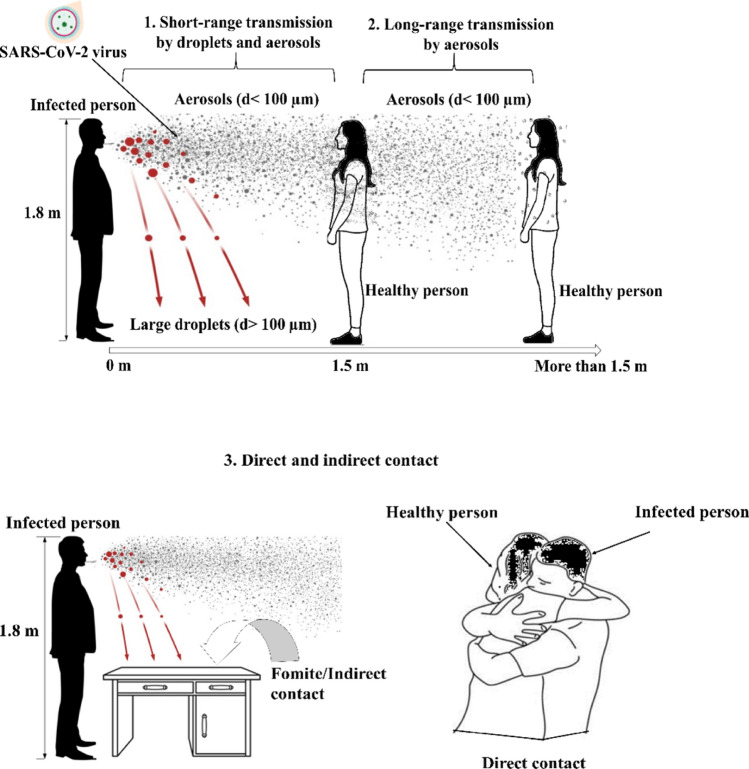
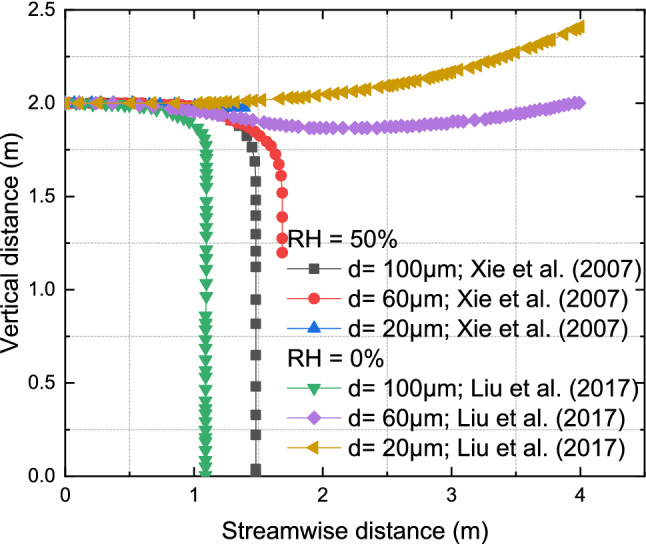
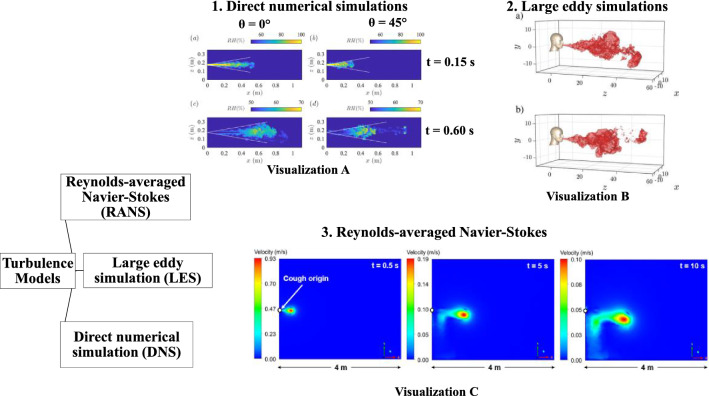
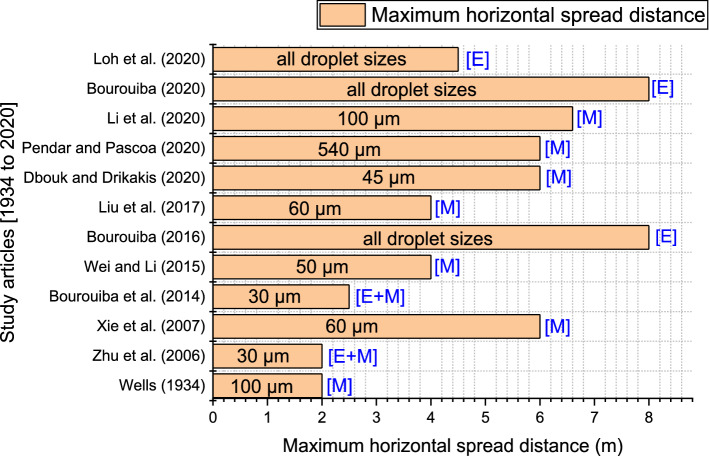
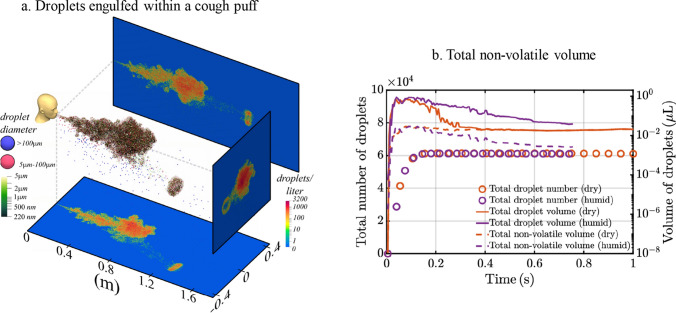
Transmission of the coronavirus disease 2019 is still ongoing despite mass vaccination, lockdowns, and other drastic measures to control the pandemic. This is due partly to our lack of understanding on the multiphase flow mechanics that control droplet transport and viral transmission dynamics. Various models of droplet evaporation have been reported, yet there is still limited knowledge about the influence of physicochemical parameters on the transport of respiratory droplets carrying the severe acute respiratory syndrome coronavirus 2. Here we review the effects of initial droplet size, environmental conditions, virus mutation, and non-volatile components on droplet evaporation and dispersion, and on virus stability. We present experimental and computational methods to analyze droplet transport, and factors controlling transport and evaporation. Methods include thermal manikins, flow techniques, aerosol-generating techniques, nucleic acid-based assays, antibody-based assays, polymerase chain reaction, loop-mediated isothermal amplification, field-effect transistor-based assay, and discrete and gas-phase modeling. Controlling factors include environmental conditions, turbulence, ventilation, ambient temperature, relative humidity, droplet size distribution, non-volatile components, evaporation and mutation. Current results show that medium-sized droplets, e.g., 50 µm, are sensitive to relative humidity. Medium-sized droplets experience delayed evaporation at high relative humidity, and increase airborne lifetime and travel distance. By contrast, at low relative humidity, medium-sized droplets quickly shrink to droplet nuclei and follow the cough jet. Virus inactivation within a few hours generally occurs at temperatures above 40 °C, and the presence of viral particles in aerosols impedes droplet evaporation.
尽管进行了大规模疫苗接种、封锁以及其他控制疫情的严厉措施,但2019冠状病毒病仍在传播。部分原因是我们对控制飞沫传播和病毒传播动力学的多相流动力学缺乏了解。已经报道了各种飞沫蒸发模型,但关于物理化学参数对携带严重急性呼吸综合征冠状病毒2的呼吸道飞沫传播的影响,目前仍知之甚少。在此,我们综述了初始飞沫大小、环境条件、病毒突变和非挥发性成分对飞沫蒸发和扩散以及病毒稳定性的影响。我们介绍了分析飞沫传播的实验和计算方法,以及控制传播和蒸发的因素。方法包括热人体模型、流动技术、气溶胶生成技术、基于核酸的检测、基于抗体的检测、聚合酶链反应、环介导等温扩增、基于场效应晶体管的检测以及离散和气相建模。控制因素包括环境条件、湍流、通风、环境温度、相对湿度、飞沫大小分布、非挥发性成分、蒸发和突变。目前的结果表明,中等大小的飞沫,例如50微米的飞沫,对相对湿度敏感。中等大小的飞沫在高相对湿度下蒸发延迟,从而增加了在空气中的停留时间和传播距离。相比之下,在低相对湿度下,中等大小的飞沫会迅速收缩成飞沫核并跟随咳嗽喷出的气流。通常在温度高于40°C时,病毒会在几小时内失活,并且气溶胶中病毒颗粒的存在会阻碍飞沫蒸发。