Rezaei Majid, Netz Roland R
Fachbereich Physik, Freie Universität Berlin, Berlin, 14195, Germany.
Curr Opin Colloid Interface Sci. 2021 Oct;55:101471. doi: 10.1016/j.cocis.2021.101471. Epub 2021 May 29.
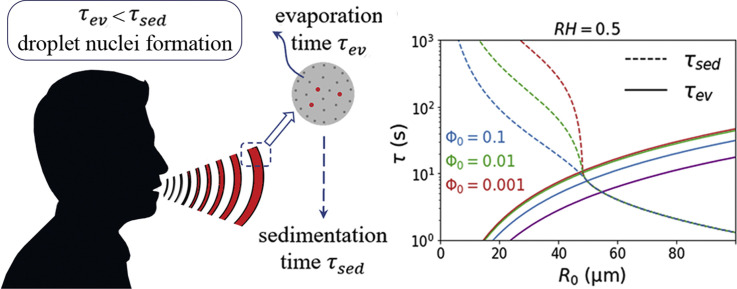
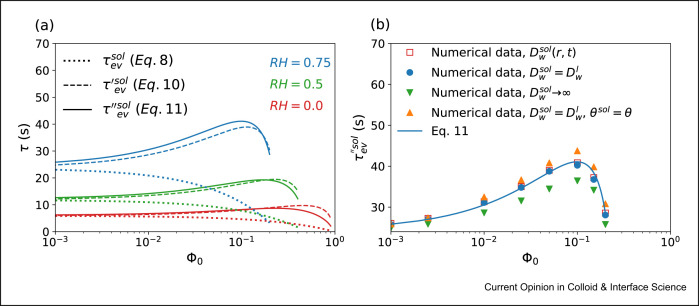
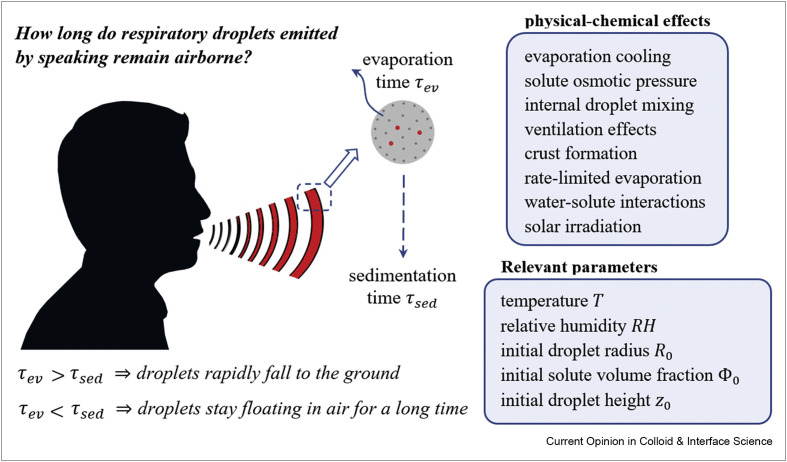
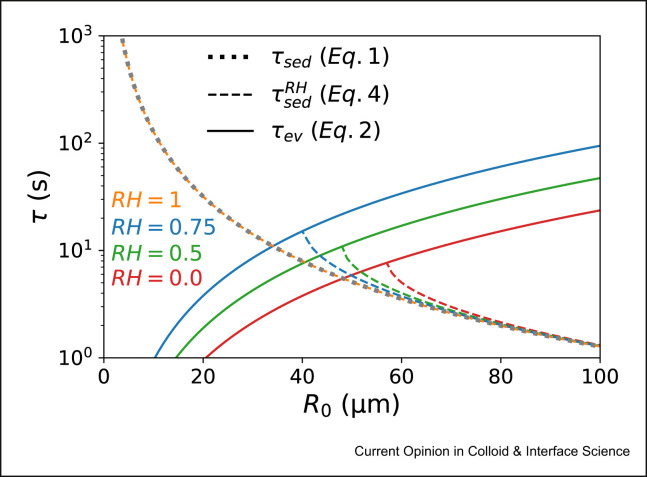
Airborne transmission is considered as an important route for the spread of infectious diseases, such as severe acute respiratory syndrome coronavirus 2 (SARS-CoV-2), and is primarily determined by the droplet sedimentation time, that is, the time droplets spend in air before reaching the ground. Evaporation increases the sedimentation time by reducing the droplet mass. In fact, small droplets can, depending on their solute content, almost completely evaporate during their descent to the ground and remain airborne as so-called droplet nuclei for a long time. Considering that viruses possibly remain infectious in aerosols for hours, droplet nuclei formation can substantially increase the infectious viral air load. Accordingly, the physical-chemical factors that control droplet evaporation and sedimentation times and play important roles in determining the infection risk from airborne respiratory droplets are reviewed in this article.
空气传播被认为是传染病传播的重要途径,例如严重急性呼吸综合征冠状病毒2(SARS-CoV-2),其主要由飞沫沉降时间决定,即飞沫在到达地面之前在空气中停留的时间。蒸发通过减少飞沫质量来增加沉降时间。事实上,小飞沫根据其溶质含量,在降落到地面的过程中几乎可以完全蒸发,并作为所谓的飞沫核长时间悬浮在空气中。考虑到病毒可能在气溶胶中保持传染性数小时,飞沫核的形成会大幅增加传染性病毒的空气负荷。因此,本文综述了控制飞沫蒸发和沉降时间并在确定空气传播呼吸道飞沫感染风险中起重要作用的物理化学因素。