Department of Pharmaceutical Health Outcomes and Policy, University of Houston College of Pharmacy, 4349 Martin Luther King Boulevard, Houston, TX, 77204-5047, USA.
Health Outcomes Division, The University of Texas at Austin, Austin, TX, USA.
Drugs Aging. 2023 Apr;40(4):377-390. doi: 10.1007/s40266-023-01008-6. Epub 2023 Feb 27.
Hypertension and diabetes mellitus are independent risk factors for cardiovascular diseases. Due to the cardioprotective nature of angiotensin-converting enzyme inhibitors (ACEIs) and angiotensin II receptor blockers (ARBs), they are recommended for patients with comorbid hypertension and diabetes. However, poor adherence to ACEIs/ARBs among older adults is a major public health concern. This study aimed to assess the effectiveness of a telephonic motivational interviewing (MI) intervention conducted by pharmacy students among a nonadherent older population (≥ 65 years old) with diabetes and hypertension.
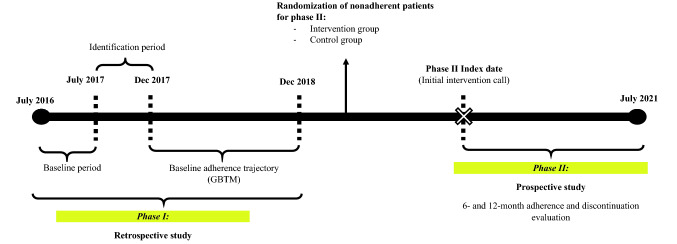
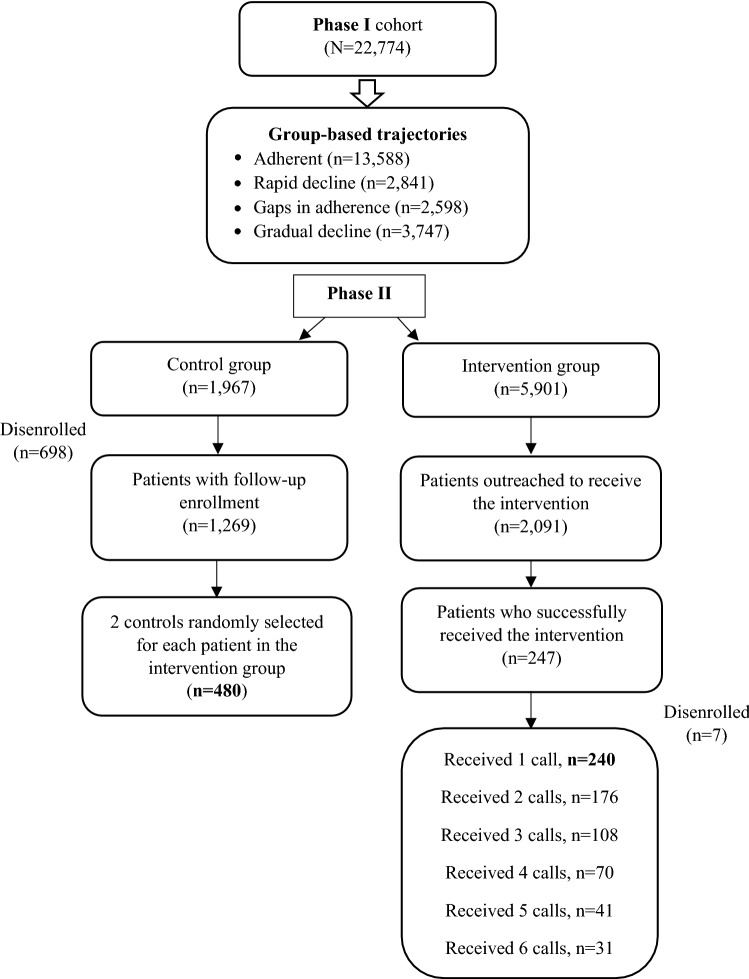
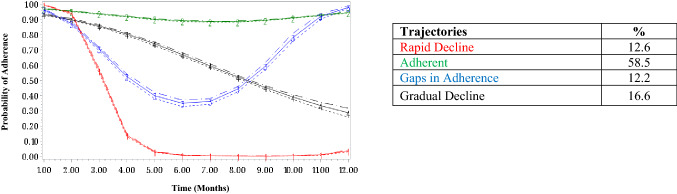
Patients continuously enrolled in a Medicare Advantage Plan who received an ACEI/ARB prescription between July 2017 and December 2017 were identified. Group-based trajectory modeling (GBTM) was used to identify distinct patterns of ACEI/ARB adherence during the 1-year baseline period: adherent, gaps in adherence, gradual decline, and rapid decline in adherence. Patients from the three nonadherent trajectories were randomized into MI intervention or control group. The intervention consisted of an initial call and five follow-up calls administered by MI-trained pharmacy students and tailored to the baseline ACEI/ARB adherence trajectories. The primary outcome was adherence to ACEI/ARB during the 6- and 12-month periods post-MI implementation. The secondary outcome was discontinuation, defined as no refills for ACEI/ARB during the 6- and 12-month periods post-MI implementation. Multivariable regression analyses examined the impact of MI intervention on ACEI/ARB adherence and discontinuation while adjusting for baseline covariates.
A total of 240 patients in the intervention group and 480 patients as randomly selected controls were included in this study. At 6 months, patients receiving the MI intervention had significantly better adherence (β = 0.06; p = 0.03) compared with the controls. Linear and logistic regression models also showed patients in the intervention group were more likely to be adherent than controls within 12 months of intervention implementation (β = 0.06; p = 0.02 and OR: 1.46; 95% CI 1.05-2.04, respectively). MI intervention did not have any significant impact on the ACEI/ARB discontinuation.
Patients who received the MI intervention were more likely to be adherent at 6 and 12 months following the intervention initiation, despite gaps in the follow-up calls due to COVID-19. Pharmacist-led MI intervention is an effective behavioral strategy to improve medication adherence among older adults and tailoring the intervention to past adherence patterns may enhance the intervention effectiveness. This study was registered with the United States National Institutes of Health (ClinicalTrials.gov identifier NCT03985098).
高血压和糖尿病是心血管疾病的独立危险因素。由于血管紧张素转换酶抑制剂(ACEIs)和血管紧张素 II 受体阻滞剂(ARBs)具有心脏保护作用,因此建议将其用于患有合并高血压和糖尿病的患者。然而,老年人对 ACEIs/ARBs 的依从性差是一个主要的公共卫生问题。本研究旨在评估由药学学生对患有糖尿病和高血压的非依从性老年人群(≥65 岁)进行电话动机性访谈(MI)干预的效果。
确定 2017 年 7 月至 2017 年 12 月期间连续参加医疗保险优势计划且接受 ACEI/ARB 处方的患者。使用基于群组的轨迹建模(GBTM)在 1 年的基线期内识别 ACEI/ARB 依从性的不同模式:依从、依从性中断、逐渐下降和快速下降。将来自三种非依从性轨迹的患者随机分配到 MI 干预或对照组。干预措施包括 MI 培训的药学学生进行的初始电话和五次随访电话,根据基线 ACEI/ARB 依从性轨迹进行调整。主要结局是 MI 实施后 6 个月和 12 个月期间 ACEI/ARB 的依从性。次要结局是停药,定义为 MI 实施后 6 个月和 12 个月期间无 ACEI/ARB 再填充。多变量回归分析调整基线协变量后,检查 MI 干预对 ACEI/ARB 依从性和停药的影响。
干预组共有 240 名患者和随机选择的 480 名对照组患者纳入本研究。在 6 个月时,接受 MI 干预的患者的依从性明显更好(β=0.06;p=0.03)。线性和逻辑回归模型还表明,在干预实施后 12 个月内,干预组的患者比对照组更有可能保持依从性(β=0.06;p=0.02 和 OR:1.46;95%CI 1.05-2.04)。MI 干预对 ACEI/ARB 的停药没有任何显著影响。
尽管由于 COVID-19 导致随访电话中断,但在干预启动后 6 个月和 12 个月,接受 MI 干预的患者更有可能保持依从性。由药剂师主导的 MI 干预是一种提高老年人药物依从性的有效行为策略,针对过去的依从模式进行干预可能会增强干预效果。本研究在美国国立卫生研究院(ClinicalTrials.gov 标识符 NCT03985098)注册。