Department of Molecular Biology, University of Texas Southwestern Medical Center, Dallas, TX, USA.
Center for Inflammation Research, University of Texas Southwestern Medical Center, Dallas, TX, USA.
Nature. 2023 Apr;616(7956):326-331. doi: 10.1038/s41586-023-05862-7. Epub 2023 Feb 27.
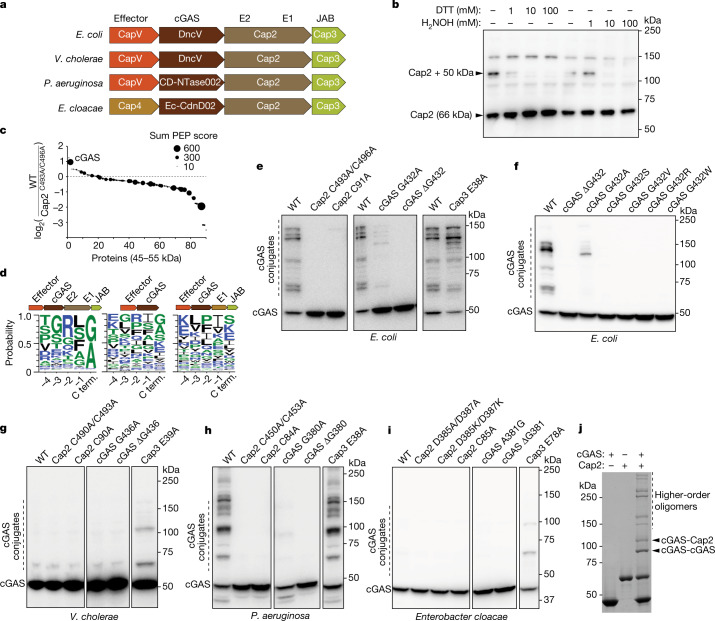
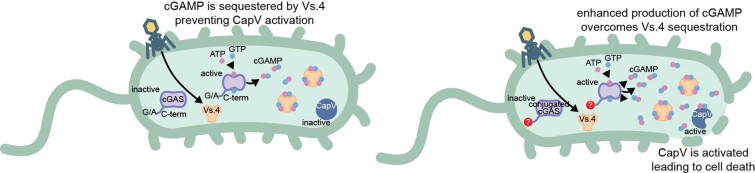
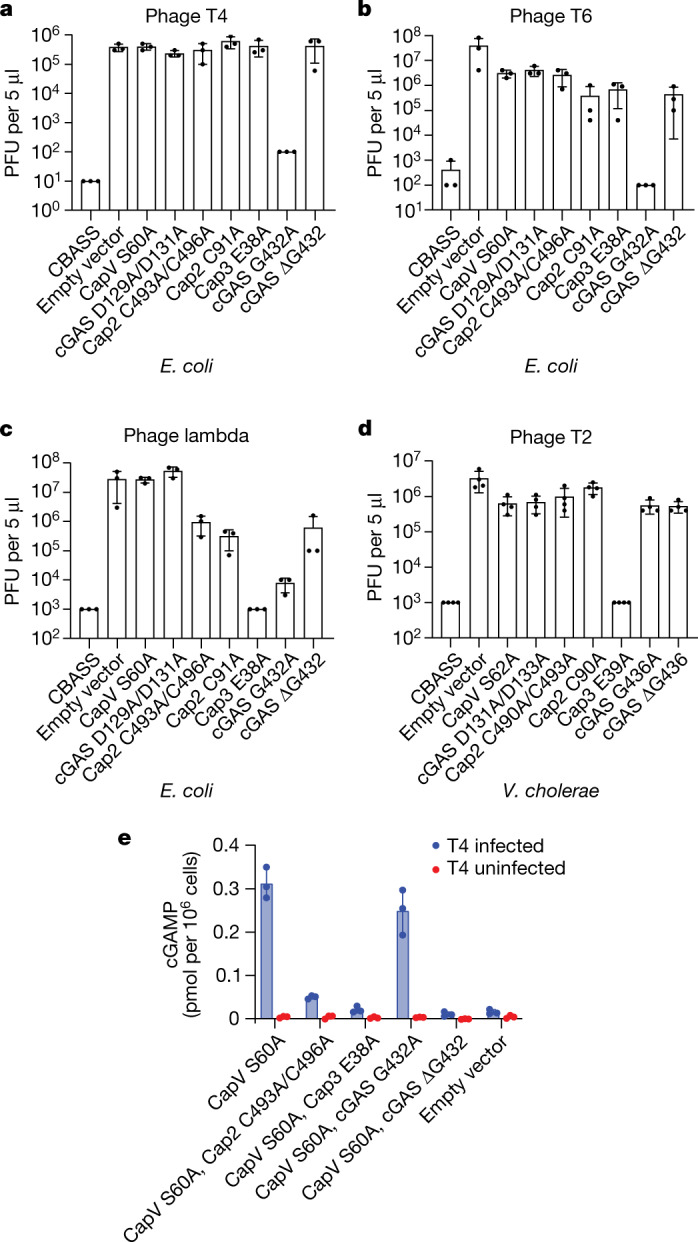
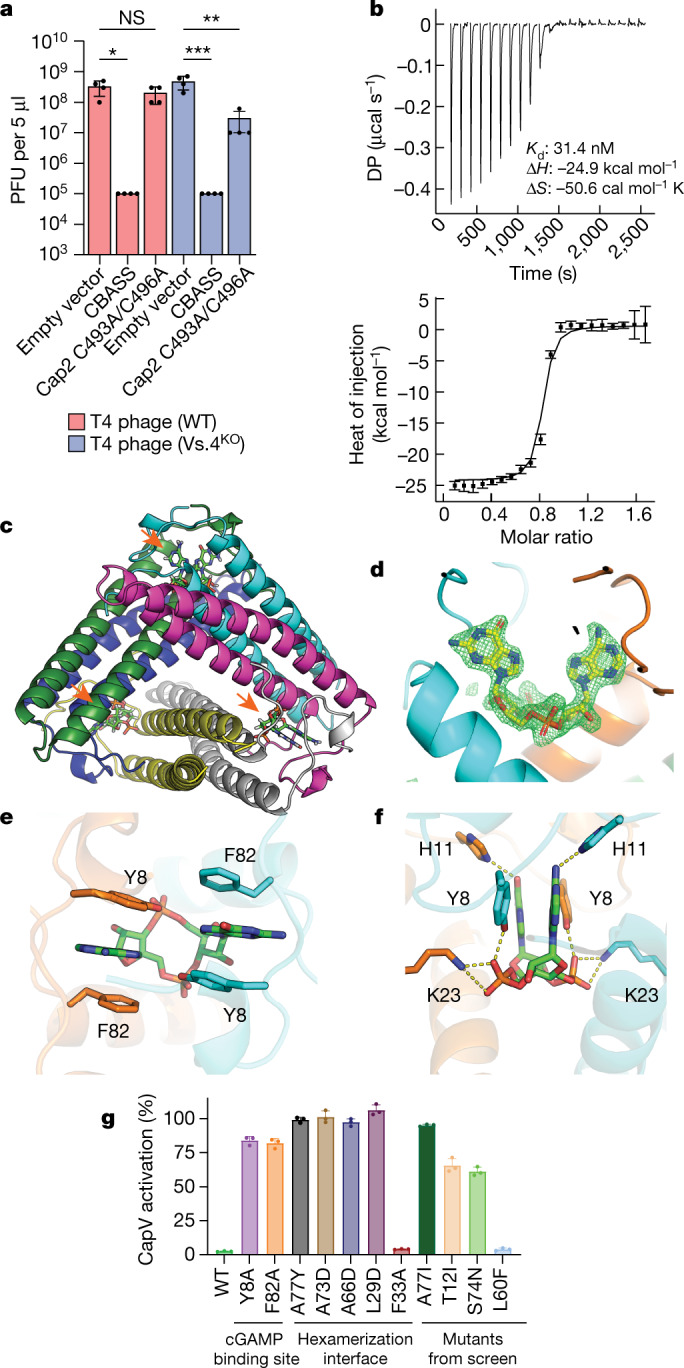
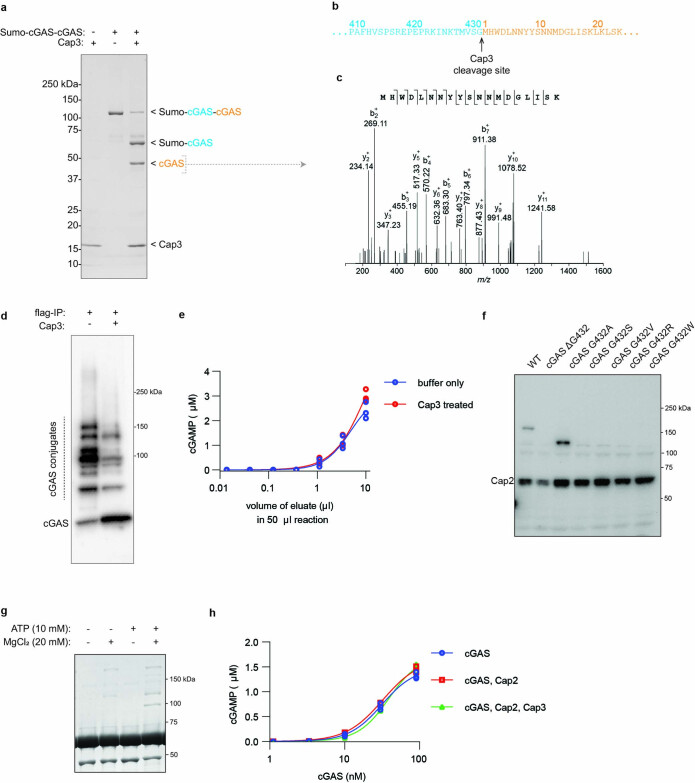
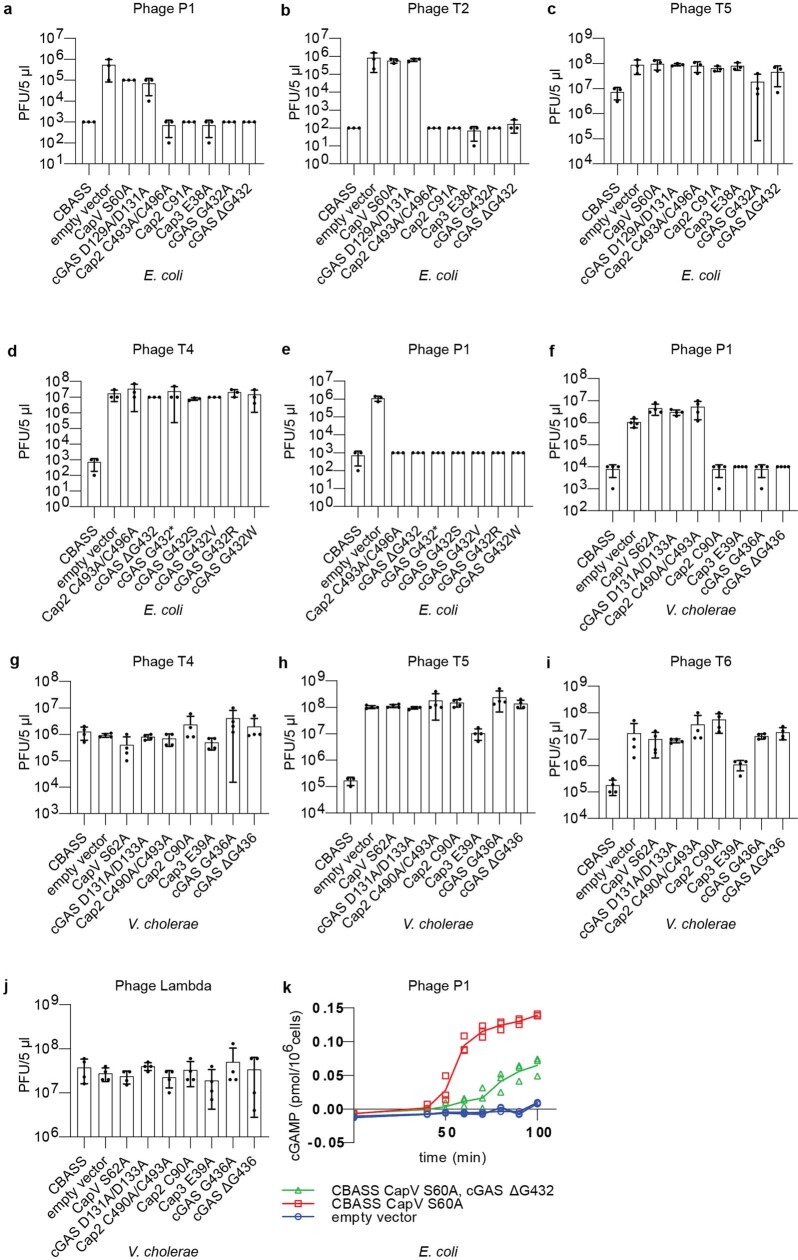
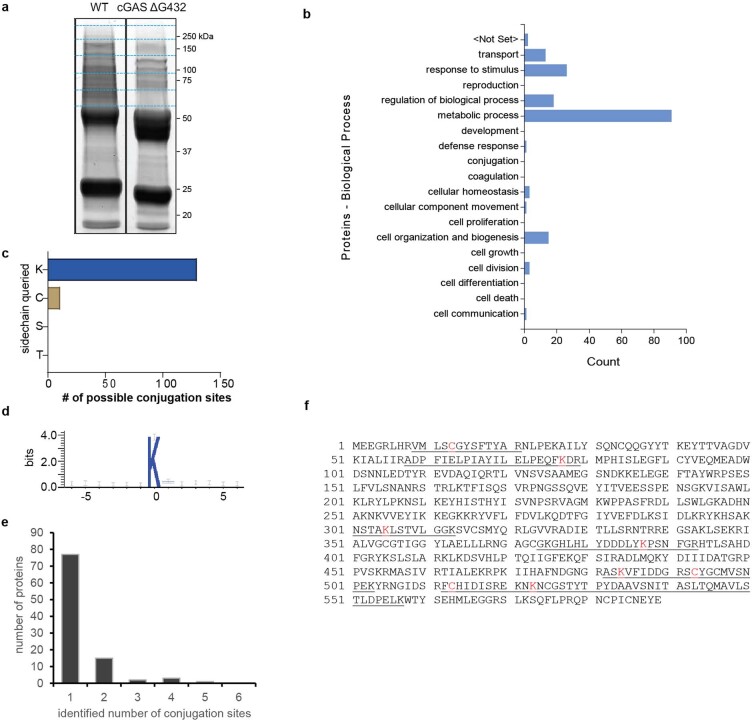
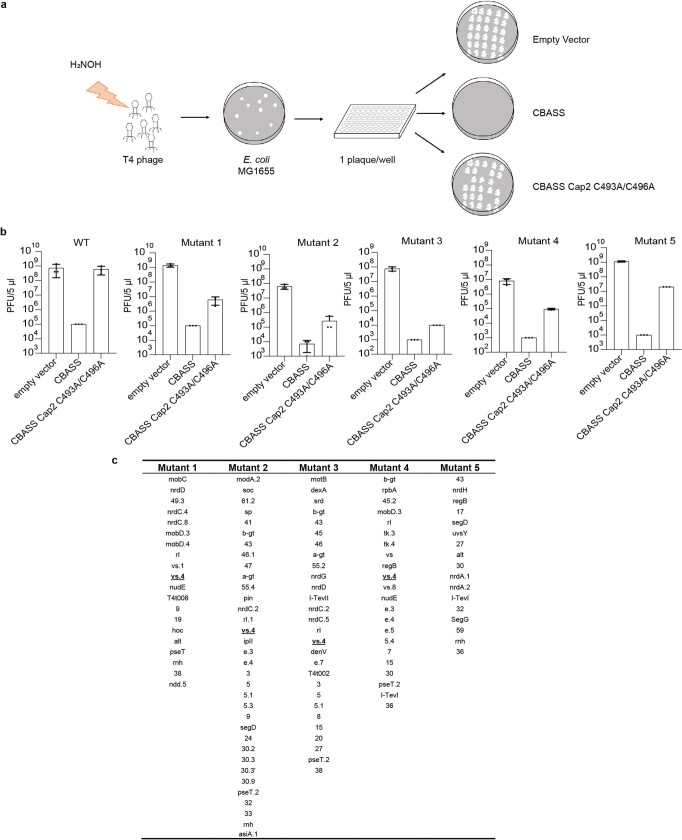
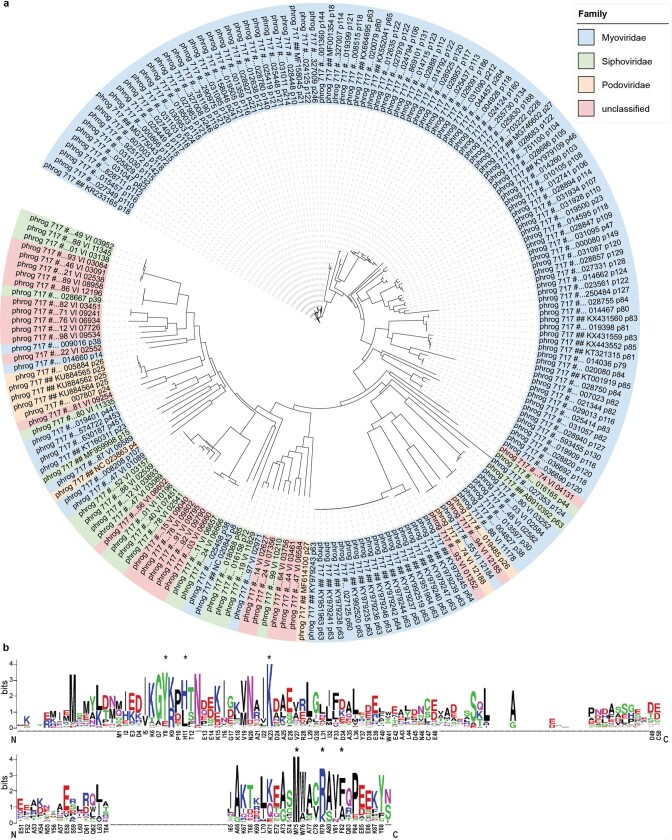
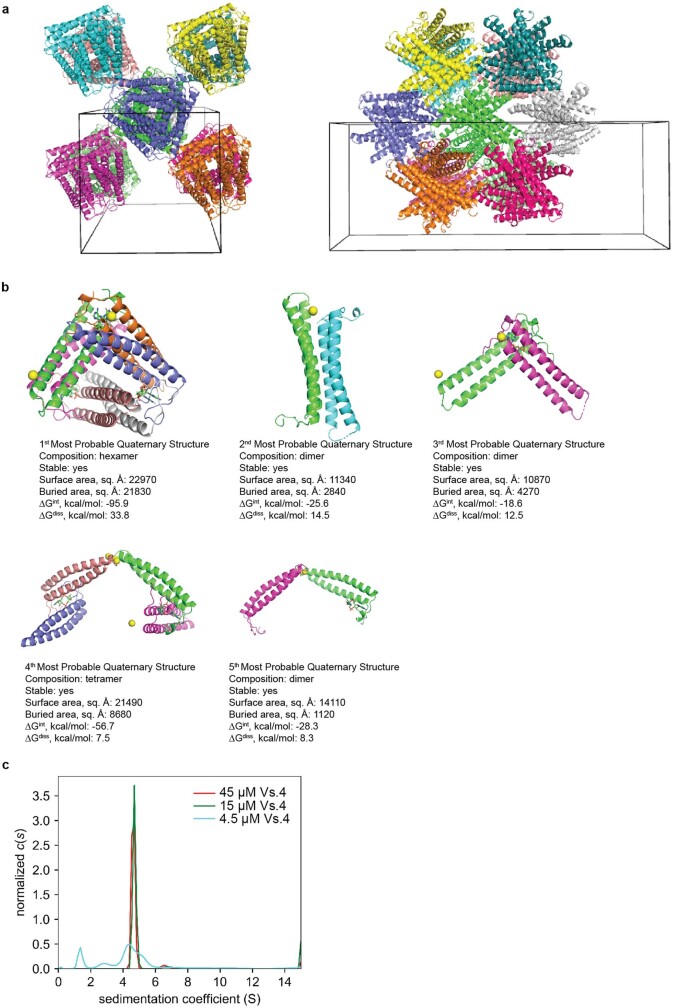
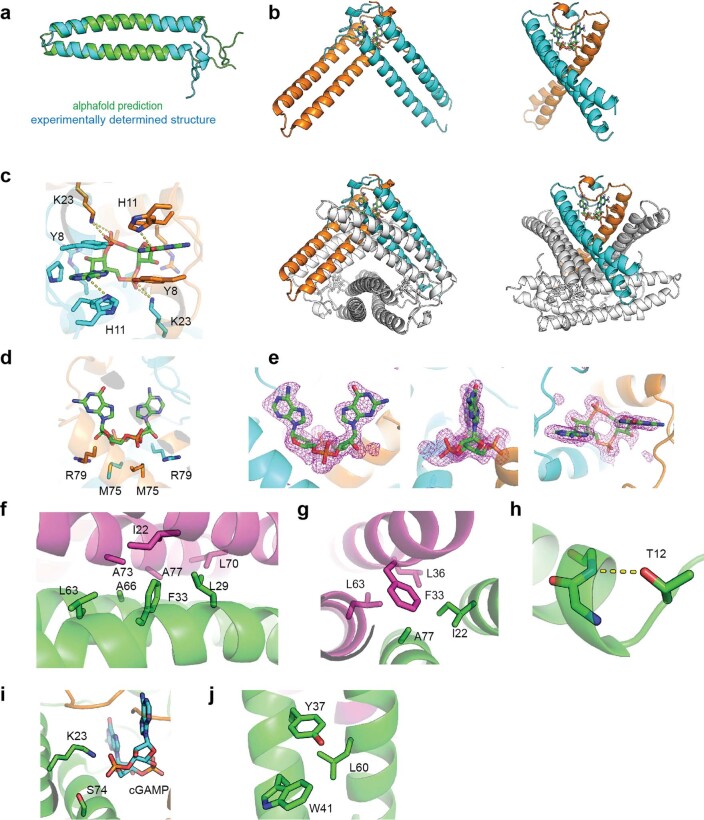
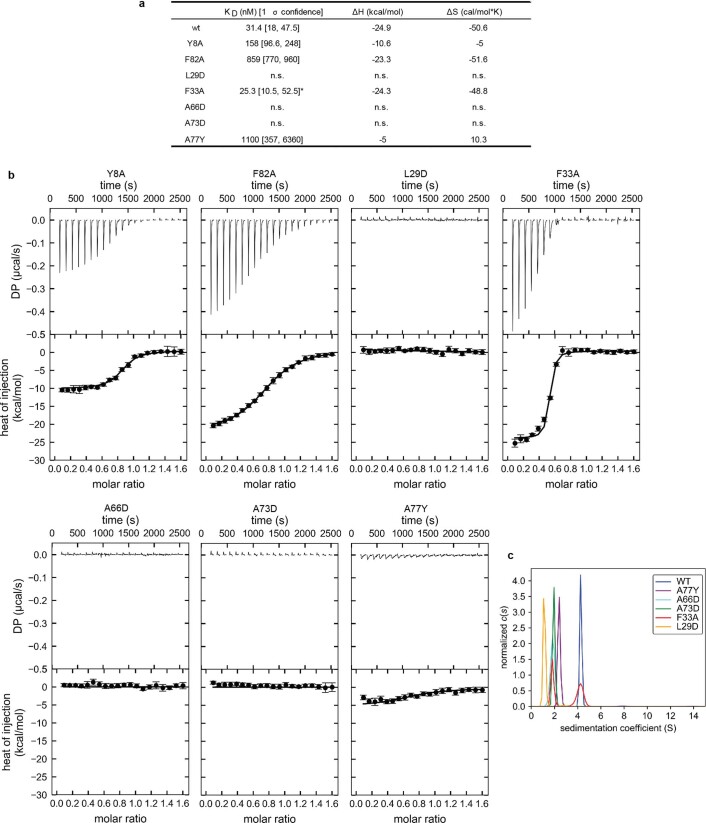
cGAS is an evolutionarily conserved enzyme that has a pivotal role in immune defence against infection. In vertebrate animals, cGAS is activated by DNA to produce cyclic GMP-AMP (cGAMP), which leads to the expression of antimicrobial genes. In bacteria, cyclic dinucleotide (CDN)-based anti-phage signalling systems (CBASS) have been discovered. These systems are composed of cGAS-like enzymes and various effector proteins that kill bacteria on phage infection, thereby stopping phage spread. Of the CBASS systems reported, approximately 39% contain Cap2 and Cap3, which encode proteins with homology to ubiquitin conjugating (E1/E2) and deconjugating enzymes, respectively. Although these proteins are required to prevent infection of some bacteriophages, the mechanism by which the enzymatic activities exert an anti-phage effect is unknown. Here we show that Cap2 forms a thioester bond with the C-terminal glycine of cGAS and promotes conjugation of cGAS to target proteins in a process that resembles ubiquitin conjugation. The covalent conjugation of cGAS increases the production of cGAMP. Using a genetic screen, we found that the phage protein Vs.4 antagonized cGAS signalling by binding tightly to cGAMP (dissociation constant of approximately 30 nM) and sequestering it. A crystal structure of Vs.4 bound to cGAMP showed that Vs.4 formed a hexamer that was bound to three molecules of cGAMP. These results reveal a ubiquitin-like conjugation mechanism that regulates cGAS activity in bacteria and illustrates an arms race between bacteria and viruses through controlling CDN levels.
cGAS 是一种进化上保守的酶,在抗感染免疫防御中起着关键作用。在脊椎动物中,cGAS 被 DNA 激活产生环鸟苷酸-腺苷酸(cGAMP),从而导致抗菌基因的表达。在细菌中,已发现基于环二核苷酸(CDN)的抗噬菌体信号系统(CBASS)。这些系统由 cGAS 样酶和各种效应蛋白组成,当噬菌体感染时,这些蛋白会杀死细菌,从而阻止噬菌体的传播。在已报道的 CBASS 系统中,约 39%含有 Cap2 和 Cap3,它们分别编码与泛素连接(E1/E2)和去泛素化酶具有同源性的蛋白。虽然这些蛋白对于防止某些噬菌体的感染是必需的,但酶活性发挥抗噬菌体作用的机制尚不清楚。本文中,我们表明 Cap2 与 cGAS 的 C 末端甘氨酸形成硫酯键,并促进 cGAS 与靶蛋白的缀合,这一过程类似于泛素缀合。cGAS 的共价缀合增加了 cGAMP 的产生。通过遗传筛选,我们发现噬菌体蛋白 Vs.4 通过紧密结合 cGAMP(解离常数约为 30 nM)并将其隔离来拮抗 cGAS 信号。与 cGAMP 结合的 Vs.4 的晶体结构表明,Vs.4 形成一个六聚体,与三个 cGAMP 分子结合。这些结果揭示了一种在细菌中调节 cGAS 活性的泛素样缀合机制,并说明了通过控制 CDN 水平,细菌和病毒之间存在一场军备竞赛。